215 posters, 5 topics, 22 sessions, 596 authors, 283 institutions
ePostersLive by SciGen Technologies S.A. All rights reserved.
Obstetric Anaesthesia Annual Scientific Meeting 2025
May 15 - 16, 2025 | ICC, 2 Lanyon Place, Belfast BT1 3WH

6779870
Review of birth trauma referrals by multi-disciplinary service at a District General Hospital
Poster Presenter
Authors
Laura Gill, Kathryn Potton, Strang Gordon, Armstrong Laura, Pamela Galloway, Helen Reid
Affiliations
Part of Topic
Service Evaluation
Review of birth trauma referrals by multi-disciplinary service at a District General Hospital
L. Gill, K. Potton, G. Strang, L. Armstrong, P. Galloway, H. Reid (Birth Trauma Working Group, Victoria Hospital, Kirkcaldy)
BACKGROUND
Childbirth can be associated with real, or perceived, threat to life that subsequently manifests as birth trauma, with long lasting morbidity for the patient and wider family. UK expert reports call for improvements in prevention, detection and treatment of traumatic birth and childbirth related post-traumatic stress disorder [1]. Follow up is recommended for all traumatic births but patient identification and provision of appropriate services is challenging [2].
We are a medium sized DGH with a delivery rate of approximately 3000 patients. Women who have a ‘medically recognised’ traumatic birth are referred for obstetric debrief at 6-8 weeks postnatal (PN). Out with this there is no formal pathway for women who experience birth trauma to access services and support.
METHODS
In 2023 we formed a multidisciplinary working group to look at birth trauma in NHS Fife. The group has members from obstetrics, obstetric anaesthesia, midwifery practice and leadership, perinatal psychology and chaplaincy services. We collected baseline data to understand population needs and guide future service development. We reviewed referral data for obstetric debrief clinics, anaesthetic and perinatal psychology services. We looked at: number of referrals, which specialties patients were referred to and when in the postnatal period, and whether this has changed over recent years. We also explored data on maternity complaints over the last ten years.
RESULTS
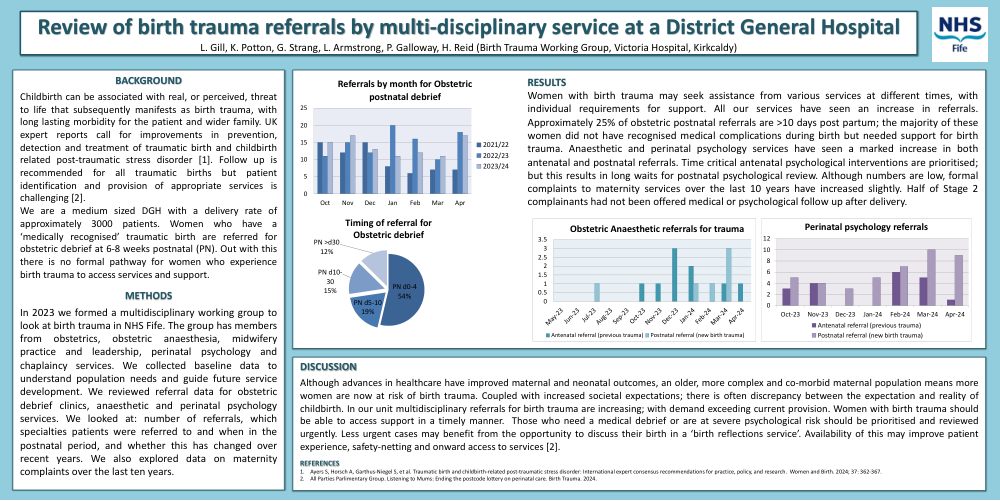
Women with birth trauma may seek assistance from various services at different times, with individual requirements for support. All our services have seen an increase in referrals. Approximately 25% of obstetric postnatal referrals are >10 days post partum; the majority of these women did not have recognised medical complications during birth but needed support for birth trauma. Anaesthetic and perinatal psychology services have seen a marked increase in both antenatal and postnatal referrals. Time critical antenatal psychological interventions are prioritised; but this results in long waits for postnatal psychological review. Although numbers are low, formal complaints to maternity services over the last 10 years have increased slightly. Half of Stage 2 complainants had not been offered medical or psychological follow up after delivery.
DISCUSSION
Although advances in healthcare have improved maternal and neonatal outcomes, an older, more complex and co-morbid maternal population means more women are now at risk of birth trauma. Coupled with increased societal expectations; there is often discrepancy between the expectation and reality of childbirth. In our unit multidisciplinary referrals for birth trauma are increasing; with demand exceeding current provision. Women with birth trauma should be able to access support in a timely manner. Those who need a medical debrief or are at severe psychological risk should be prioritised and reviewed urgently. Less urgent cases may benefit from the opportunity to discuss their birth in a ‘birth reflections service’. Availability of this may improve patient experience, safety-netting and onward access to services [2].
REFERENCES