215 posters, 5 topics, 22 sessions, 596 authors, 283 institutions
ePostersLive by SciGen Technologies S.A. All rights reserved.
Obstetric Anaesthesia Annual Scientific Meeting 2025
May 15 - 16, 2025 | ICC, 2 Lanyon Place, Belfast BT1 3WH

6779469
Does moving to electronic records make a difference? An audit into maternity follow-up
Poster Presenter
Authors
Affiliations
Part of Topic
Quality Improvement
Does moving to electronic records make a difference? An audit into maternity follow-up
Dr. Stephen Dean (ST6 Anaesthetics), Dr Shirjeel Chaudhry (Consultant Anaesthetist), Dr Lydia Ngu (Anaesthetic Trainee) - George Eliot Hospital NHS Trust, Nuneaton, CV10 7DJ
Introduction
All maternity patients, following an anaesthetic intervention, should have a post-natal review. This was highlighted in the Ockenden review, an independent report of failures within a United Kingdom NHS maternity department in 2020. It stated that to provide state-of-the-art care to maternity patients, a multi-disciplinary team review must take place before their discharge from the hospital to help identifying possible concerns, risk factors or complications to allow timely interventions if needed1. This requirement for post-natal follow-up is part of the Royal College of Anaesthetists 2024 Guidelines for the Provision of Anaesthesia2.
Our trust recently moved its maternity services to electronic records for all disciplines involved in maternity, including anaesthetics. This gave us the opportunity to identify whether moving to electronic records would improve our compliance with providing post-natal anaesthetic reviews /follow-up.
This was a registered audit with full permission from the local audit department and approval from the Caldicott guardian.
Methods
Two audits were performed, both audits retrospectively looked at all obstetric patients undergoing anaesthetic intervention at a district general hospital (including all theatre cases and epidural insertions).
The first audit utilised a physical diary of anaesthetic records within the maternity department to identify cases over a 3 month period. Patient notes were audited for any documented anaesthetic follow-up. At this time, the practice in the trust was to use a paper-based follow-up proforma. A sub-analysis was also performed to identify any issues raised or missed.
Several months later the trust moved to electronic records for maternity; specifically the BadgerNet system. After a period of crossover to this system the audit was repeated, utilising the inbuilt reporting tools and electronic proformas.
Results
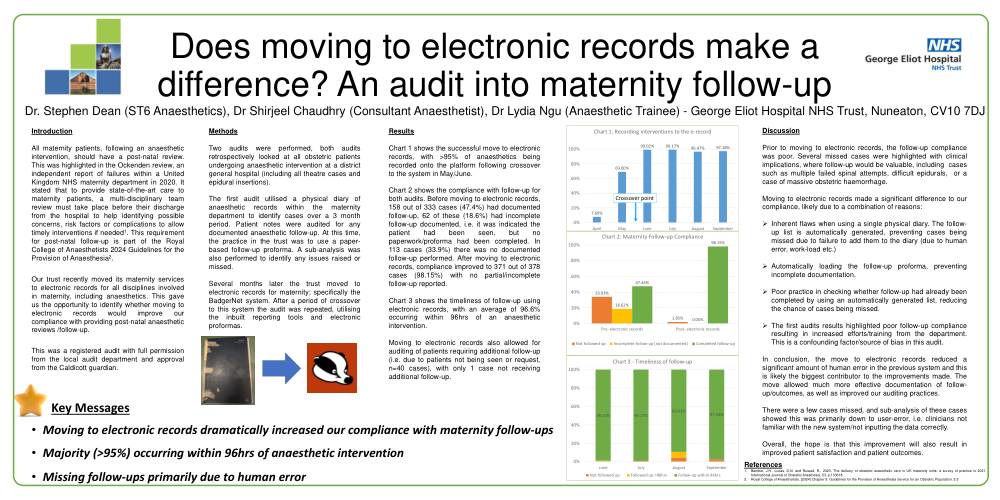
Chart 1 shows the successful move to electronic records, with >95% of anaesthetics being recorded onto the platform following crossover to the system in May/June.
Chart 2 shows the compliance with follow-up for both audits. Before moving to electronic records, 158 out of 333 cases (47.4%) had documented follow-up, 62 of these (18.6%) had incomplete follow-up documented, i.e. it was indicated the patient had been seen, but no paperwork/proforma had been completed. In 113 cases (33.9%) there was no documented follow-up performed. After moving to electronic records, compliance improved to 371 out of 378 cases (98.15%) with no partial/incomplete follow-up reported.
Chart 3 shows the timeliness of follow-up using electronic records, with an average of 96.6% occurring within 96hrs of an anaesthetic intervention.
Moving to electronic records also allowed for auditing of patients requiring additional follow-up (i.e. due to patients not being seen or request, n=40 cases), with only 1 case not receiving additional follow-up.
Discussion
Prior to moving to electronic records, the follow-up compliance was poor. Several missed cases were highlighted with clinical implications, where follow-up would be valuable, including cases such as multiple failed spinal attempts, difficult epidurals, or a case of massive obstetric haemorrhage.
Moving to electronic records made a significant difference to our compliance, likely due to a combination of reasons:
- Inherent flaws when using a single physical diary. The follow-up list is automatically generated, preventing cases being missed due to failure to add them to the diary (due to human error, work-load etc.)
- Automatically loading the follow-up proforma, preventing incomplete documentation.
- Poor practice in checking whether follow-up had already been completed by using an automatically generated list, reducing the chance of cases being missed.
- The first audits results highlighted poor follow-up compliance resulting in increased efforts/training from the department. This is a confounding factor/source of bias in this audit.
In conclusion, the move to electronic records reduced a significant amount of human error in the previous system and this is likely the biggest contributor to the improvements made. The move allowed much more effective documentation of follow-up/outcomes, as well as improved our auditing practices.
There were a few cases missed, and sub-analysis of these cases showed this was primarily down to user-error, i.e. clinicians not familiar with the new system/not inputting the data correctly.
Overall, the hope is that this improvement will also result in improved patient satisfaction and patient outcomes.
Key Messages
- Moving to electronic records dramatically increased our compliance with maternity follow-ups
- Majority (>95%) occurring within 96hrs of anaesthetic intervention
- Missing follow-ups primarily due to human error
References
- Bamber, J.H., Lucas, D.N. and Russell, R., 2023. The delivery of obstetric anaesthetic care in UK maternity units: a survey of practice in 2021. International Journal of Obstetric Anesthesia, 53, p.103618.
- Royal College of Anaesthetists. (2024) Chapter 9: Guidelines for the Provision of Anaesthesia Service for an Obstetric Population. 5.5