586 posters, 8 topics, 23 sessions, 1,077 authors, 622 institutions
ePostersLive by SciGen Technologies S.A. All rights reserved.
ISQua's 40th International Conference 2024
24th - 27th September 2024 | Istanbul, Türkiye

P540
Effectiveness of digital-based healthcare services for the elderly in the community
Poster Presenter
Part of Topic
Future of Healthcare: AI and Digital Transformation
Effectiveness of digital-based healthcare services for the elderly in the community
INTRODUCTION
South Korea is one of the world's fastest population aging countries, and the proportion of the elderly population is expected to exceed 20% by 2025. As the elderly population has grown, the importance of preventive healthcare services for this demographic has become increasingly apparent. Additionally, during the COVID-19 epidemic, there has been a heightened emphasis on the need for a sustainable healthcare system for the elderly in the community, utilizing non-face-to-face methods. Accordingly, in November 2020, the Korean government introduced a digital-based healthcare program for the elderly with frailty, chronic diseases, or needs for promoting health behaviors.
The purpose of this study is to evaluate the effectiveness of the digital-based elderly healthcare program introduced.
METHOD
The data collected through a smartphone app used for the digital-based elderly healthcare program, along with the results of health screening tests conducted on the participants, were utilized for the analysis. The study subjects comprised those who enrolled in the program between November 2020 and December 2021 and participated for a minimum of 5 months. A total of 9,566 participants who completed both pre- and post-screening were included in the final analysis.
To assess the effectiveness of the program, health indicators of participants were compared before and after the program using a paired t-test. The dependent variables are changes in physical activity and dietary habits, body mass index, blood pressure, fasting blood glucose, degree of frailty, cognitive function, grip strength, and balance of the elderly participants before and after the program.
This study was conducted with approval from the Institutional Review Board of the corresponding author's affiliated institution.
RESULTS
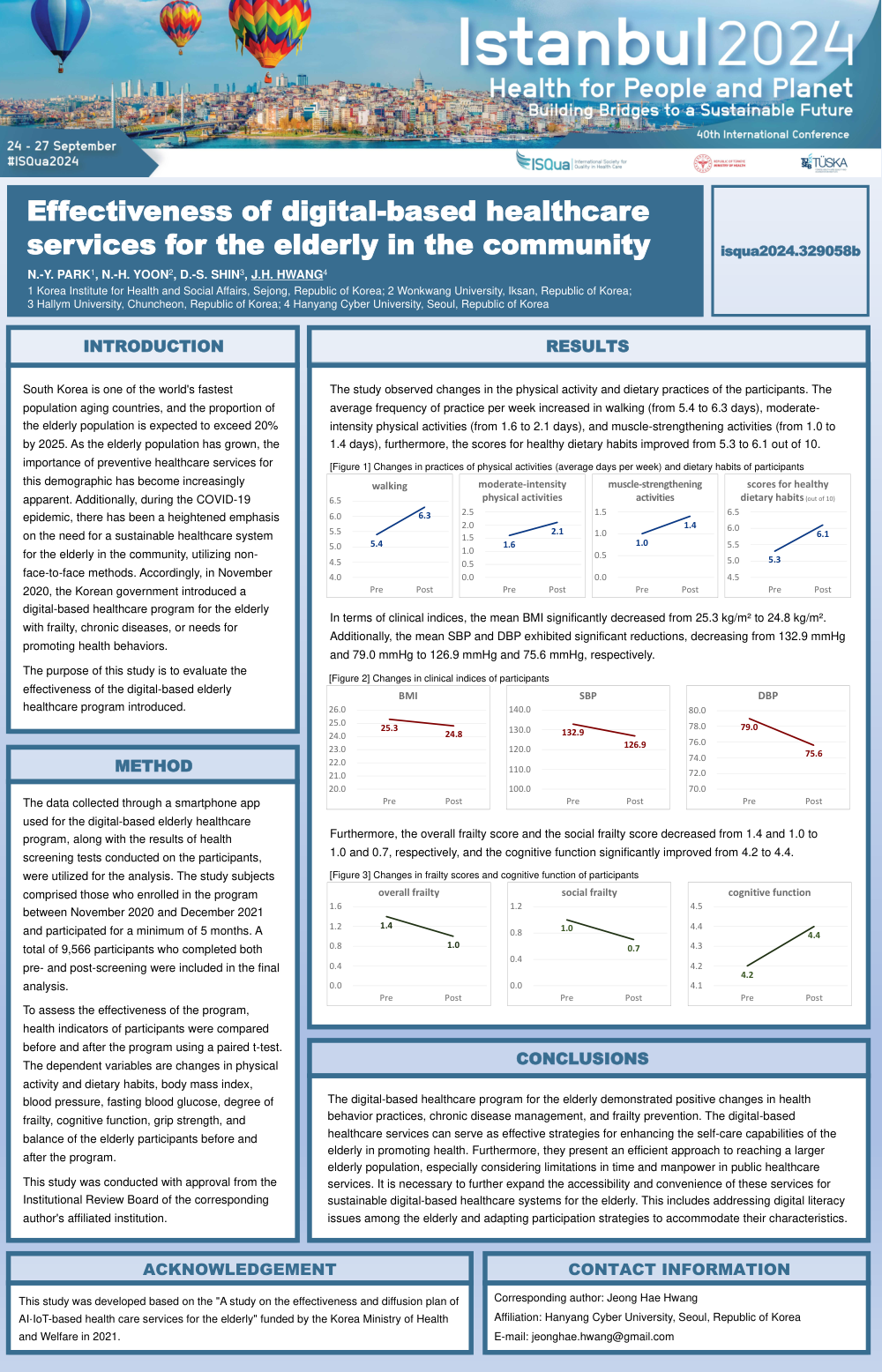
The study observed changes in the physical activity and dietary practices of the participants. The average frequency of practice per week increased in walking (from 5.4 to 6.3 days), moderate-intensity physical activities (from 1.6 to 2.1 days), and muscle-strengthening activities (from 1.0 to 1.4 days), furthermore, the scores for healthy dietary habits improved from 5.3 to 6.1 out of 10.
In terms of clinical indices, the mean BMI significantly decreased from 25.3 kg/m² to 24.8 kg/m². Additionally, the mean SBP and DBP exhibited significant reductions, decreasing from 132.9 mmHg and 79.0 mmHg to 126.9 mmHg and 75.6 mmHg, respectively.
Furthermore, the overall frailty score and the social frailty score decreased from 1.4 and 1.0 to 1.0 and 0.7, respectively, and the cognitive function significantly improved from 4.2 to 4.4.
CONCLUSIONS
The digital-based healthcare program for the elderly demonstrated positive changes in health behavior practices, chronic disease management, and frailty prevention. The digital-based healthcare services can serve as effective strategies for enhancing the self-care capabilities of the elderly in promoting health. Furthermore, they present an efficient approach to reaching a larger elderly population, especially considering limitations in time and manpower in public healthcare services. It is necessary to further expand the accessibility and convenience of these services for sustainable digital-based healthcare systems for the elderly. This includes addressing digital literacy issues among the elderly and adapting participation strategies to accommodate their characteristics.