586 posters, 8 topics, 23 sessions, 1,077 authors, 622 institutions
ePostersLive by SciGen Technologies S.A. All rights reserved.
ISQua's 40th International Conference 2024
24th - 27th September 2024 | Istanbul, Türkiye

P482
“I think there's huge value in just bringing people together”: A community of practice supporting health system improvement and advocacy in rare disease care
Poster Presenter
Authors
Affiliations
Part of Topic
Co-production - Creating a patient-centred healthcare service
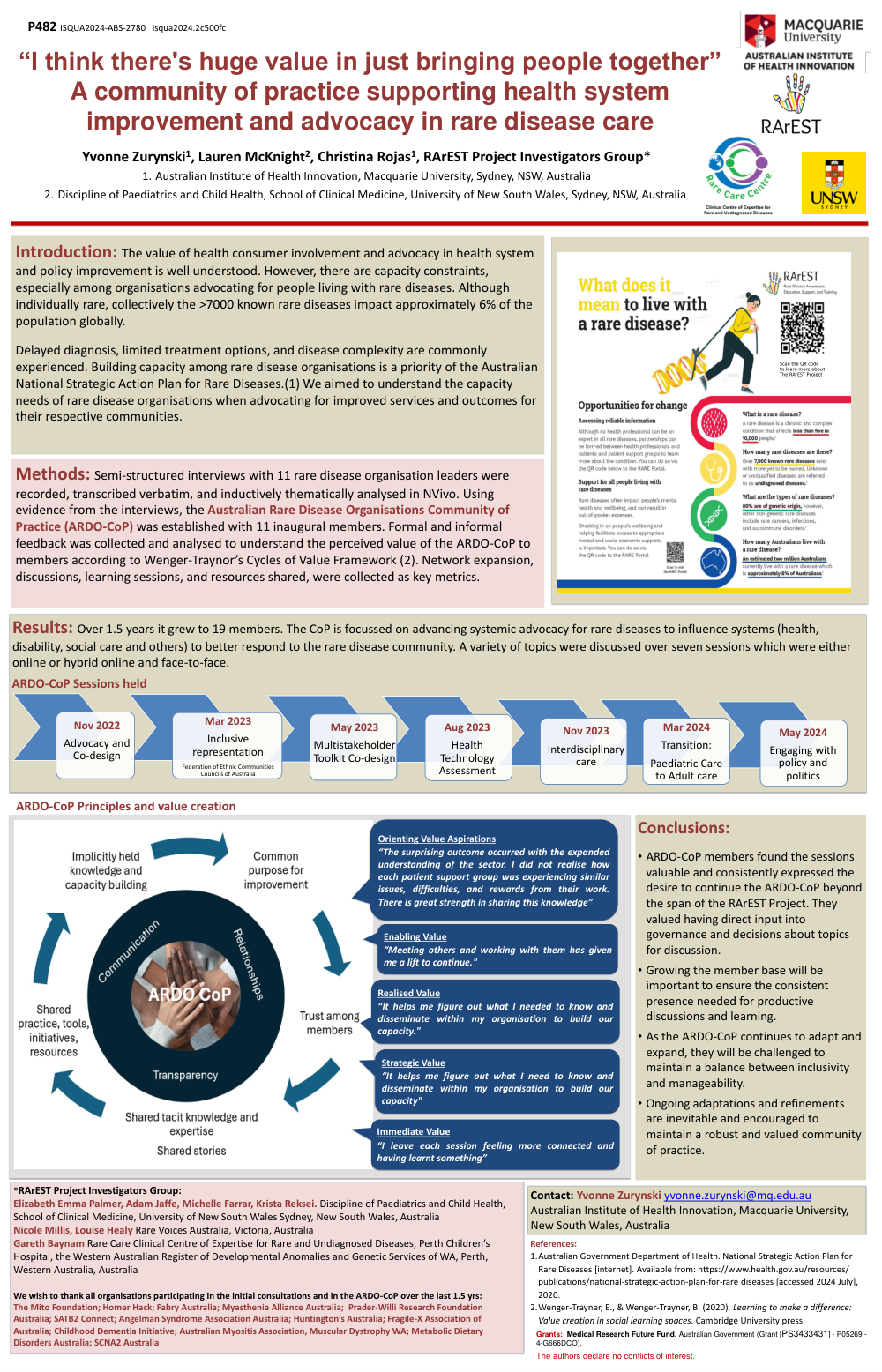
“I think there's huge value in just bringing people together” A community of practice supporting health system improvement and advocacy in rare disease care
Yvonne Zurynski1, Lauren McKnight2, Christina Rojas1, RArEST Project Investigators Group*
Introduction: The value of health consumer involvement and advocacy in health system and policy improvement is well understood. However, there are capacity constraints, especially among organisations advocating for people living with rare diseases. Although individually rare, collectively the >7000 known rare diseases impact approximately 6% of the population globally.
Delayed diagnosis, limited treatment options, and disease complexity are commonly experienced. Building capacity among rare disease organisations is a priority of the Australian National Strategic Action Plan for Rare Diseases.(1) We aimed to understand the capacity needs of rare disease organisations when advocating for improved services and outcomes for their respective communities.
Methods: Semi-structured interviews with 11 rare disease organisation leaders were recorded, transcribed verbatim, and inductively thematically analysed in NVivo. Using evidence from the interviews, the Australian Rare Disease Organisations Community of Practice (ARDO-CoP) was established with 11 inaugural members. Formal and informal feedback was collected and analysed to understand the perceived value of the ARDO-CoP to members according to Wenger-Traynor’s Cycles of Value Framework (2). Network expansion, discussions, learning sessions, and resources shared, were collected as key metrics.