586 posters, 8 topics, 23 sessions, 1,077 authors, 622 institutions
ePostersLive by SciGen Technologies S.A. All rights reserved.
ISQua's 40th International Conference 2024
24th - 27th September 2024 | Istanbul, Türkiye

P438
Improving the quality and safety of chemotherapy for gynecological cancer patients
Poster Presenter
Authors
Affiliations
Part of Topic
Co-production - Creating a patient-centred healthcare service
Improving the quality and safety of chemotherapy for gynecological cancer patients
Introduction
Gynecological cancer patients usually complete the process from diagnosis to surgical treatment to the first chemotherapy within two weeks. During these two weeks, patients and their families need to receive a cancer diagnosis and receive information about gynecological cancer treatment and care. Health education, and even understanding the complications of surgery and chemotherapy, is a great pressure and impact on patients and their families. At present, most of the nursing staff are responsible for providing surgical disease care, chemotherapy drugs, nutrition and other health education, which also puts a lot of pressure on the nursing staff. We need to make comprehensive improvements and integrate the cooperation of teams of all grades to improve the quality and safety of treatment for gynecological cancer patients.
Methods
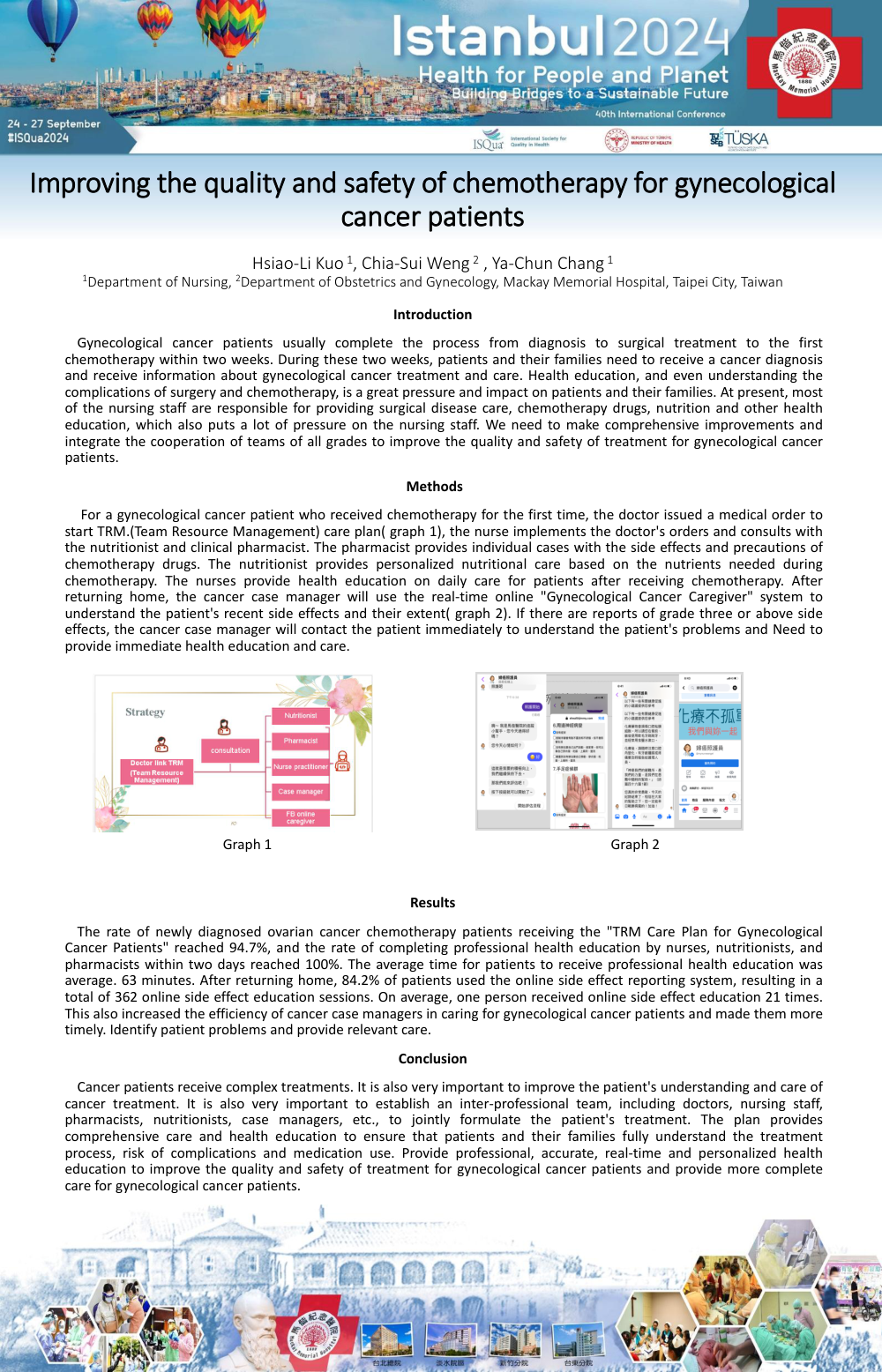
For a gynecological cancer patient who received chemotherapy for the first time, the doctor issued a medical order to start TRM.(Team Resource Management) care plan( graph 1), the nurse implements the doctor's orders and consults with the nutritionist and clinical pharmacist. The pharmacist provides individual cases with the side effects and precautions of chemotherapy drugs. The nutritionist provides personalized nutritional care based on the nutrients needed during chemotherapy. The nurses provide health education on daily care for patients after receiving chemotherapy. After returning home, the cancer case manager will use the real-time online "Gynecological Cancer Caregiver" system to understand the patient's recent side effects and their extent( graph 2). If there are reports of grade three or above side effects, the cancer case manager will contact the patient immediately to understand the patient's problems and Need to provide immediate health education and care.
Results
The rate of newly diagnosed ovarian cancer chemotherapy patients receiving the "TRM Care Plan for Gynecological Cancer Patients" reached 94.7%, and the rate of completing professional health education by nurses, nutritionists, and pharmacists within two days reached 100%. The average time for patients to receive professional health education was average. 63 minutes. After returning home, 84.2% of patients used the online side effect reporting system, resulting in a total of 362 online side effect education sessions. On average, one person received online side effect education 21 times. This also increased the efficiency of cancer case managers in caring for gynecological cancer patients and made them more timely. Identify patient problems and provide relevant care.
Conclusion
Cancer patients receive complex treatments. It is also very important to improve the patient's understanding and care of cancer treatment. It is also very important to establish an inter-professional team, including doctors, nursing staff, pharmacists, nutritionists, case managers, etc., to jointly formulate the patient's treatment. The plan provides comprehensive care and health education to ensure that patients and their families fully understand the treatment process, risk of complications and medication use. Provide professional, accurate, real-time and personalized health education to improve the quality and safety of treatment for gynecological cancer patients and provide more complete care for gynecological cancer patients.