586 posters, 8 topics, 23 sessions, 1,077 authors, 622 institutions
ePostersLive by SciGen Technologies S.A. All rights reserved.
ISQua's 40th International Conference 2024
24th - 27th September 2024 | Istanbul, Türkiye

P529
"Kidney Helper," an AI robot mobile application designed for kidney patients.
Poster Presenter
Authors
Affiliations
Part of Topic
Future of Healthcare: AI and Digital Transformation
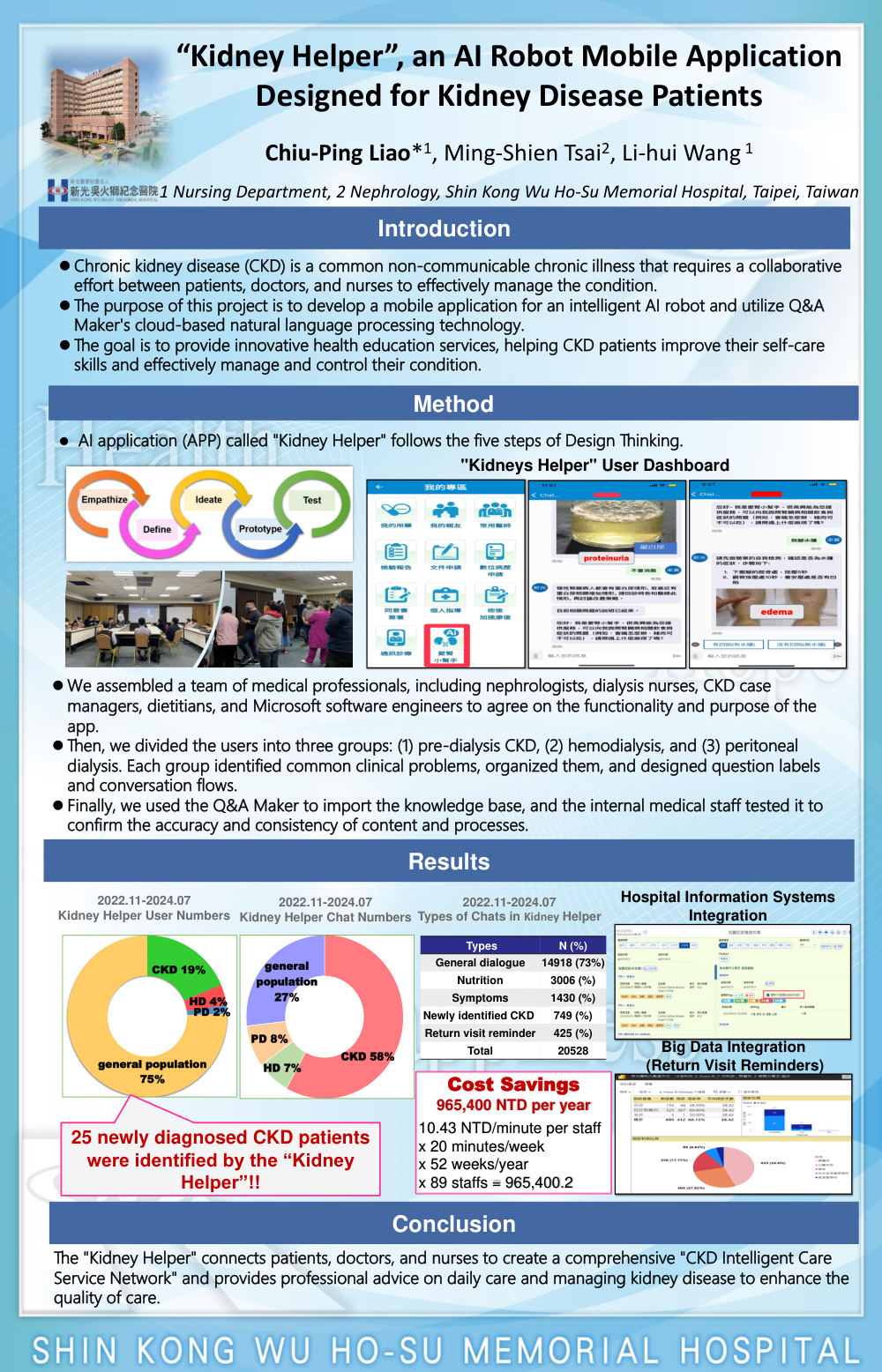
Kidney Helper an AI Robot Mobile Application Designed for Kidney Disease Patients
Introduction
Chronic kidney disease (CKD) is a common non-communicable chronic illness that requires a collaborative effort between patients, doctors, and nurses to effectively manage the condition. The purpose of this project is to develop a mobile application for an intelligent AI robot and utilize Q&A Maker's cloud-based natural language processing technology. The goal is to provide innovative health education services, helping CKD patients improve their self-care skills and effectively manage and control their condition.
Method
AI application (APP) called "Kidney Helper" follows the five steps of Design Thinking. We assembled a team of medical professionals, including nephrologists, dialysis nurses, CKD case managers, dietitians, and Microsoft software engineers to agree on the functionality and purpose of the app. Then, we divided the users into three groups: (1) pre-dialysis CKD, (2) hemodialysis, and (3) peritoneal dialysis. Each group identified common clinical problems, organized them, and designed question labels and conversation flows. Finally, we used the Q&A Maker to import the knowledge base, and the internal medical staff tested it to confirm the accuracy and consistency of content and processes.
Results
As of July 2024, there have been 1,789 users who have engaged in 20,528 chats. The majority of users are from the general population, accounting for 75%. Among the general population, 25 CKD patients were identified. The majority of chat interactions are from CKD patients, accounting for 58%. General dialogues are the most common, followed by discussions on nutrition and symptoms. This has resulted in cost savings of approximately NT$965,400. Additionally, we have integrated "Kidneys Helper" with hospital information systems and a big data platform to improve communication between the medical team and patients. We also used Power BI to create interactive visual dashboards, making data management and analysis more efficient.
Conclusion
The "Kidney Helper" connects patients, doctors, and nurses to create a comprehensive "CKD Intelligent Care Service Network" and provides professional advice on daily care and managing kidney disease to enhance the quality of care.