586 posters, 8 topics, 23 sessions, 1,077 authors, 622 institutions
ePostersLive by SciGen Technologies S.A. All rights reserved.
ISQua's 40th International Conference 2024
24th - 27th September 2024 | Istanbul, Türkiye

P483
Utilizing Shared Decision-Making to Enhance Illiac Vein Compression Syndrome Patients' Understanding of Their Disease
Poster Presenter
Part of Topic
Co-production - Creating a patient-centred healthcare service
Utilizing Shared Decision-Making to Enhance Illiac Vein Compression Syndrome Patients' Understanding of Their Disease
Introduction: Patients suffering from iliac vein compression syndrome frequently experience progressive symptoms such as leg pain, swelling, skin pigmentation, and even venous ulcers. These distressing symptoms considerably affect their health and quality of life, particularly when the cause remains unidentified. Without timely and appropriate treatment, the symptoms may exacerbate, heightening the patient's anxiety about uncontrollable changes in their body. In Taiwan, awareness of this condition is not widespread. A lack of understanding among patients can lead to delayed treatment or indecision regarding therapeutic options. Consequently, enhancing patient awareness of iliac vein compression syndrome is essential. This study aims to improve patient comprehension of the condition through shared decision-making interventions between physicians and patients.
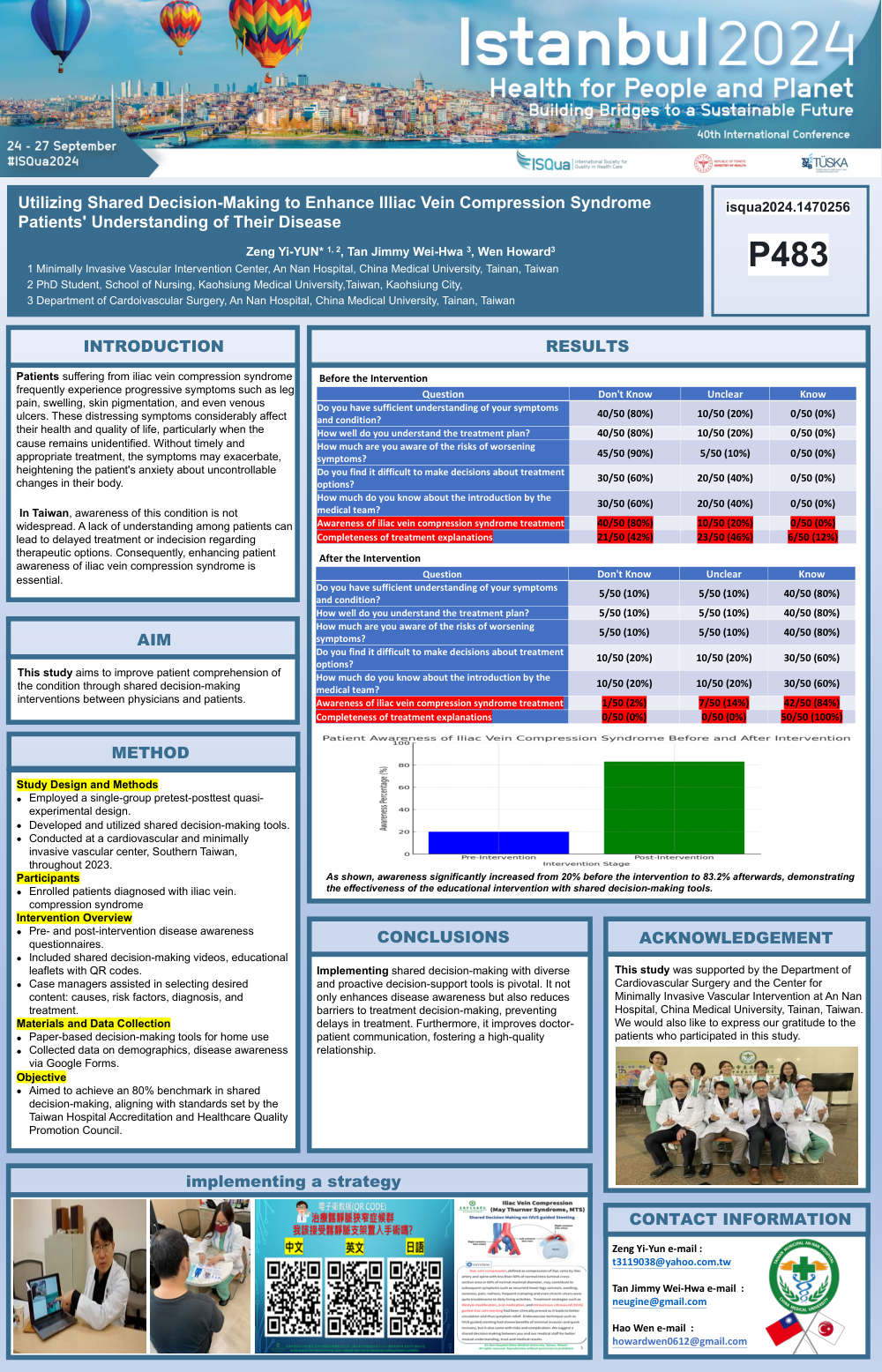
Methods: This study employed a single-group pretest-posttest quasi-experimental design. It involved the development of shared decision-making tools and standardised procedures based on the best evidence-based treatment guidelines for iliac vein compression syndrome. The study was conducted from 1 January 2023 to 31 December 2023 at a cardiovascular surgery and minimally invasive vascular centre in a regional teaching hospital in Southern Taiwan. Patients diagnosed with iliac vein compression syndrome were enrolled. A disease awareness questionnaire was administered before and after the intervention. The intervention comprised shared decision-making videos about iliac vein compression syndrome, educational leaflets stored on tablets with QR codes, and case managers facilitating shared decision-making for patients to select the content they wished to know (e.g., causes, risk factors, diagnosis, and treatment of iliac vein compression syndrome). Paper-based shared decision-making tools were actively provided to patients for use at home or to discuss with family members. Data on patient demographics, disease awareness, and considerations were collected using Google Forms. The goal was to achieve a benchmark of 80% in shared decision-making, as recommended by the Taiwan Hospital Accreditation and Healthcare Quality Promotion Council.
Results: This study included 50 patients with iliac vein compression syndrome, and 50 questionnaires were distributed, achieving a 100% response rate. Prior to the intervention using shared decision-making support tools, the patients' average awareness of iliac vein compression syndrome was 20% (10 out of 50), as indicated by their responses of 'knowing' in the awareness questionnaire. In contrast, 80% (40 out of 50) responded with 'unclear' or 'don't know'. Following the educational intervention that utilized shared decision-making support tools, a subsequent survey on disease and treatment awareness of iliac vein compression syndrome was conducted. The results showed that after the shared decision-making intervention, the correct awareness rate of treatment among patients with iliac vein compression syndrome increased from 20% to 83.2%, achieving 104% of the target rate. Moreover, the analysis indicated that the completeness of the treatment explanations provided by medical team members improved from 71% to 100%, reaching a target achievement rate of 125%, thus meeting the study's set goal of 80%.
Conclusion: Implementing shared decision-making with diverse and proactive decision-support tools is pivotal. It not only enhances disease awareness but also reduces barriers to treatment decision-making, preventing delays in treatment. Furthermore, it improves doctor-patient communication, fostering a high-quality relationship.
Disclosure of Interest: Z. Yi-YUN Other: No Conflict of Interest, T. Jimmy Wei-Hwa Other: No Conflict of Interest, W. Howard Other: No Conflict of Interest
Keywords: Disease Awareness, Iliac Vein Compression Syndrome, Shared Decision Making