586 posters, 8 topics, 23 sessions, 1,077 authors, 622 institutions
ePostersLive by SciGen Technologies S.A. All rights reserved.
ISQua's 40th International Conference 2024
24th - 27th September 2024 | Istanbul, Türkiye

P477
Co-designing Healthcare Solutions through Patient Partnerships at Singapore Diabetes and Metabolism Centre
Poster Presenter
Part of Topic
Co-production - Creating a patient-centred healthcare service
Co-designing Healthcare Solutions through Patient Partnerships at a Singapore Diabetes and Metabolism Centre
Introduction
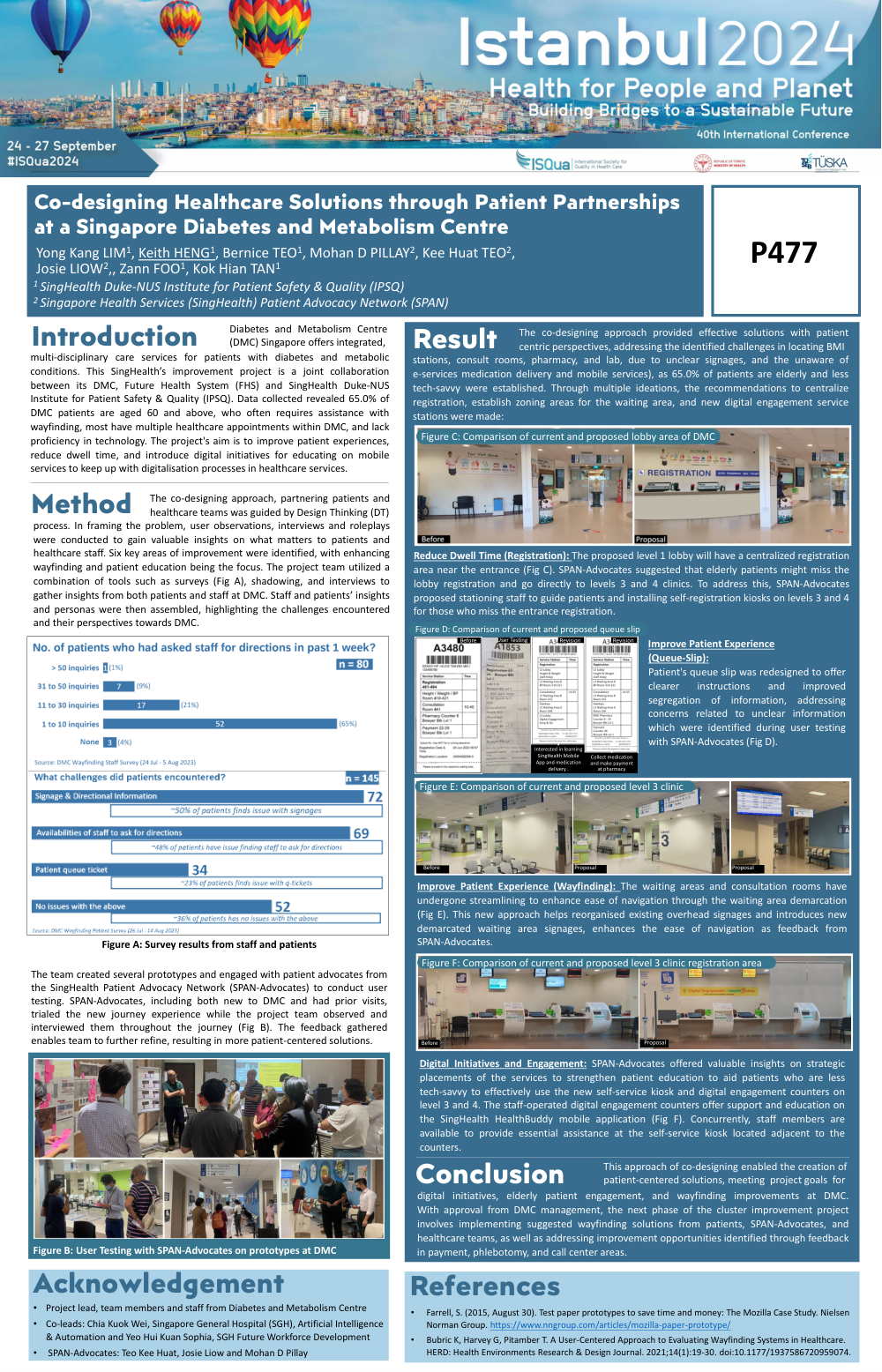
Diabetes and Metabolism Centre (DMC) Singapore offers integrated,multi-disciplinary care services for patients with diabetes and metabolic conditions. This SingHealth’s improvement project is a joint collaboration between its DMC, Future Health System (FHS) and SingHealth Duke-NUS Institute for Patient Safety & Quality (IPSQ). Data collected revealed 65.0% of DMC patients are aged 60 and above, who often requires assistance with wayfinding, most have multiple healthcare appointments within DMC, and lack proficiency in technology. The project's aim is to improve patient experiences, reduce dwell time, and introduce digital initiatives for educating on mobile services to keep up with digitalisation processes in healthcare services.
Method
The co-designing approach, partnering patients and healthcare teams was guided by Design Thinking (DT) process. In framing the problem, user observations, interviews and roleplays were conducted to gain valuable insights on what matters to patients and healthcare staff. Six key areas of improvement were identified, with enhancing wayfinding and patient education being the focus. The project team utilized a combination of tools such as surveys (Fig A), shadowing, and interviews to gather insights from both patients and staff at DMC. Staff and patients’ insights and personas were then assembled, highlighting the challenges encountered and their perspectives towards DMC. The team created several prototypes and engaged with patient advocates from the SingHealth Patient Advocacy Network (SPAN-Advocates) to conduct user testing. SPAN-Advocates, including both new to DMC and had prior visits, trialed the new journey experience while the project team observed and interviewed them throughout the journey (Fig B). The feedback gathered enables team to further refine, resulting in more patient-centered solutions.
Result
The co-designing approach provided effective solutions with patient centric perspectives, addressing the identified challenges in locating BMI ations, consult rooms, pharmacy, and lab, due to unclear signages, and the unaware of e-services medication delivery and mobile services), as 65.0% of patients are elderly and less tech-savvy were established. Through multiple ideations, the recommendations to centralize registration, establish zoning areas for the waiting area, and new digital engagement service stations were made:
Reduce Dwell Time (Registration): The proposed level 1 lobby will have a centralized registration area near the entrance (Fig C). SPAN-Advocates suggested that elderly patients might miss the lobby registration and go directly to levels 3 and 4 clinics. To address this, SPAN-Advocates proposed stationing staff to guide patients and installing self-registration kiosks on levels 3 and 4 for those who miss the entrance registration.
Improve Patient Experience (Queue-Slip): Patient's queue slip was redesigned to offer clearer instructions and improved segregation of information, addressing concerns related to unclear information which were identified during user testing with SPAN-Advocates (Fig D).
Improve Patient Experience (Wayfinding): The waiting areas and consultation rooms have undergone streamlining to enhance ease of navigation through the waiting area demarcation (Fig E). This new approach helps reorganised existing overhead signages and introduces new demarcated waiting area signages, enhances the ease of navigation as feedback from SPAN-Advocates.
Digital Initiatives and Engagement: SPAN-Advocates offered valuable insights on strategic placements of the services to strengthen patient education to aid patients who are less tech-savvy to effectively use the new self-service kiosk and digital engagement counters on level 3 and 4. The staff-operated digital engagement counters offer support and education on the SingHealth HealthBuddy mobile application (Fig F). Concurrently, staff members are available to provide essential assistance at the self-service kiosk located adjacent to the counters.
Conclusions:This approach of co-designing enabled the creation of patient-centered solutions, meeting project goals for digital initiatives, elderly patient engagement, and wayfinding improvements at DMC. With approval from DMC management, the next phase of the cluster improvement project involves implementing suggested wayfinding solutions from patients, SPAN-Advocates, and healthcare teams, as well as addressing improvement opportunities identified through feedback in payment, phlebotomy, and call center areas.