708 posters, 8 topics, 16 sessions, 1,190 authors, 600 institutions
ePostersLive by SciGen Technologies S.A. All rights reserved.
ISQua's 39th International Conference 2023
August 27 - 30, 2023 | Seoul, Republic of Korea

P852
DEVELOPING A CLINICAL PRACTICE GUIDELINES FOR ALCOHOL DEPENDENCE PATIENTS IN HOSPITAL.
Poster Presenter
Authors
Affiliations
Part of Topic
Patient Safety & Quality Improvement
INTRODUCTION:
Alcohol abuse not only caused diseases and increased the mortality rate, but also increased domestic issues, medical costs and social problems. To enhance the quality of care among alcoholic patients, we cooperated with psychiatrist and social workers to develop a clinical practice guideline which help alcohol dependent patient to quit drinking.
METHOD:
There were two stages in our study. First, we conducted a need assessment by data analysis, questionnaire and interview to know our crews’ intention of caring alcoholic patients and patients’ needs for quitting drinking. Second, we used
cause and effect diagram and decision matrix to summarize the causes, and developed the clinical practice guideline which was evaluated by consultant rate and return rate.
RESULTS:
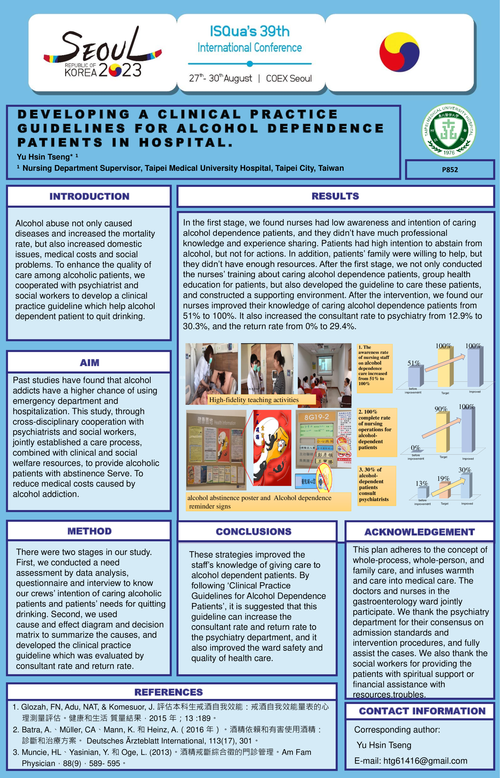
In the first stage, we found nurses had low awareness and intention of caring alcohol dependence patients, and they didn’t have much professional knowledge and experience sharing. Patients had high intention to abstain from alcohol, but not for actions. In addition, patients’ family were willing to help, but they didn’t have enough resources. After the first stage, we not only conducted the nurses’ training about caring alcohol dependence patients, group health education for patients, but also developed the guideline to care these patients, and constructed a supporting environment. After the intervention, we found our nurses improved their knowledge of caring alcohol dependence patients from 51% to 100%. It also increased the consultant rate to psychiatry from 12.9% to 30.3%, and the return rate from 0% to 29.4%.
CONCLUSIONS:
These strategies improved the staff’s knowledge of giving care to alcohol dependent patients. By following ‘Clinical Practice Guidelines for Alcohol Dependence Patients’, it is suggested that this guideline can increase the consultant rate and return rate to the psychiatry department, and it also improved the ward safety and quality of health care.