708 posters, 8 topics, 16 sessions, 1,190 authors, 600 institutions
ePostersLive by SciGen Technologies S.A. All rights reserved.
ISQua's 39th International Conference 2023
August 27 - 30, 2023 | Seoul, Republic of Korea

P727
CURRENT STATUS AND FUTURE OF CANCER PREVENTION HEALTHCARE UNDER THE IMPACT OF COVID-19
Poster Presenter
Authors
Affiliations
Part of Topic
Patient Safety & Quality Improvement
INTRODUCTION
According to the Ministry of Health and Welfare's report on the 2020 Cause of Death Statistics, cancer has consistently ranked as the leading cause of death among Taiwanese since 1982. This alarming statistic highlights the enduring impact of cancer on the population, with both the incidence and mortality rates showing a continuous upward trend. However, the emergence of the Covid-19 pandemic in 2020 has posed additional challenges to healthcare systems worldwide. The fears of infection and reduced willingness to visit hospitals have resulted in limited access to medical care. To manage the pandemic, medical institutions have implemented strict access control measures, diverting resources towards the treatment of Covid-19 patients. Consequently, promoting cancer screening has become more difficult, potentially leading to hidden and undiagnosed cases of early-stage cancer. Additionally, individuals with concerning symptoms or abnormalities may be unwilling to seek medical diagnosis and treatment, exacerbating the occurrence of subsequent symptoms. In light of these circumstances, it is essential to examine the impact of the Covid-19 pandemic on cancer care and outcomes in Taiwan and explore strategies to address the challenges posed by this dual public health crisis.
AIM
The purpose of this study is to explore the vital role of cancer screening as a cornerstone of comprehensive cancer prevention and control strategies. Guided by the principle of "prevention is better than cure", this research aims to highlight the paramount importance of early detection through cancer screening in mitigating the impact of cancer on both individuals and society. By investigating the effectiveness of cancer screening in identifying early-stage cancers, the study seeks to underscore its potential in facilitating timely curative treatments, ultimately leading to improved survival rates and enhanced quality of life for individuals affected by cancer.
METHOD
During the epidemic, in order to maintain sustainable cancer prevention and control measures, we have implemented the following initiatives:
Community Outreach for Healthy Individuals: Screening vehicles and staff have been deployed to enter communities and rural areas to provide cancer screening services to healthy individuals who do not require immediate medical treatment.
Enhanced Health Awareness for Regular Hospital Visitors: We have focused on strengthening the health awareness of individuals who visit the hospital for regular check-ups. Emphasis is placed on the importance of early screening for early detection and prevention of cancer.
Promoting Cancer Prevention and Treatment in Hospitals: To increase awareness among hospital visitors, we have implemented the display of looping videos within the hospital premises. These videos emphasize the significance of cancer prevention and treatment, educating individuals about preventive measures and available treatments.
By implementing these measures, we aim to ensure continuous cancer prevention efforts, even during the epidemic. Our goal is to promote early detection, timely treatment, and raise awareness about the importance of cancer prevention for individuals in the community and those receiving medical care.
RESULTS
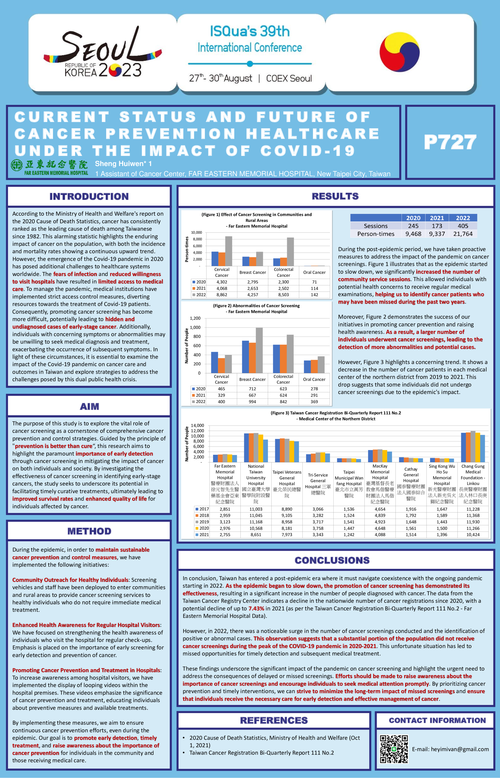
During the post-epidemic period, we have taken proactive measures to address the impact of the pandemic on cancer screenings. Figure 1 illustrates that as the epidemic started to slow down, we significantly increased the number of community service sessions. This allowed individuals with potential health concerns to receive regular medical examinations, helping us to identify cancer patients who may have been missed during the past two years.
Moreover, Figure 2 demonstrates the success of our initiatives in promoting cancer prevention and raising health awareness. As a result, a larger number of individuals underwent cancer screenings, leading to the detection of more abnormalities and potential cases.
However, Figure 3 highlights a concerning trend. It shows a decrease in the number of cancer patients in each medical center of the northern district from 2019 to 2021. This drop suggests that some individuals did not undergo cancer screenings due to the epidemic's impact.
CONCLUSIONS
In conclusion, Taiwan has entered a post-epidemic era where it must navigate coexistence with the ongoing pandemic starting in 2022. As the epidemic began to slow down, the promotion of cancer screening has demonstrated its effectiveness, resulting in a significant increase in the number of people diagnosed with cancer. The data from the Taiwan Cancer Registry Center indicates a decline in the nationwide number of cancer registrations since 2020, with a potential decline of up to 67% in 2021 (as per the Taiwan Cancer Registration Bi-Quarterly Report 111 No.2 - Far Eastern Memorial Hospital Data).
However, in 2022, there was a noticeable surge in the number of cancer screenings conducted and the identification of positive or abnormal cases. This observation suggests that a substantial portion of the population did not receive cancer screenings during the peak of the COVID-19 pandemic in 2020-2021. This unfortunate situation has led to missed opportunities for timely detection and subsequent medical treatment.
These findings underscore the significant impact of the pandemic on cancer screening and highlight the urgent need to address the consequences of delayed or missed screenings. Efforts should be made to raise awareness about the importance of cancer screenings and encourage individuals to seek medical attention promptly. By prioritizing cancer prevention and timely interventions, we can strive to minimize the long-term impact of missed screenings and ensure that individuals receive the necessary care for early detection and effective management of cancer.