708 posters, 8 topics, 16 sessions, 1,190 authors, 600 institutions
ePostersLive by SciGen Technologies S.A. All rights reserved.
ISQua's 39th International Conference 2023
August 27 - 30, 2023 | Seoul, Republic of Korea

P719
QUALITY INDICATORS : CARE PATHWAY DISPARITIES FOR COPD PATIENTS MEASURED IN DATABASES
Poster Presenter
Authors
Affiliations
HAUTE AUTORITÉ DE SANTÉ, The French National Authority for Health
Part of Topic
Patient Safety & Quality Improvement
Introduction
▪ In France, 15 million people suffer from chronic diseases representing a major challenge to our health system, both financially and organizational wise. Rising inequalities in access and utilization of health care for the chronically ill has become a growing concern. Effective implementation of care pathways is believed should encourage and facilitate access to health professionals in all care settings (hospital and primary care). With 3 million people suffering from chronic obstructive pulmonary disease (COPD) in France, quality measurements for this care pathway were therefore the first to be developed for the top chronic diseases affecting the French population.
Methods
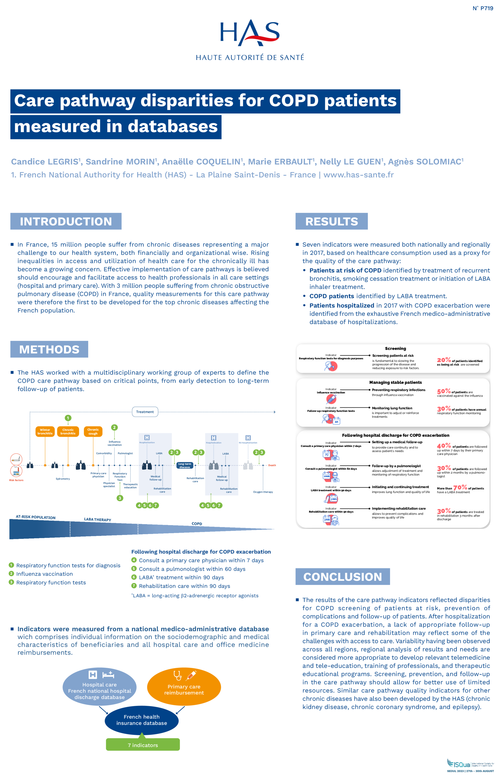
The HAS worked with a multidisciplinary working group of experts to define the COPD care pathway based on critical points, from early detection to long-term follow-up of patients.
Indicators were measured from a national medico-administrative database wich comprises individual information on the sociodemographic and medical characteristics of beneficiaries and all hospital care and office medicine reimbursements.
Results
Seven indicators were measured both nationally and regionally in 2017, based on healthcare consumption used as a proxy for the quality of the care pathway:
• Patients at risk of COPD identified by treatment of recurrent bronchitis, smoking cessation treatment or initiation of LABA inhaler treatment.
• COPD patients identified by LABA treatment.
• Patients hospitalized in 2017 with COPD exacerbation were identified from the exhaustive French medico-administrative database of hospitalizations.
Conclusion
▪ The results of the care pathway indicators reflected disparities for COPD screening of patients at risk, prevention of complications and follow-up of patients. After hospitalization for a COPD exacerbation, a lack of appropriate follow-up in primary care and rehabilitation may reflect some of the challenges with access to care. Variability having been observed across all regions, regional analysis of results and needs are considered more appropriate to develop relevant telemedicine and tele-education, training of professionals, and therapeutic educational programs. Screening, prevention, and follow-up in the care pathway should allow for better use of limited resources. Similar care pathway quality indicators for other chronic diseases have also been developed by the HAS (chronic kidney disease, chronic coronary syndrome, and epilepsy).