708 posters, 8 topics, 16 sessions, 1,190 authors, 600 institutions
ePostersLive by SciGen Technologies S.A. All rights reserved.
ISQua's 39th International Conference 2023
August 27 - 30, 2023 | Seoul, Republic of Korea

P679
REDUCTION OF WAITING DAYS FOR HOSPITALIZATION THROUGH IMPROVEMENT OF CARDIOLOGY PROCEDURE PROCESS
Poster Presenter
Authors
Affiliations
Part of Topic
Patient Safety & Quality Improvement
Reducing waiting days for hospitalization through improvement of cardiology procedure process
INTRODUCTION
97.6% of patients admitted to the Department of Cardiology at our hospital need to be hospitalized for treatment due to coronary artery disease or arrhythmia, but there is a waiting list for admission due to lack of beds. In addition, due to the role of the national designated hospital for COVID-19, the number of hospital beds that can be admitted has decreased, and the waiting days for hospitalization has become longer. Delays in cardiovascular center may cause patients who need instant procedure to miss the appropriate treatment time and cause emergency situations such as cardiac arrest. Therefore, the cardiovascular center plans to improve hospitalization procedures to reduce waiting days for hospitalization.
AIM
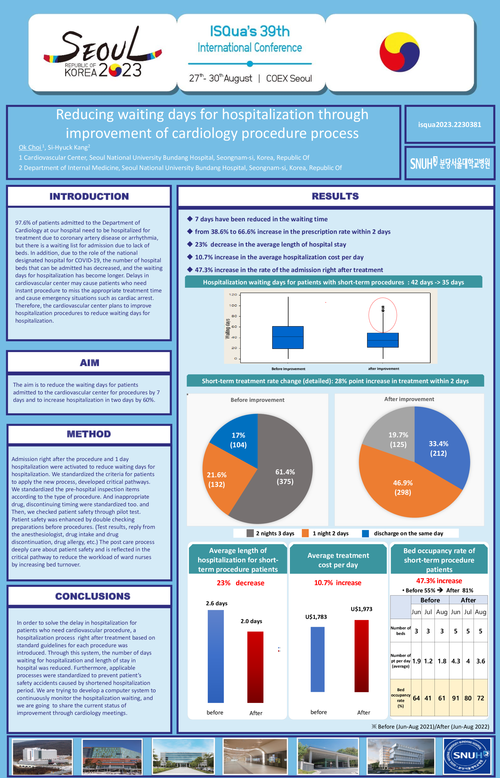
The aim is to reduce the waiting days for patients admitted to the cardiovascular center for procedures by 7 days and to increase hospitalization in two days by 60%.
METHOD
Admission right after the procedure and 1 day hospitalization were activated to reduce waiting days for hospitalization. We standardized the criteria for patients to apply the new process, developed critical pathways. We standardized the pre-hospital inspection items according to the type of procedure. And inappropriate drug, discontinuing timing were standardized too. and Then, we checked patient safety through pilot test. Patient safety was enhanced by double checking preparations before procedures. (Test results, reply from the anesthesiologist, drug intake and drug discontinuation, drug allergy, etc.) The post care process deeply care about patient safety and is reflected in the critical pathway to reduce the workload of ward nurses by increasing bed turnover.
CONCLUSIONS
In order to solve the delay in hospitalization for patients who need cardiovascular procedure, a hospitalization process right after treatment based on standard guidelines for each procedure was introduced. Through this system, the number of days waiting for hospitalization and length of stay in hospital was reduced. Furthermore, applicable processes were standardized to prevent patient’s safety accidents caused by shortened hospitalization period. We are trying to develop a computer system to continuously monitor the hospitalization waiting, and we are going to share the current status of improvement through cardiology meetings