708 posters, 8 topics, 16 sessions, 1,190 authors, 600 institutions
ePostersLive by SciGen Technologies S.A. All rights reserved.
ISQua's 39th International Conference 2023
August 27 - 30, 2023 | Seoul, Republic of Korea

P663
PHARMACIST-LED DISCHARGE COUNSELING OF MEDICATIONS FROM EMERGENCY DEPARTMENT OF TERTIARY CARE HOSPITAL
Poster Presenter
Authors
Affiliations
Part of Topic
Patient Safety & Quality Improvement
PHARMACIST-LED DISCHARGE COUNSELING OF MEDICATIONS FROM EMERGENCY DEPARTMENT
OF A TERTIARY CARE HOSPITAL
N. Manzoor1, S. Ahsan1, A. Zafar1
1Department of Pharmacy, Shifa International Hospital, Islamabad, Pakistan
INTRODUCTION
In an emergency department (ED) of a hospital, the patients are prescribed home medications upon discharge. Also, the patients’ current home medications need to be reviewed so as to rationalize the medication therapy with patients’ current state. Also, the patients’ education regarding their state and therapy becomes necessary. Owing to the chaotic state and time pressure in ED, the risk of medication discrepancies increase during this prescribing phase accompanied by transition of care.
The American Society of Health-System Pharmacist (ASHP) also recommends the development of counselling triage for patients being discharged from ED, so as to:
Pharmacist can play an effective role in this regards due to their drug knowledge and counselling skills leading to lesser medication discrepancies during ED discharge
AIM
To initiate and implement a medicine counselling & reconciliation service provided by the pharmacist to the patients discharged from Emergency Department of tertiary care hospital as well as to assess the impact of this service on accomplishment of the patient safety goal
OBJECTIVES
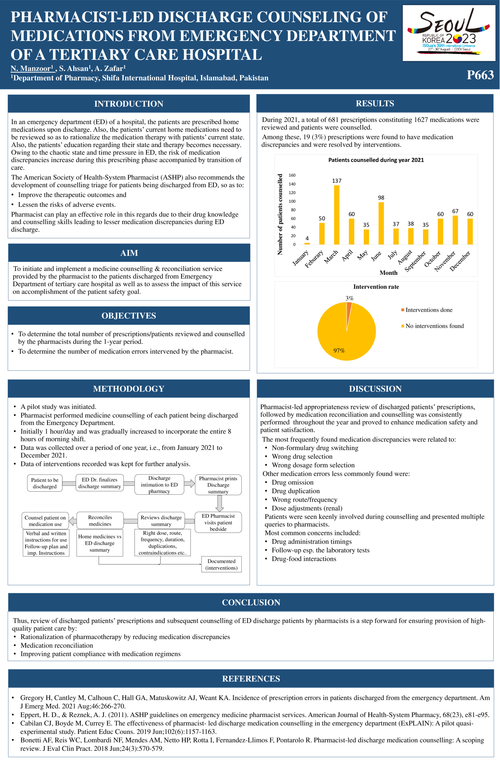
Pharmacist-led appropriateness review of discharged patients’ prescriptions, followed by medication reconciliation and counselling was consistently performed throughout the year and proved to enhance medication safety and patient satisfaction.
Other medication errors less commonly found were:
Patients were seen keenly involved during counselling and presented multiple queries to pharmacists.
Most common concerns included: