708 posters, 8 topics, 16 sessions, 1,190 authors, 600 institutions
ePostersLive by SciGen Technologies S.A. All rights reserved.
ISQua's 39th International Conference 2023
August 27 - 30, 2023 | Seoul, Republic of Korea

ISQUA2023-ABS-1141
A STUDY ON THE EFFECT OF THE DISTRICT TEACHING HOSPITAL LAUNCHED PRE-ESRD PHARMACIST OUTPATIENT
Poster Presenter
Authors
Affiliations
Part of Topic
Patient Safety & Quality Improvement
Analysis of the effectiveness of establishing Pre-ESRD pharmacist clinics in regional teaching hospitals in Taiwan
Purpose
In the past, the care of Pre-ESRD (pre-end-stage renal disease) patients in hospitals was primarily provided by physicians and nurses working together. However, in 2021, the Taiwanese government made efforts to incorporate pharmacists into the care of Pre-ESRD patients as an additional role. As a result of this policy promotion, our hospital‘s Pre-ESRD team has now included pharmacists.
Approaches / Methods
In our hospital, there are two nephrology specialists who, in accordance with their clinic schedules, collaborate with pharmacists to conduct pharmacist clinics on Monday, Tuesday, and Friday afternoons. One week prior to each pharmacist clinic, a list of Pre-ESRD patients is received, and during the course of their duties, patients are required to visit the pharmacist clinic before other consultations. The pharmacist reviews the patient’s recent medication, both those prescribed within our hospital and those from other hospitals, including Chinese herbal medicine and dietary supplements.
Particular attention is given to explaining the impact of non-steroidal anti-inflammatory drugs on kidney damage. The pharmacist also assesses the patient‘s medication compliance and understanding of their medication regimen. If there are any nutritional needs, our hospital’s nutritionist collaborates in developing nutritional education materials for the patients. In the case of any concerns or doubts about a prescription, the pharmacist fills out a recommendation form, which is given to the patient to be presented to the physician during their visit, allowing for immediate adjustments to the prescription if necessary.
Results
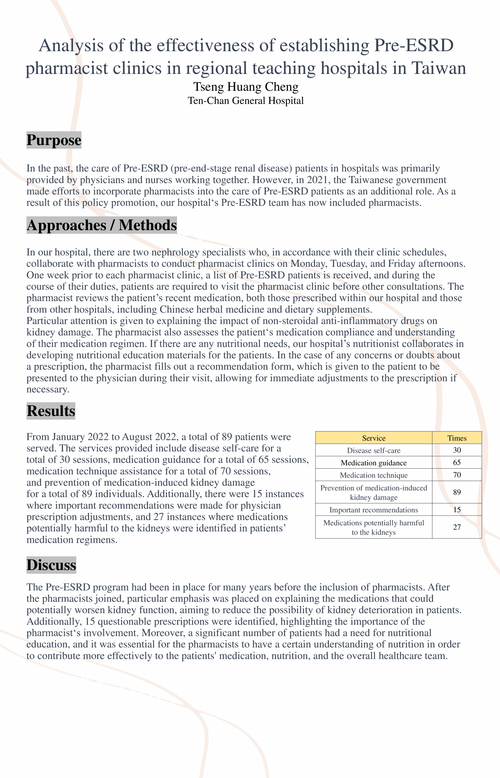
From January 2022 to August 2022, a total of 89 patients were served. The services provided include disease self-care for a
total of 30 sessions, medication guidance for a total of 65 sessions,medication technique assistance for a total of 70 sessions,
and prevention of medication-induced kidney damage for a total of 89 individuals. Additionally, there were 15 instances
where important recommendations were made for physician prescription adjustments, and 27 instances where medications
potentially harmful to the kidneys were identified in patients’ medication regimens.
Discuss
The Pre-ESRD program had been in place for many years before the inclusion of pharmacists. After the pharmacists joined, particular emphasis was placed on explaining the medications that could potentially worsen kidney function, aiming to reduce the possibility of kidney deterioration in patients. Additionally, 15 questionable prescriptions were identified, highlighting the importance of the pharmacist‘s involvement. Moreover, a significant number of patients had a need for nutritional education, and it was essential for the pharmacists to have a certain understanding of nutrition in order to contribute more effectively to the patients' medication, nutrition, and the overall healthcare team.