301 posters, 50 videos, 13 topics, 13 sessions, 734 authors, 193 institutions
ePostersLive by SciGen Technologies S.A. All rights reserved.
ISMICS 2026 Annual Meeting
10 - 13 June, 2026 | Miami, Florida

D118
Detailed Interdisciplinary Assessment Of Risk Factors Can Lead To A Low Incidence Of Systolic Anterior Motion In Robotic Mitral Valve Repair
Poster Presenter
Part of Topic
Valve � Surgical Valves
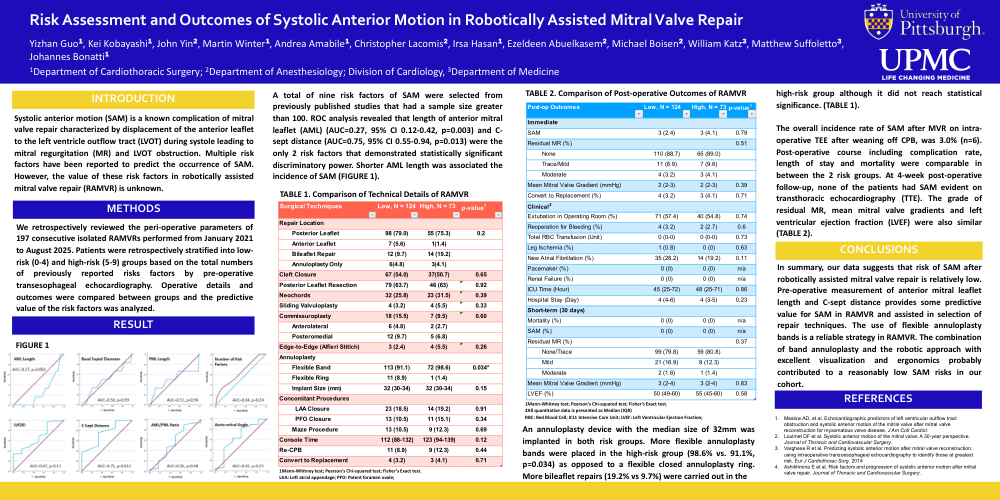
Title: Risk Assessment and Outcomes of Systolic Anterior Motion in Robotically Assisted Mitral Valve Repair
Abstract: Systolic anterior motion (SAM) is a known complication of mitral valve repair characterized by displacement of the anterior leaflet to the left ventricle outflow tract (LVOT) during systole leading to mitral regurgitation (MR) and LVOT obstruction. Multiple risk factors have been reported to predict the occurrence of SAM. However, the value of these risk factors in robotically assisted mitral valve repair (RAMVR) is unknown. We retrospectively reviewed the peri-operative parameters of 197 consecutive isolated RAMVRs performed from January 2021 to August 2025. Patients were retrospectively stratified into low-risk (0-4) and high-risk (5-9) groups based on the total numbers of previously reported risks factors by pre-operative transesophageal echocardiography. Operative details and outcomes were compared between groups and the predictive value of the risk factors was analyzed. Our data suggests that risk of SAM after robotically assisted mitral valve repair is relatively low. Pre-operative measurement of anterior mitral leaflet length and C-sept distance provides some predictive value for SAM in RAMVR and assisted in selection of repair techniques. The use of flexible annuloplasty bands is a reliable strategy in RAMVR. The combination of band annuloplasty and the robotic approach with excellent visualization and ergonomics probably contributed to a reasonably low SAM risks in our cohort.