301 posters, 50 videos, 13 topics, 13 sessions, 734 authors, 193 institutions
ePostersLive by SciGen Technologies S.A. All rights reserved.
ISMICS 2026 Annual Meeting
10 - 13 June, 2026 | Miami, Florida

D16
Totally Endoscopic Robotic Treatment Of Cor Triatriatum Sinistrum Under Ventricular Fibrillation
Part of Topic
Valve � Surgical Valves
Video
Objectives
Surgical correction of cor triatriatum sinistrum (CTS) has traditionally relied on conventional sternotomy with cardioplegic myocardial arrest. To date, there has been limited experience with totally endoscopic and robotic approaches, especially with ventricular fibrillation as an alternative to aortic cross-clamping and cardioplegic arrest.
Case presentation
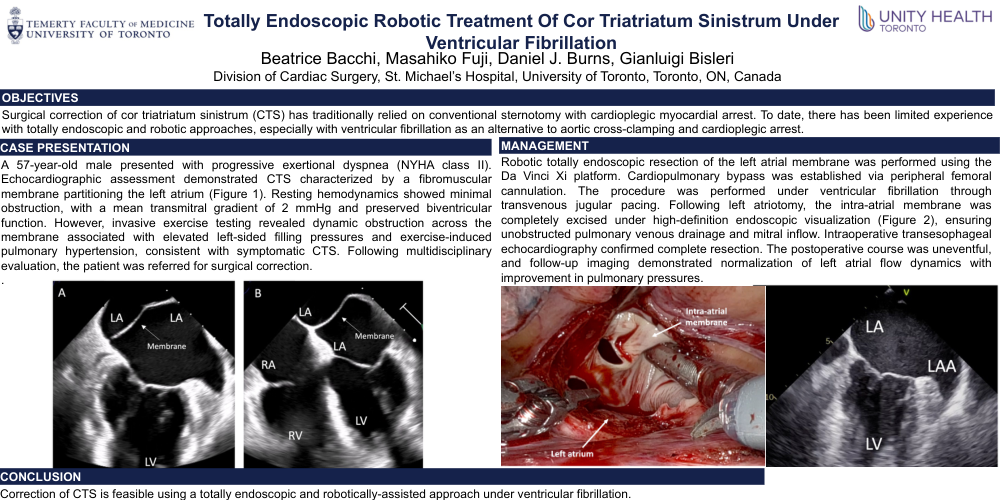
A 57-year-old male presented with progressive exertional dyspnea (NYHA class II). Echocardiographic assessment demonstrated CTS characterized by a fibromuscular membrane partitioning the left atrium (Figure 1). Resting hemodynamics showed minimal obstruction, with a mean transmitral gradient of 2 mmHg and preserved biventricular function. However, invasive exercise testing revealed dynamic obstruction across the membrane associated with elevated left-sided filling pressures and exercise-induced pulmonary hypertension, consistent with symptomatic CTS. Following multidisciplinary evaluation, the patient was referred for surgical correction.
Management
Robotic totally endoscopic resection of the left atrial membrane was performed using the Da Vinci Xi platform. Cardiopulmonary bypass was established via peripheral femoral cannulation. The procedure was performed under ventricular fibrillation through transvenous jugular pacing. Following left atriotomy, the intra-atrial membrane was completely excised under high-definition endoscopic visualization (Figure 2), ensuring unobstructed pulmonary venous drainage and mitral inflow. Intraoperative transesophageal echocardiography confirmed complete resection. The postoperative course was uneventful, and follow-up imaging demonstrated normalization of left atrial flow dynamics with improvement in pulmonary pressures.
Conclusion
Correction of CTS is feasible using a totally endoscopic and robotically-assisted approach under ventricular fibrillation.