293 posters, 56 videos, 24 topics, 13 sessions, 658 authors, 215 institutions
ePostersLive by SciGen Technologies S.A. All rights reserved.
ISMICS 2025 Annual Meeting
28 - 31 May, 2025 | Istanbul, Turkey

D126
Hybrid Treatment Of Atrial Fibrillation: Current Status
Part of Topic
Arrhythmia Surgery & Interventions
Background: Atrial fibrillation (AF) is one of the most common arrhythmias, which significantly increases the risk of thromboembolic events, heart failure and overall mortality. Modern approaches to the treatment of AF increasingly include hybrid methods that combine the advantages of surgical and catheterization procedures. The new 2024 guidelines of the European Society of Cardiology (ESC) and the European Association for Cardiothoracic Surgery (EACTS) recommend the hybrid approach as one of the preferred methods in selected patients with persistent and long-term persistent AF.
Methods: The methodology of this work is based on a review of the current world literature, which includes multicenter studies focused on hybrid treatment of atrial fibrillation. Studies published between 2014 and 2024 were included, which focused on patients with persistent and paroxysmal atrial fibrillation, treated with a combination of surgical and catheter ablation. Data from different geographical locations, including both European and North American cohorts, were analyzed. The main parameters monitored were the rate of long-term restoration of sinus rhythm, the safety profile of the procedure (including complications), the need for reintervention and the quality of life of patients after treatment.
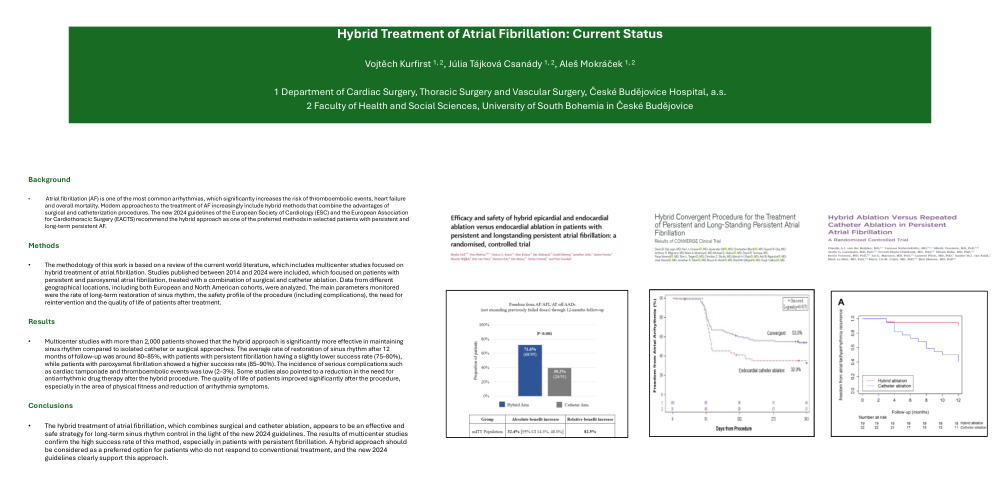
Results: Multicenter studies with more than 2,000 patients showed that the hybrid approach is significantly more effective in maintaining sinus rhythm compared to isolated catheter or surgical approaches. The average rate of restoration of sinus rhythm after 12 months of follow-up was around 80–85%, with patients with persistent fibrillation having a slightly lower success rate (75–80%), while patients with paroxysmal fibrillation showed a higher success rate (85–90%). The incidence of serious complications such as cardiac tamponade and thromboembolic events was low (2–3%). Some studies also pointed to a reduction in the need for antiarrhythmic drug therapy after the hybrid procedure. The quality of life of patients improved significantly after the procedure, especially in the area of physical fitness and reduction of arrhythmia symptoms.
Conclusions: The hybrid treatment of atrial fibrillation, which combines surgical and catheter ablation, appears to be an effective and safe strategy for long-term sinus rhythm control in the light of the new 2024 guidelines. The results of multicenter studies confirm the high success rate of this method, especially in patients with persistent fibrillation. A hybrid approach should be considered as a preferred option for patients who do not respond to conventional treatment, and the new 2024 guidelines clearly support this approach.