225 posters, 34 videos, 18 topics, 14 sessions, 251 authors, 55 institutions
ePostersLive by SciGen Technologies S.A. All rights reserved.
ISMICS 2024 Annual Meeting
29 May - 1 June, 2024 | Athens, Greece

PC.108
Comparative Analysis Of Primary Versus Redo Robotic-assisted Cardiac Surgery Outcomes: A Retrospective Study
Poster Presenter
Authors
Part of Topic
Valve - Surgical Valves
Title: Comparative Analysis of Primary Versus Redo Robotic-Assisted Cardiac Surgery Outcomes: A Retrospective Study
Abstract:
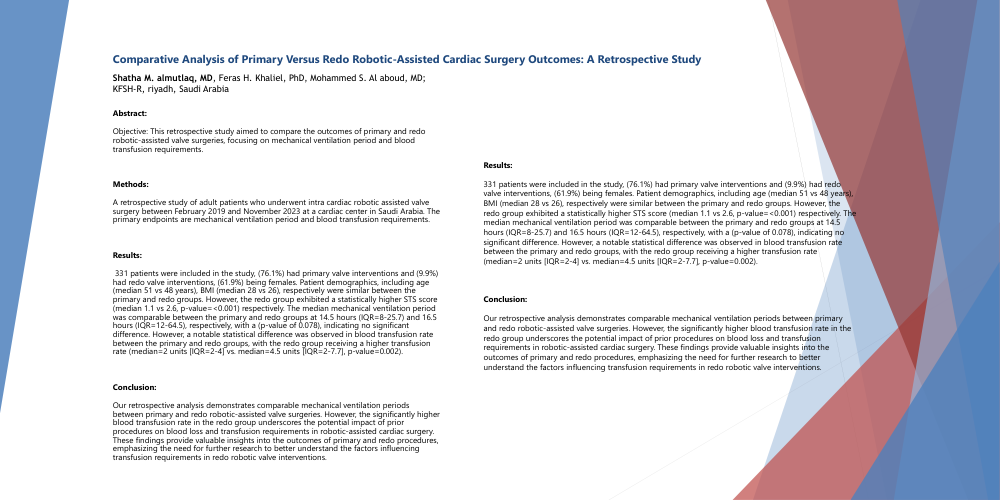
Objective: This retrospective study aimed to compare the outcomes of primary and redo robotic-assisted valve surgeries, focusing on mechanical ventilation period and blood transfusion requirements.
Methods: A retrospective study of adult patients who underwent intra cardiac robotic assisted valve surgery between February 2019 and November 2023 at a cardiac center in Saudi Arabia. The primary endpoints are mechanical ventilation period and blood transfusion requirements.
Results: 331 patients were included in the study, (76.1%) had primary valve interventions and (9.9%) had redo valve interventions, (61.9%) being females. Patient demographics, including age (median 51 vs 48 years), BMI (median 28 vs 26), respectively were similar between the primary and redo groups. However, the redo group exhibited a statistically higher STS score (median 1.1 vs 2.6, p-value=<0.001) respectively. The median mechanical ventilation period was comparable between the primary and redo groups at 14.5 hours (IQR=8-25.7) and 16.5 hours (IQR=12-64.5), respectively, with a (p-value of 0.078), indicating no significant difference. However, a notable statistical difference was observed in blood transfusion rate between the primary and redo groups, with the redo group receiving a higher transfusion rate (median=2 units [IQR=2-4] vs. median=4.5 units [IQR=2-7.7], p-value=0.002).
Conclusion: Our retrospective analysis demonstrates comparable mechanical ventilation periods between primary and redo robotic-assisted valve surgeries. However, the significantly higher blood transfusion rate in the redo group underscores the potential impact of prior procedures on blood loss and transfusion requirements in robotic-assisted cardiac surgery. These findings provide valuable insights into the outcomes of primary and redo procedures, emphasizing the need for further research to better understand the factors influencing transfusion requirements in redo robotic valve interventions.