477 posters, 14 topics, 2,065 authors, 1,055 institutions
ePostersLive by SciGen Technologies S.A. All rights reserved.
The Joint EBJIS-MSIS 2026 Conference
17 - 19 September, 2026 | Porto, Portugal

EP212
Atypical acute hematogenous osteomyelitis in children: a diagnostic challenge a retrospective study of 20 cases
Poster Presenter
Authors
Jawhar Ben Dhief, mohamed frikha, Jacem Saadana, Meriam abdeljalil, aymen fekih, abderrazak abid
Affiliations
Infectious Diseases Department, Fattouma Bourguiba University Hospital, Tunisia, The Orthopedics and Traumatology Department, Habib Bourguiba University Hospital, Sfax, Tht Orthopedics and Traumatology Department, Fattouma Bourguiba University Hospital, Monastir, Tunisia
Part of Topic
Osteomyelitis/ Spondylitis
Introduction : Acute hematogenous osteomyelitis (AHO) is a common pediatric infection, typically involving the metaphysis of long bones. Atypical localizations, including flat bones, short bones, and epiphyseal or apophyseal regions, are uncommon and often lead to delayed diagnosis due to non-specific clinical presentation. The aim of this study was to describe the diagnostic, therapeutic, and outcome characteristics of atypical AHO.
Materials and Methods : We conducted a retrospective study from January 2015 to December 2023 in the orthopedic department of Fattouma Bourguiba Hospital. All pediatric cases of AHO involving atypical sites, including flat bones, short bones, and epiphyseal or apophyseal locations, were included. Clinical, biological, radiological, microbiological, therapeutic, and outcome data were collected and analyzed.
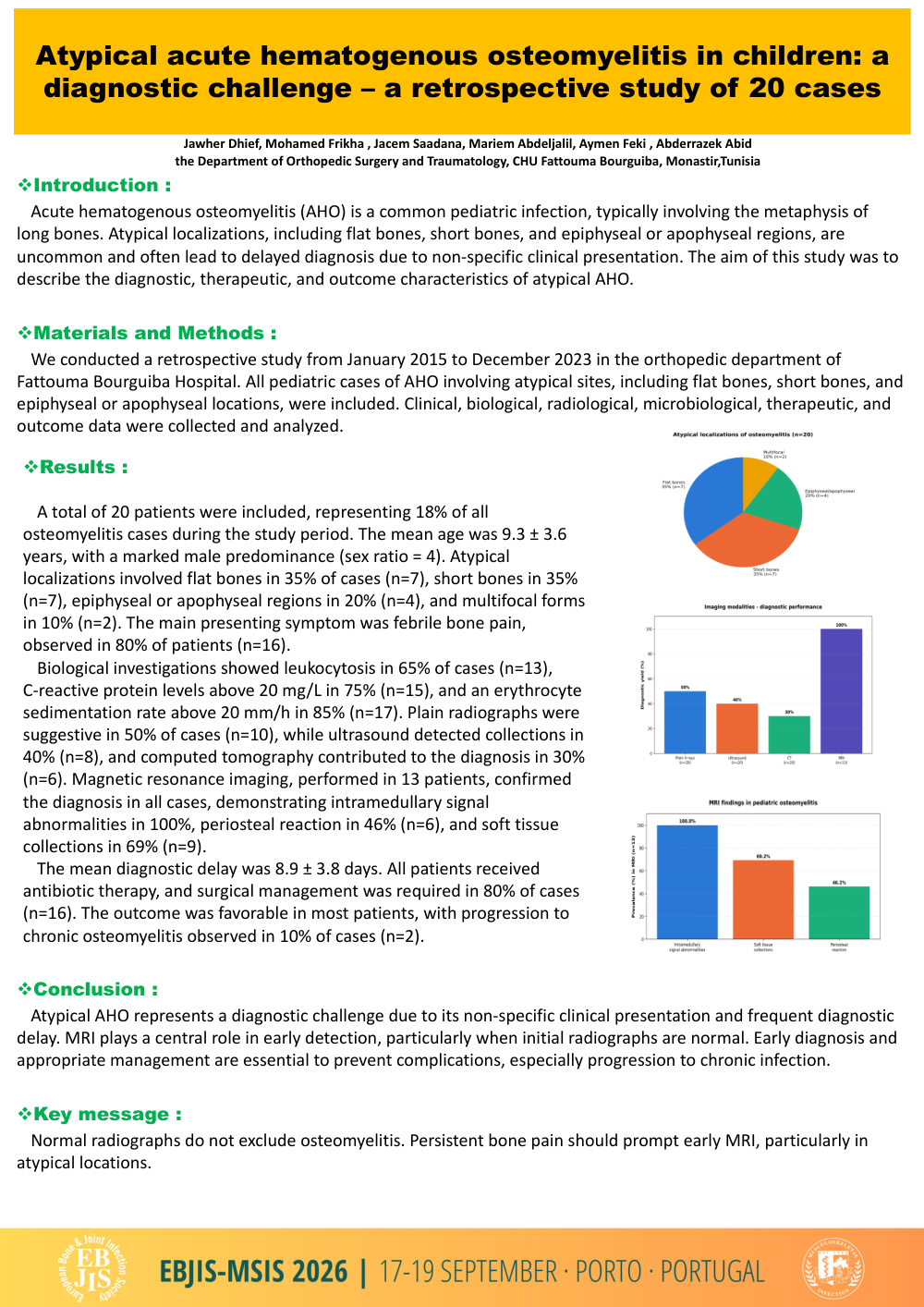
Results : A total of 20 patients were included, representing 18% of all osteomyelitis cases during the study period. The mean age was 9.3 ± 3.6 years, with a marked male predominance (sex ratio = 4). Atypical localizations involved flat bones in 35% of cases (n=7), short bones in 35% (n=7), epiphyseal or apophyseal regions in 20% (n=4), and multifocal forms in 10% (n=2). The main presenting symptom was febrile bone pain, observed in 80% of patients (n=16). Biological investigations showed leukocytosis in 65% of cases (n=13), C-reactive protein levels above 20 mg/L in 75% (n=15), and an erythrocyte sedimentation rate above 20 mm/h in 85% (n=17). Plain radiographs were suggestive in 50% of cases (n=10), while ultrasound detected collections in 40% (n=8), and computed tomography contributed to the diagnosis in 30% (n=6). Magnetic resonance imaging, performed in 13 patients, confirmed the diagnosis in all cases, demonstrating intramedullary signal abnormalities in 100%, periosteal reaction in 46% (n=6), and soft tissue collections in 69% (n=9). The mean diagnostic delay was 8.9 ± 3.8 days. All patients received antibiotic therapy, and surgical management was required in 80% of cases (n=16). The outcome was favorable in most patients, with progression to chronic osteomyelitis observed in 10% of cases (n=2).
Conclusion : Atypical AHO represents a diagnostic challenge due to its non-specific clinical presentation and frequent diagnostic delay. MRI plays a central role in early detection, particularly when initial radiographs are normal. Early diagnosis and appropriate management are essential to prevent complications, especially progression to chronic infection. vKey message : Normal radiographs do not exclude osteomyelitis. Persistent bone pain should prompt early MRI, particularly in atypical locations.