99 posters, 2 videos, 5 audios, 13 topics, 7 sessions, 418 authors, 180 institutions
ePostersLive by SciGen Technologies S.A. All rights reserved.
The 21st Meeting of the Diabetic Foot Study Group 2026
24-26 September, 2026 | Florence, Italy

EP77
Antimicrobial stewardship in diabetes-related foot ulcers; development and evaluation of a pathway implementing guideline recommendations using microbial-binding dressings for infection prevention, early intervention and treatment
Poster Presenter
Part of Topic
Infection
Antimicrobial stewardship in diabetes-related foot ulcers; development and evaluation of a pathway implementing guideline recommendations using microbial-binding dressings for infection prevention, early intervention and treatment
Paulo Ramos,1-3 George Smith,4 Emma Woodmansey5,6
1. Community Care and Wound, Ostomy and Continence Care Specialist Nurse, ULS Póvoa de Varzim Vila do Conde, Portugal, 2. Vice-President, Portuguese Wound Care Association, Gondomar, Portugal, 3. Council Member, European Wound Management Association,
4. Senior Lecturer and Honorary Vascular Consultant, Hull York Medical School, York, UK, 5. Clinical & Scientific Solutions, York, UK, 6. Honorary Senior Lecturer, Cardiff University, Wales,
Background
Antimicrobial resistance (AMR) is a growing concern in diabetes-related foot ulcers (DRFU) with prevalence of multi-drug-resistant organisms as high as 63%.1
Topical antimicrobial dressings are not recommended for treatment of diabetes-related foot infections (DFRI),2 however a recent survey found 41.8% of healthcare professionals managing hard to heal wounds used antimicrobials prophylactically, while 37.2% did not follow antimicrobial stewardship (AMS) guidance, indicating a gap in best-practice.3
Early diagnosis and treatment are essential to minimise delayed healing and complications, improving outcomes. This should be balanced with a reduction of inappropriate use of antimicrobials to minimise AMR.
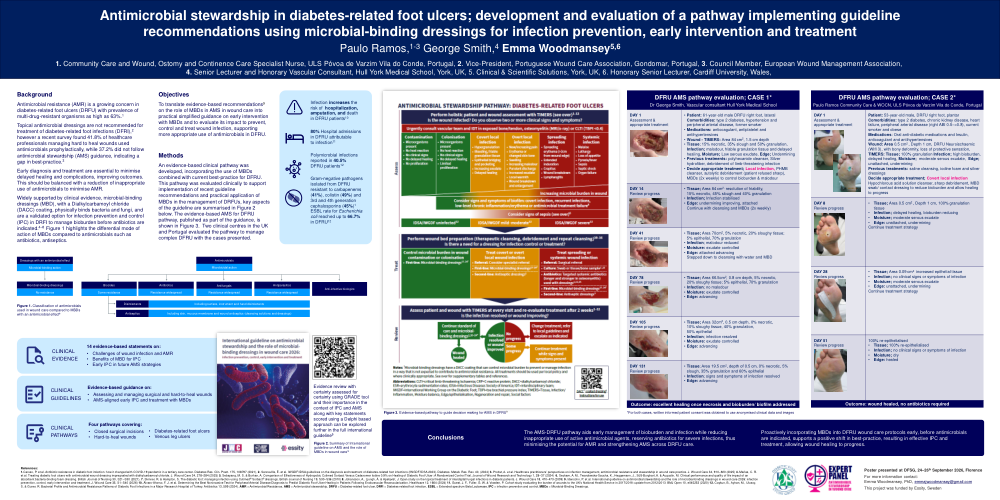
Widely supported by clinical evidence, microbial-binding dressings (MBD), with a Dialkylcarbamoyl chloride (DACC) coating, physically binds bacteria and fungi, and are a validated option for infection prevention and control (IPC) in DRFI to manage bioburden before antibiotics are indicated.4–8 Figure 1 highlights the differential mode of action of MBDs compared to antimicrobials such as antibiotics, antiseptics.
Objectives
To translate evidence-based recommendations9 on the role of MBDs in AMS in wound care into practical simplified guidance on early intervention with MBDs and to evaluate its impact to prevent, control and treat wound infection, supporting more appropriate use of antimicrobials in DFRU.
Methods
An evidence-based clinical pathway was developed, incorporating the use of MBDs combined with current best-practice for DFRU. This pathway was evaluated clinically to support implementation of recent guideline recommendations and practical application of MBDs in the management of DRFUs, key aspects of the guideline are summarised in Figure 2 below. The evidence-based AMS for DFRU pathway, published as part of the guidance, is shown in Figure 3. Two clinical centres in the UK and Portugal evaluated the pathway to manage complex DFRU with the cases presented
Conclusions
The AMS-DRFU pathway aids early management of bioburden and infection while reducing inappropriate use of active antimicrobial agents, reserving antibiotics for severe infections, thus minimising the potential for AMR and strengthening AMS across DRFU care.
Proactively incorporating MBDs into DFRU wound care protocols early, before antimicrobials are indicated, supports a positive shift in best-practice, resulting in effective IPC and treatment, allowing wound healing to progress.