99 posters, 2 videos, 5 audios, 13 topics, 7 sessions, 418 authors, 180 institutions
ePostersLive by SciGen Technologies S.A. All rights reserved.
The 21st Meeting of the Diabetic Foot Study Group 2026
24-26 September, 2026 | Florence, Italy

EP05 - Top 10 E-Poster
Outpatient Parenteral Antimicrobial Therapy (OPAT) for Diabetic Foot Infections: Clinical Outcomes and Hospital Admission Avoidance in a Single-Centre Experience
Poster Presenter
Part of Topic
Infection
TITLE:
Outpatient Parenteral Antimicrobial Therapy (OPAT) for Diabetic Foot Infections: Clinical Outcomes and Hospital Admission Avoidance in a Single-Centre Experience
Kiran Rathi, Sarah Elshinshawy, Sheena Thayyil, Rachel Berrington, Deborah Modha, Marie-France Kong
University Hospitals of Leicester NHS Foundation Trust, United Kingdom
BACKGROUND: Diabetic foot infections (DFI) are a leading cause of hospitalisation and lower limb amputation. Outpatient Parenteral Antimicrobial Therapy (OPAT) offers an alternative to prolonged inpatient care and potentially reduces healthcare costs. We aimed to evaluate the clinical outcomes, safety, and hospital admission avoidance rates of OPAT in patients with diabetic foot ulcers complicated by infection.
METHODS: We conducted a retrospective analysis of patients with diabetic foot infections managed through our OPAT service between 2023 -present. Data collected included demographics, diabetes type, ulcer grade (Wagner classification), presence of osteomyelitis, vascular status, renal function (eGFR), IV antibiotic regimen and duration, wound healing outcomes, amputation rates, recurrence, and hospital readmissions.
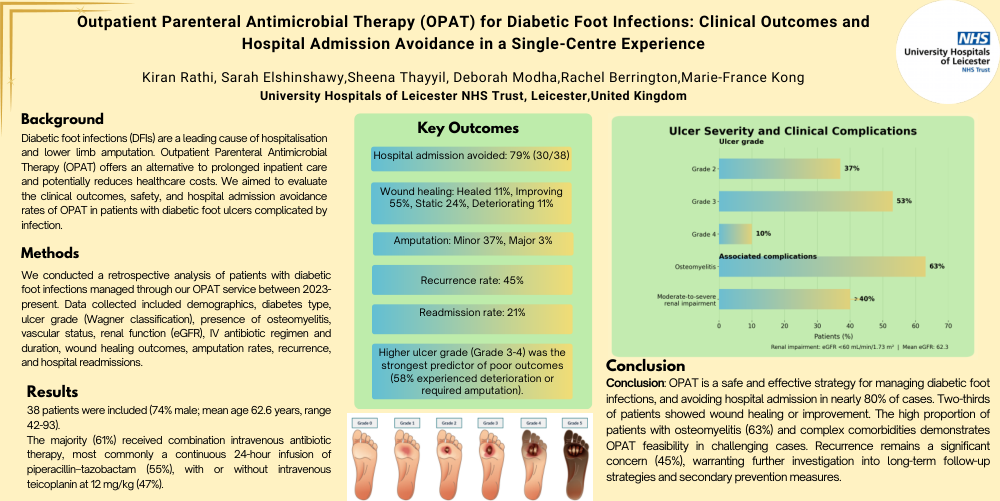
RESULTS: 38 patients were included (74% male; mean age 62.6 years, range 42-93).82% had Type 2 Diabetes. Ulcer grades were: Grade 2 (37%), Grade 3 (53%), and Grade 4 (10%). Osteomyelitis was present in 63% of patients. Over 40% had moderate-to-severe renal impairment (eGFR <60 mL/min/1.73m²; mean eGFR 62.3).
The majority (61%) received combination IV antibiotic therapy, most commonly piperacillin-tazobactam (55%) or teicoplanin (47%). Median IV treatment duration was 42 days (range 7-98), with 36% requiring extended courses (>42 days).
Key Outcomes
· Hospital admission avoided: 79% (30/38)
· Wound healing: Healed 11%, Improving 55%, Static 24%, Deteriorating 11%
· Amputation: Minor 37%, Major 3%
· Recurrence rate: 45%
· Readmission rate: 21%
· Higher ulcer grade (Grade 3-4) was the strongest predictor of poor outcomes (58% experienced deterioration or required amputation).
CONCLUSIONS: OPAT is a safe and effective strategy for managing diabetic foot infections, and avoiding hospital admission in nearly 80% of cases. Two-thirds of patients showed wound healing or improvement. The high proportion of patients with osteomyelitis (63%) and complex comorbidities demonstrates OPAT feasibility in challenging cases. Recurrence remains a significant concern (45%), warranting further investigation into long-term follow-up strategies and secondary prevention measures.