250 posters, 68 videos, 55 audios, 5 topics, 3 sessions, 367 authors, 223 institutions
ePostersLive by SciGen Technologies S.A. All rights reserved.
6th Commonwealth Chemistry Posters
United Kingdom | 1 - 2 October 2025

P79
CRISPR/Cas9-mediated silencing of PFK-1 allosteric activation as a novel therapeutic approach for cancer
Poster Presenter
Part of Topic
Good Health and Wellbeing (SDG 3)
Audio
Main Objective:
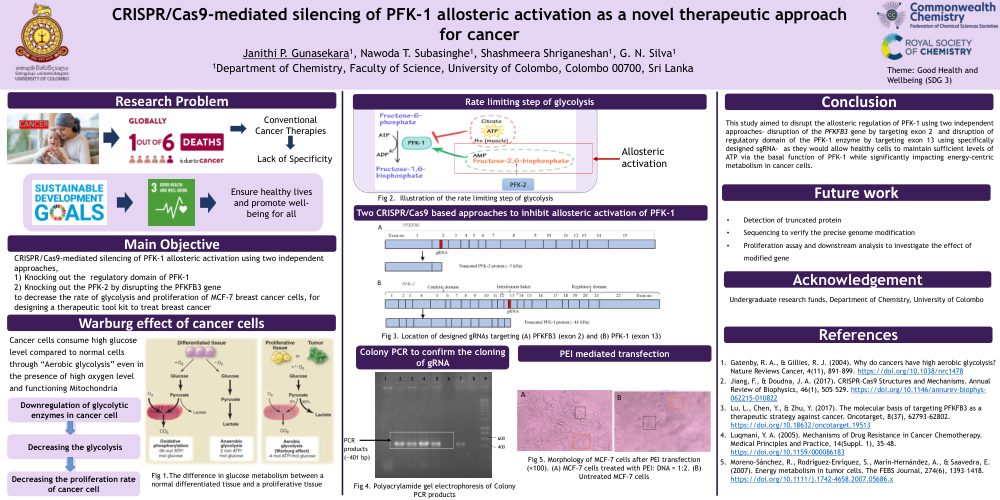
CRISPR/Cas9-mediated silencing of PFK-1 allosteric activation using two independent approaches,
to decrease the rate of glycolysis and proliferation of MCF-7 breast cancer cells, for designing a therapeutic tool kit to treat breast cancer
Warburg effect of cancer cells:
Cancer cells consume high glucose level compared to normal cells through “Aerobic glycolysis” even in the presence of high oxygen level and functioning Mitochondria
Conclusion:
This study aimed to disrupt the allosteric regulation of PFK-1 using two independent approaches- disruption of the PFKFB3 gene by targeting exon 2 and disruption of the regulatory domain of the PFK-1 enzyme by targeting exon 13 using specifically designed sgRNA- as they would allow healthy cells to maintain sufficient levels of ATP via the basal function of PFK-1 while significantly impacting energy-centric metabolism in cancer cells.
Future work:
Acknowledgement:
Undergraduate research funds, Department of Chemistry, University of Colombo
References:
5.Moreno-Sánchez, R., Rodríguez-Enríquez, S., Marín-Hernández, A., & Saavedra, E. (2007). Energy metabolism in tumor cells. The FEBS Journal, 274(6), 1393–1418. https://doi.org/10.1111/j.1742-4658.2007.056