250 posters, 68 videos, 55 audios, 5 topics, 3 sessions, 367 authors, 223 institutions
ePostersLive by SciGen Technologies S.A. All rights reserved.
6th Commonwealth Chemistry Posters
United Kingdom | 1 - 2 October 2025

P23
Green Chemistry Strategies for Nature-Based Removal of Emerging Pollutants
Poster Presenter
Authors
Affiliations
Part of Topic
Clean Water and Sanitation (SDG 6)
Video
Audio
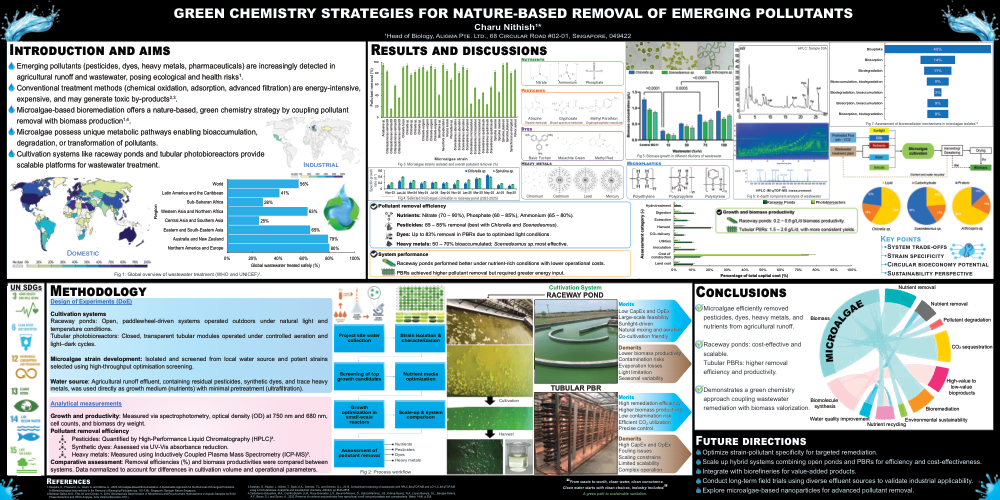
Emerging pollutants including pesticides, dyes, pharmaceuticals, and heavy metals are increasingly detected in aquatic environments, largely originating from agricultural runoff and industrial effluents. These compounds are often persistent, bioactive, and resistant to conventional wastewater treatments, leading to long-term ecological and human health risks such as endocrine disruption, antimicrobial resistance, and toxicity to aquatic organisms.
Traditional remediation methods (e.g., advanced oxidation, adsorption, chemical precipitation) are limited by high energy demands, incomplete degradation, and secondary pollution. In contrast, microalgae-based treatment systems represent a green chemistry approach that is cost-effective, energy-efficient, and capable of achieving both wastewater purification and biomass production.
Microalgae can remove pollutants via biosorption, bioaccumulation, and biodegradation, while also utilizing nutrients from effluents for growth. Their cultivation in engineered systems such as raceway ponds and tubular photobioreactors provides a scalable pathway to integrate pollutant removal with circular bioeconomy applications
And importantly, this work aligns directly with several UN Sustainable Development Goals:
SDG 3 (Good Health and Well-being) – Reduces human exposure to pollutants in contaminated water.
SDG 6 (Clean Water and Sanitation) – by improving wastewater treatment,
SDG 12 (Responsible Consumption and Production) – by turning waste into resources,
SDG 13 (Climate Action) – because algae also capture CO₂,
and SDG 14 (Life Below Water) – by reducing eutrophication and aquatic pollution.