92 posters, 1 audios, 567 authors, 81 institutions
ePostersLive by SciGen Technologies S.A. All rights reserved.
Data-driven Cancer Research Conference 2026
24-26 February 2026 | Edinburgh, Scotland

P06
Time trends in dose to breast tissue and other mediastinal organs-at-risk in young women treated for lymphoma: a single institutional cohort study
Poster Presenter
Part of Topic
Mediastinal dose time trends in young women treated for lymphoma: a single institutional cohort study
Time trends in dose to breast tissue and other mediastinal organs-at-risk in young women treated for lymphoma: a single institutional cohort study
Rory AD Bell , H. Chamberlin , J. Radford , J. Williams , R. Cowan , C. Hague , S. Howell , E. Henderson , K. Linton , E. Vasquez Osorio , M. Aznar
Introduction
Aim Investigate dose trends with time to organs-of-interest in mediastinal lymphoma patients.
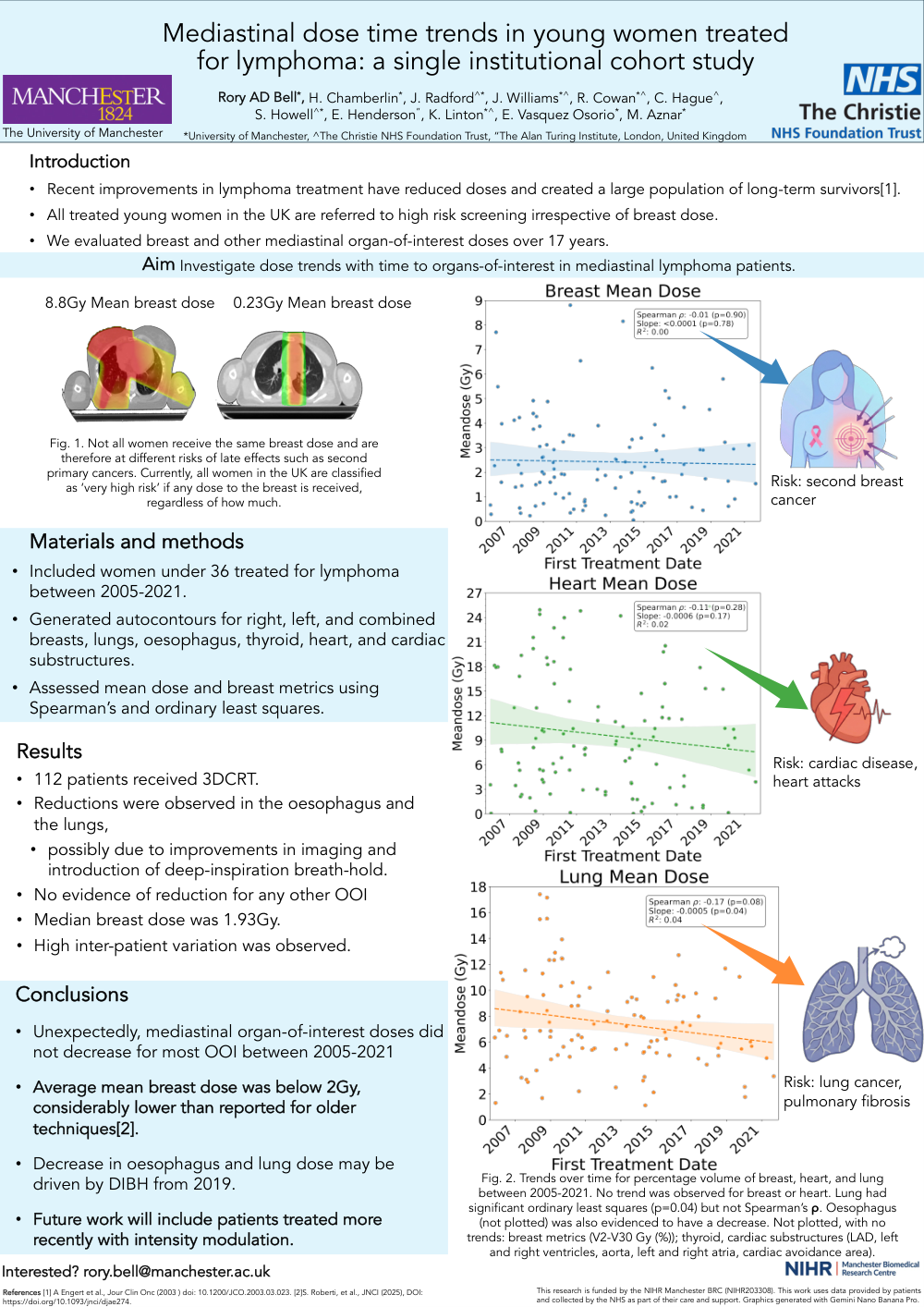
Fig. 1. Not all women receive the same breast dose and are therefore at different risks of late effects such as second primary cancers. Currently, all women in the UK are classified as ‘very high risk’ if any dose to the breast is received, regardless of how much.
Materials and methods
Results
Conclusions
Risk: second breast cancer
Risk: cardiac disease, heart attacks
Risk: lung cancer, pulmonary fibrosis
Fig. 2. Trends over time for percentage volume of breast, heart, and lung between 2005-2021. No trend was observed for breast or heart. Lung had significant ordinary least squares (p=0.04) but not Spearman’s ρ. Oesophagus (not plotted) was also evidenced to have a decrease. Not plotted, with no trends: breast metrics (V2-V30 Gy (%)); thyroid, cardiac substructures (LAD, left and right ventricles, aorta, left and right atria, cardiac avoidance area).
Interested? rory.bell@manchester.ac.uk
References [1] A Engert et al., Jour Clin Onc (2003 ) doi: 10.1200/JCO.2003.03.023. [2]S. Roberti, et al., JNCI (2025), DOI: https://doi.org/10.1093/jnci/djae274.
This research is funded by the NIHR Manchester BRC (NIHR203308). This work uses data provided by patients and collected by the NHS as part of their care and support. Graphics generated with Gemini Nano Banana Pro.
Comments
Email is required but is not shown publicly.
Loading comments...