92 posters, 1 audios, 567 authors, 81 institutions
ePostersLive by SciGen Technologies S.A. All rights reserved.
Data-driven Cancer Research Conference 2026
24-26 February 2026 | Edinburgh, Scotland

P02
Using English linked population-based electronic health records to understand respiratory outcomes after cancer over the course of survivorship .
Poster Presenter
Part of Topic
INTRODUCTION
Cancer and its treatment can adversely affect lung health (1), but the long-term respiratory risks in adult cancer survivors remain unclear.
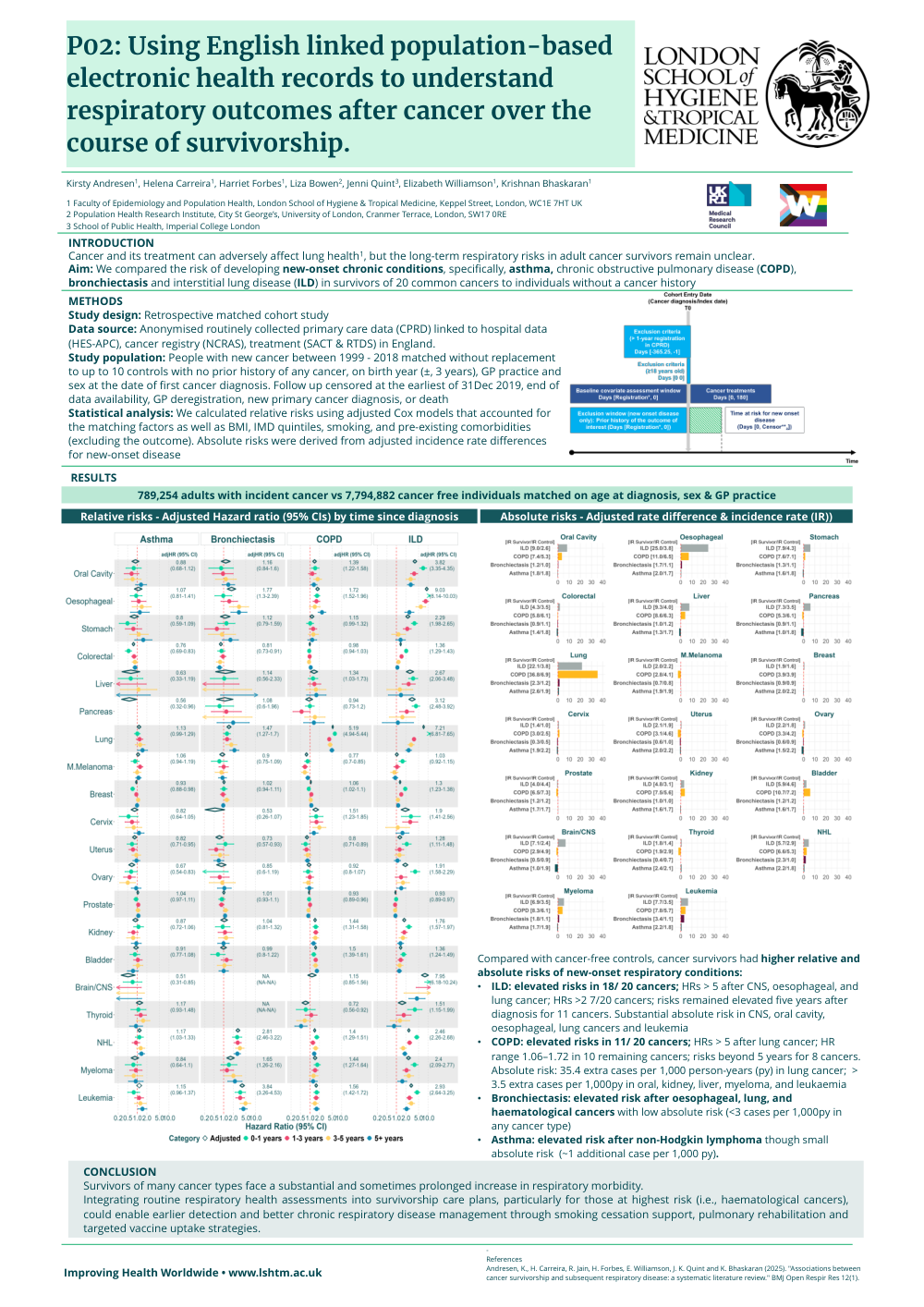
Aim: We compared the risk of developing new-onset chronic conditions, specifically, asthma, chronic obstructive pulmonary disease (COPD), bronchiectasis and interstitial lung disease (ILD) in survivors of 20 common cancers to individuals without a cancer history
METHODS
Study design: Retrospective matched cohort study
Data source: Anonymised routinely collected primary care data (CPRD) linked to hospital data (HES-APC), cancer registry (NCRAS), treatment (SACT & RTDS) in England.
Study population: People with new cancer between 1999 - 2018 matched without replacement to up to 10 controls with no prior history of any cancer, on birth year (±, 3 years), GP practice and sex at the date of first cancer diagnosis. Follow up censored at the earliest of 31Dec 2019, end of data availability, GP deregistration, new primary cancer diagnosis, or death
Statistical analysis: We calculated relative risks using adjusted Cox models that accounted for the matching factors as well as BMI, IMD quintiles, smoking, and pre-existing comorbidities (excluding the outcome). Absolute risks were derived from adjusted incidence rate differences for new-onset disease
RESULTS
789,254 adults with incident cancer vs 7,794,882 cancer free individuals matched on age at diagnosis, sex & GP practice
Compared with cancer-free controls, cancer survivors had higher relative and absolute risks of new-onset respiratory conditions:
CONCLUSION
Survivors of many cancer types face a substantial and sometimes prolonged increase in respiratory morbidity.
Integrating routine respiratory health assessments into survivorship care plans, particularly for those at highest risk (i.e., haematological cancers), could enable earlier detection and better chronic respiratory disease management through smoking cessation support, pulmonary rehabilitation and targeted vaccine uptake strategies.
-
References
Andresen, K., H. Carreira, R. Jain, H. Forbes, E. Williamson, J. K. Quint and K. Bhaskaran (2025). "Associations between cancer survivorship and subsequent respiratory disease: a systematic literature review." BMJ Open Respir Res 12(1).
Comments
Email is required but is not shown publicly.
Loading comments...