383 posters, 2 videos, 1 audios, 8 topics, 28 sessions, 328 authors, 225 institutions
ePostersLive by SciGen Technologies S.A. All rights reserved.
50th Annual Regional Anesthesiology and Acute Pain Medicine Meeting
May 1 - 3, 2025 | Orlando, Florida

6819
ACUTE PAIN MANAGEMENT AFTER BRACHIAL PLEXUS AVULSION COMPLICATED WITH SUBSTANCE USE
Poster Presenter
Part of Topic
Medically Challenging Cases
Acute Pain Management after Brachial Plexus Avulsion
Alejandro Hallo-Carrasco, MD1; Patrick Discepola, MD1
1Anesthesiology Department – Rutgers New Jersey Medical School
Introduction
• Brachial Plexus Avulsion (BPA) is a
catastrophic nerve injury in which the
brachial plexus, responsible for motor
and sensory innervation of the upper
limb, is torn from the spinal cord.
• The complexity of BPA-related pain
triggers maladaptive responses such as
cortical reorganization further contributing
to persistent refractory pain and
dysfunction.
Methodology
• As the cases reported devoid of patient
identifiable information, it is exempt from
IRB review requirements as per
University Hospital policy.
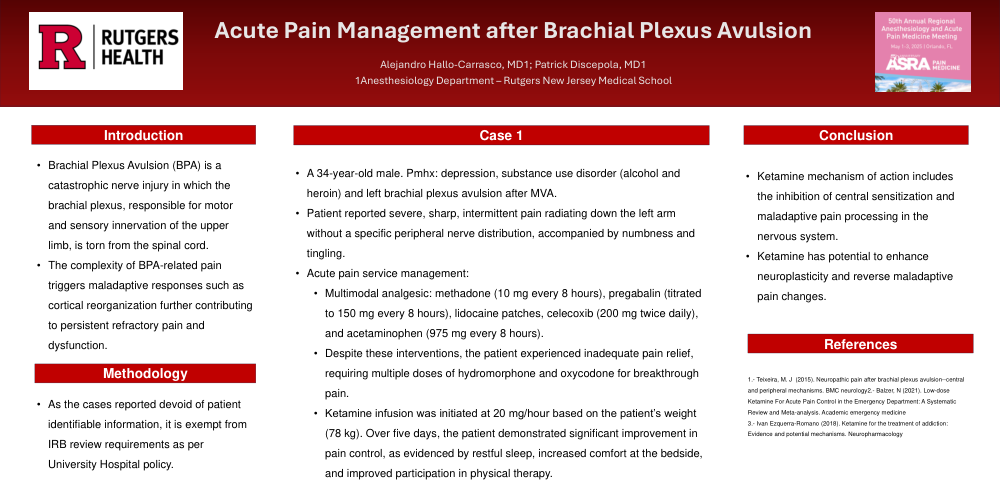
Case 1
• A 34-year-old male. Pmhx: depression, substance use disorder (alcohol and
heroin) and left brachial plexus avulsion after MVA.
• Patient reported severe, sharp, intermittent pain radiating down the left arm
without a specific peripheral nerve distribution, accompanied by numbness and
tingling.
• Acute pain service management:
• Multimodal analgesic: methadone (10 mg every 8 hours), pregabalin (titrated
to 150 mg every 8 hours), lidocaine patches, celecoxib (200 mg twice daily),
and acetaminophen (975 mg every 8 hours).
• Despite these interventions, the patient experienced inadequate pain relief,
requiring multiple doses of hydromorphone and oxycodone for breakthrough
pain.
• Ketamine infusion was initiated at 20 mg/hour based on the patient’s weight
(78 kg). Over five days, the patient demonstrated significant improvement in
pain control, as evidenced by restful sleep, increased comfort at the bedside,
and improved participation in physical therapy.
Conclusion
Ketamine mechanism of action includes
the inhibition of central sensitization and
maladaptive pain processing in the
nervous system.
• Ketamine has potential to enhance
neuroplasticity and reverse maladaptive
pain changes.
References
1.- Teixeira, M. J (2015). Neuropathic pain after brachial plexus avulsion--central
and peripheral mechanisms. BMC neurology2.- Balzer, N (2021). Low-dose
Ketamine For Acute Pain Control in the Emergency Department: A Systematic
Review and Meta-analysis. Academic emergency medicine
3.- Ivan Ezquerra-Romano (2018). Ketamine for the treatment of addiction:
Evidence and potential mechanisms. Neuropharmacology