383 posters, 2 videos, 1 audios, 8 topics, 28 sessions, 328 authors, 225 institutions
ePostersLive by SciGen Technologies S.A. All rights reserved.
50th Annual Regional Anesthesiology and Acute Pain Medicine Meeting
May 1 - 3, 2025 | Orlando, Florida

6861
CATATONIA OR LOCAL ANESTHETIC CNS TOXICITY: A CASE REPORT
Poster Presenter
Authors
Affiliations
Part of Topic
Medically Challenging Cases
CATATONIA OR LOCAL ANESTHETIC CNS TOXICITY: A CASE REPORT
Helena Aaberg, MD; Rakesh Sondekoppam, MBBS; Nada Sadek, MD; Adeeb Oweidat, MD
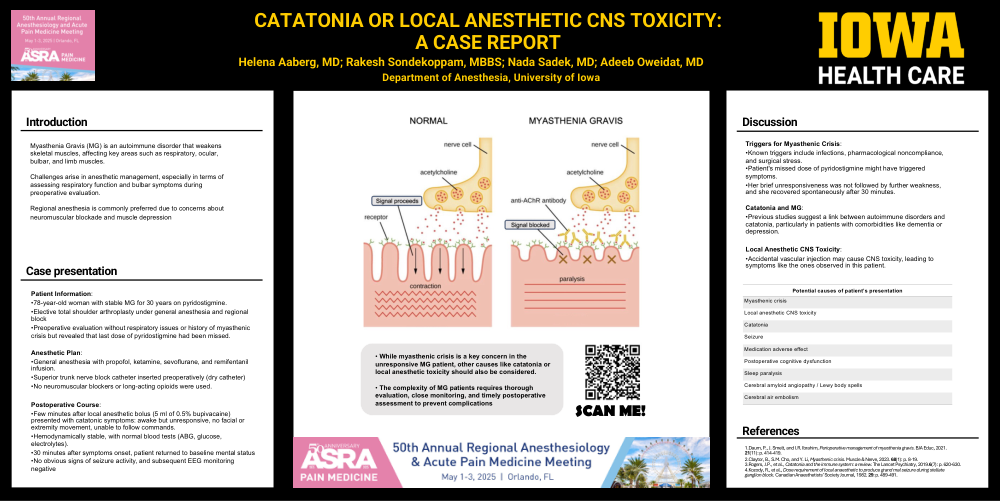
Myasthenia Gravis (MG) is an autoimmune disorder that weakens skeletal muscles, affecting key areas such as respiratory, ocular, bulbar, and limb muscles. Challenges arise in anesthetic management, especially in terms of assessing respiratory function and bulbar symptoms during preoperative evaluation. Regional anesthesia is commonly preferred due to concerns about neuromuscular blockade and muscle depression
Patient Information: 78-year-old woman with stable MG for 30 years on pyridostigmine. Elective total shoulder arthroplasty under general anesthesia and regional block Preoperative evaluation without respiratory issues or history of myasthenic crisis but revealed that last dose of pyridostigmine had been missed. Anesthetic Plan: General anesthesia with propofol, ketamine, sevoflurane, and remifentanil infusion. Superior trunk nerve block catheter inserted preoperatively (dry catheter) No neuromuscular blockers or long-acting opioids were used. Postoperative Course: Few minutes after local anesthetic bolus (5 ml of 0.5% bupivacaine) presented with catatonic symptoms: awake but unresponsive, no facial or extremity movement, unable to follow commands. Hemodynamically stable, with normal blood tests (ABG, glucose, electrolytes). 30 minutes after symptoms onset, patient returned to baseline mental status No obvious signs of seizure activity, and subsequent EEG monitoring negative
Triggers for Myasthenic Crisis: Known triggers include infections, pharmacological noncompliance, and surgical stress. Patient's missed dose of pyridostigmine might have triggered symptoms. Her brief unresponsiveness was not followed by further weakness, and she recovered spontaneously after 30 minutes. Catatonia and MG: Previous studies suggest a link between autoimmune disorders and catatonia, particularly in patients with comorbidities like dementia or depression. Local Anesthetic CNS Toxicity: Accidental vascular injection may cause CNS toxicity, leading to symptoms like the ones observed in this patient.