457 posters, 2 videos, 2 audios, 8 topics, 45 sessions, 401 authors, 265 institutions
ePostersLive by SciGen Technologies S.A. All rights reserved.
49th Annual Regional Anesthesiology and Acute Pain Medicine Meeting
March 21-23, 2024 | The Hilton Bayfront San Diego | San Diego, California

5422
BONE CEMENT IMPLANTATION SYNDROME GRADE 3: A CASE REPORT
Poster Presenter
Authors
Affiliations
Part of Topic
Medically Challenging Cases
Introduction
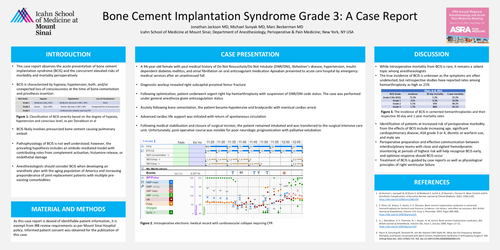
•This case report observes the acute presentation of bone cement implantation syndrome (BCIS) and the concurrent elevated risks of morbidity and mortality perioperatively
•BCIS is characterized by hypoxia, hypotension, both, and/or unexpected loss of consciousness at the time of bone cementation and prosthesis insertion
•BCIS likely involves pressurized bone cement causing pulmonary emboli
•Pathophysiology of BCIS is not well understood; however, the prevailing hypothesis includes an embolic-mediated model with contributing roles from complement activation, histamine release, or endothelial damage
•Anesthesiologists should consider BCIS when developing an anesthetic plan with the aging population of America and increasing preponderance of joint-replacement patients with multiple pre-existing comorbidities
Case Presentation
•A 94-year-old female with past medical history of Do Not Resuscitate/Do Not Intubate (DNR/DNI), Alzheimer’s disease, hypertension, insulin dependent diabetes mellitus, and atrial fibrillation on oral anticoagulant medication Apixaban presented to acute care hospital by emergency medical services after an unwitnessed fall
•Diagnostic workup revealed right subcapital proximal femur fracture
•Following optimization, patient underwent urgent right hip hemiarthroplasty with suspension of DNR/DNI code status. The case was performed under general anesthesia given anticoagulation status
•Acutely following bone cementation, the patient became hypotensive and bradycardic with eventual cardiac arrest
•Advanced cardiac life support was initiated with return of spontaneous circulation
•Following medical stabilization and closure of surgical incision, the patient remained intubated and was transferred to the surgical intensive care unit. Unfortunately, post-operative course was notable for poor neurologic prognostication with palliative extubation
Discussion
•While intraoperative mortality from BCIS is rare, it remains a salient topic among anesthesiologists
•The true incidence of BCIS is unknown as the symptoms are often undetected, but retrospective studies have reported rates among hemiarthroplasty as high as 21%
•Identification of patients at increased risk of perioperative morbidity from the effects of BCIS include increasing age, significant cardiopulmonary disease, ASA grade 3 or 4, diuretic or warfarin use, and male sex
•Perioperative preparation and effective communication between interdisciplinary teams with close and vigilant hemodynamic monitoring at periods of highest risk will help recognize BCIS early, and optimize response should BCIS occur
•Treatment of BCIS is guided by case reports as well as physiological principles of right ventricular failure