457 posters, 2 videos, 2 audios, 8 topics, 45 sessions, 401 authors, 265 institutions
ePostersLive by SciGen Technologies S.A. All rights reserved.
49th Annual Regional Anesthesiology and Acute Pain Medicine Meeting
March 21-23, 2024 | The Hilton Bayfront San Diego | San Diego, California

5420
TIBIAL NERVE MONONEUROPATHY POST-COVID-19: SUCCESSFUL MANAGEMENT WITH PERIPHERAL NERVE STIMULATOR
Poster Presenter
Authors
Affiliations
Part of Topic
Medically Challenging Cases
|
Tibial Nerve Mononeuropathy Post Covid-19: Successful Management with Peripheral Nerve Stimulation Sri Harsha Kanuri, MD*; Luis Miguel Escano Volquez, MD; Roger Haddad MD |
|
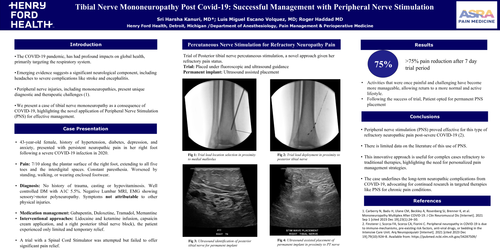
Introduction • The COVID-19 pandemic, has had profound impacts on global health, primarily targeting the respiratory system. • Emerging evidence suggests a significant neurological component, including headaches to severe complications like stroke and encephalitis. • Peripheral nerve injuries, including mononeuropathies, present unique diagnostic and therapeutic challenges (1). • We present a case of tibial nerve mononeuropathy as a consequence of COVID-19, highlighting the novel application of Peripheral Nerve Stimulation (PNS) for effective management. Case Presentation
Percutaneous Nerve Stimulation for Refractory Neuropathy Pain Trial of Posterior tibial nerve percutaneous stimulation, a novel approach given her refractory pain status. Results >75% pain reduction after 7 day trial period Activities that were once painful and challenging have become more manageable, allowing return to a more normal and active lifestyle. Conclusions Peripheral nerve stimulation (PNS) proved effective for this type of refractory neuropathic pain post-severe COVID-19 (2). There is limited data on the literature of this use of PNS. This innovative approach is useful for complex cases refractory to traditional therapies, highlighting the need for personalized pain management strategies. The case underlines the long-term neuropathic complications from COVID-19, advocating for continued research in targeted therapies like PNS for chronic pain conditions. References 1. Carberry N, Badu H, Ulane CM, Beckley A, Rosenberg SJ, Brenner K, et al. Mononeuropathy Multiplex After COVID-19. J Clin Neuromuscul Dis [Internet]. 2021 Sep 1 [cited 2023 Dec 19];23(1):24–30. 2. Finsterer J, Scorza FA, Scorza CA, Fiorini C. Peripheral neuropathy in COVID-19 is due to immune-mechanisms, pre-existing risk factors, anti-viral drugs, or bedding in the Intensive Care Unit. Arq Neuropsiquiatr [Internet]. 2021 [cited 2023 Dec 19];79(10):924–8. Available from: https://pubmed.ncbi.nlm.nih.gov/34287509/ |