457 posters, 2 videos, 2 audios, 8 topics, 45 sessions, 401 authors, 265 institutions
ePostersLive by SciGen Technologies S.A. All rights reserved.
49th Annual Regional Anesthesiology and Acute Pain Medicine Meeting
March 21-23, 2024 | The Hilton Bayfront San Diego | San Diego, California

5157
PLACEMENT OF ERECTOR SPINAE PLANE CATHETER FOR RIB FRACTURES IN THE SETTING OF REVERSAL OF ANTICOAGULATION
Poster Presenter
Authors
Affiliations
Part of Topic
Medically Challenging Cases
Introduction:
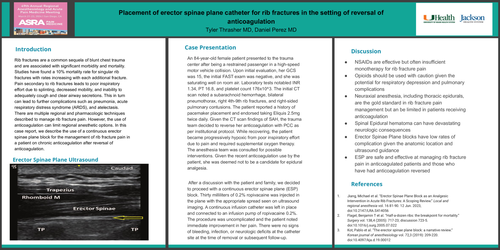
Rib fractures are a common sequela of blunt chest trauma and are associated with significant morbidity and mortality. Pain secondary to rib fractures leads to poor inspiratory effort due to splinting, decreased mobility, and inability to cough and clear airway secretions adequately. There are multiple regional and pharmacologic techniques described to manage rib fracture pain. However, the use of anticoagulation can limit regional anesthetic options. In this case report, we describe the use of a continuous erector spinae plane block for managing rib fracture pain in a patient on chronic anticoagulation after reversal of anticoagulation.
84 yo F presented to the trauma center after being a restrained passenger in a high speed MVC. Her GCS was 15 and the initial FAST was negative. CT noted SAH, R 4-9 rib fractures, bilateral pneumothorax, and R pulmonary contusions. Labs noted an INR of 1.37, PT 16.8, and Platelets 176,000. She reported taking Eliquis 2.5 mg BID. Given the CT findings of SAH, the trauma team reversed her anticoagulation with PCC. While recovering in the trauma bay, she became progressively hypoxic and required supplemental O2 therapy.
After a discussion with the patient and family, we decided to proceed with a continuous ESP block. 30 ml of 0.2% ropivacaine was injected in the plane with the appropriate spread seen on ultrasound imaging. A continuous infusion catheter was left in place and connected to an infusion pump of ropivacaine 0.2%. The procedure was uncomplicated and the patient noted immediate improvement in her pain.
-
NSAIDs are effective but often insufficient monotherapy for rib fracture pain
-
Opioids should be used with caution given the potential for respiratory depression and pulmonary complications
-
Neuraxial anesthesia, including thoracic epidurals, are the gold standard in rib fracture pain management but an be limited in patients receiving anticoagulation
-
Spinal Epidural hematoma can have devastating neurologic consequences
-
Erector Spinae Plane blocks have low rates of complication given the anatomic location
-
ESP are safe and effective at managing rib fracture pain in anticoagulated patients and those who have had anticoagulation reversed
References
-
Jiang, Michael et al. “Erector Spinae Plane Block as an Analgesic Intervention in Acute Rib Fractures: A Scoping Review.” Local and regional anesthesia vol. 16 81-90. 12 Jun. 2023, doi:10.2147/LRA.S414056
-
Flagel, Benjamin T et al. “Half-a-dozen ribs: the breakpoint for mortality.” Surgery vol. 138,4 (2005): 717-23; discussion 723-5. doi:10.1016/j.surg.2005.07.022
-
Kot, Pablo et al. “The erector spinae plane block: a narrative review.” Korean journal of anesthesiology vol. 72,3 (2019): 209-220. doi:10.4097/kja.d.19.00012