343 posters, 5 videos, 2 audios, 18 topics, 33 sessions, 263 authors, 202 institutions
ePostersLive by SciGen Technologies S.A. All rights reserved.
24th Annual Pain Medicine Meeting 2025
November 13-15, 2025| JW Marriott Austin, Austin, Texas

2198313
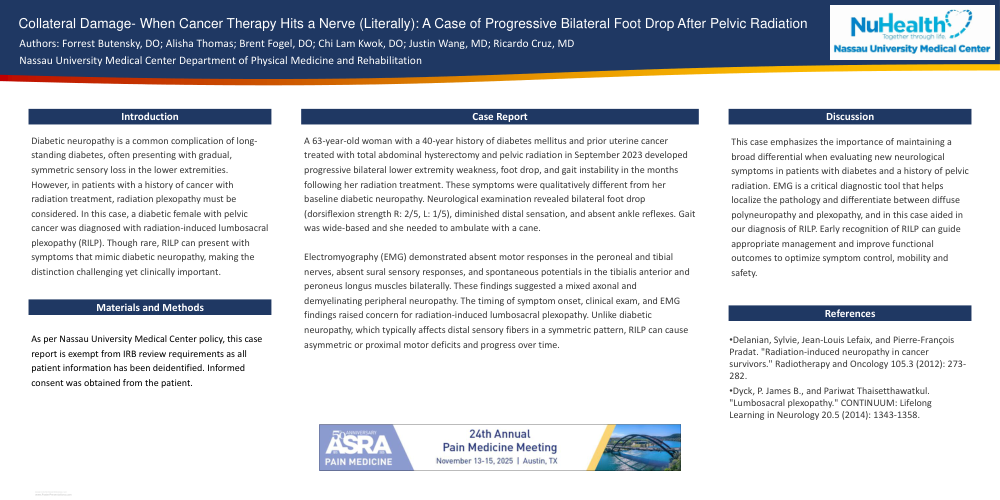
Collateral Damage- When Cancer Therapy Hits a Nerve (Literally): A Case of Progressive Bilateral Foot Drop After Pelvic Radiation
Poster Presenter
Authors
Affiliations
Part of Topic
Scientific Abstracts > Chronic Pain
Introduction:
Diabetic neuropathy is a common complication of long-standing diabetes, often presenting with gradual, symmetric sensory loss in the lower extremities. However, in patients with a history of cancer with radiation treatment, radiation plexopathy must be considered. In this case, a diabetic female with pelvic cancer was diagnosed with radiation-induced lumbosacral plexopathy (RILP). Though rare, RILP can present with symptoms that mimic diabetic neuropathy, making the distinction challenging yet clinically important.
Materials and Methods:
As per Nassau University Medical Center policy, this case report is exempt from IRB review requirements as all patient information has been deidentified. Informed consent was obtained from the patient.
Case Report:
A 63-year-old woman with a 40-year history of diabetes mellitus and prior uterine cancer treated with total abdominal hysterectomy and pelvic radiation in September 2023 developed progressive bilateral lower extremity weakness, foot drop, and gait instability in the months following her radiation treatment. These symptoms were qualitatively different from her baseline diabetic neuropathy. Neurological examination revealed bilateral foot drop (dorsiflexion strength R: 2/5, L: 1/5), diminished distal sensation, and absent ankle reflexes. Gait was wide-based and she needed to ambulate with a cane.
Electromyography (EMG) demonstrated absent motor responses in the peroneal and tibial nerves, absent sural sensory responses, and spontaneous potentials in the tibialis anterior and peroneus longus muscles bilaterally. These findings suggested a mixed axonal and demyelinating peripheral neuropathy. The timing of symptom onset, clinical exam, and EMG findings raised concern for radiation-induced lumbosacral plexopathy. Unlike diabetic neuropathy, which typically affects distal sensory fibers in a symmetric pattern, RILP can cause asymmetric or proximal motor deficits and progress over time.
Discussion:
This case emphasizes the importance of maintaining a broad differential when evaluating new neurological symptoms in patients with diabetes and a history of pelvic radiation. EMG is a critical diagnostic tool that helps localize the pathology and differentiate between diffuse polyneuropathy and plexopathy, and in this case aided in our diagnosis of RILP. Early recognition of RILP can guide appropriate management and improve functional outcomes to optimize symptom control, mobility and safety.
References: