343 posters, 5 videos, 2 audios, 18 topics, 33 sessions, 263 authors, 202 institutions
ePostersLive by SciGen Technologies S.A. All rights reserved.
24th Annual Pain Medicine Meeting 2025
November 13-15, 2025| JW Marriott Austin, Austin, Texas

2197237
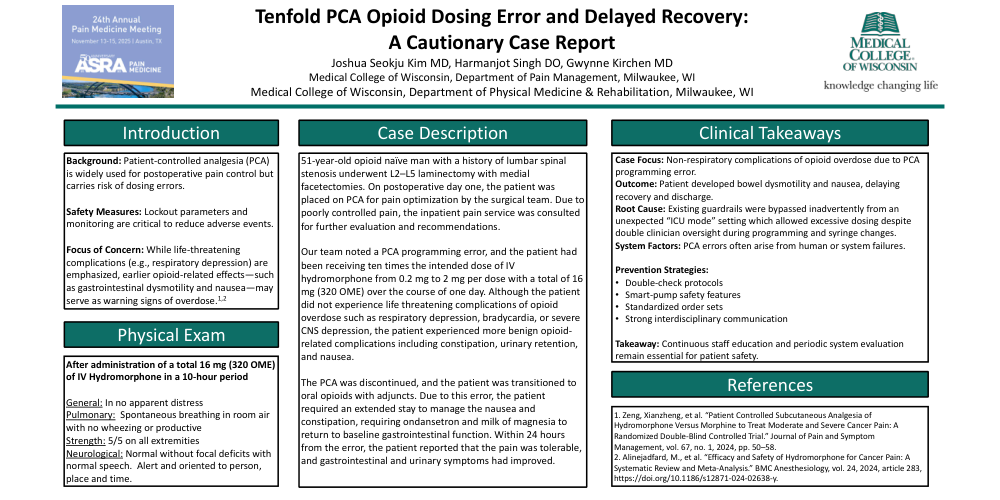
Tenfold PCA Opioid Dosing Error and Delayed Recovery: A Cautionary Case Report
Poster Presenter
Authors
Affiliations
Part of Topic
Safety/QA/QI Projects
Title:
Tenfold PCA Opioid Dosing Error and Delayed Recovery: A Cautionary Case Report
Introduction
Patient-controlled analgesia (PCA) is effective for postoperative pain management but prone to dosing errors, requiring safety measures like lockout parameters to mitigate risk. While focus is often on life-threatening effects such as respiratory depression, opioid-related complications like gastrointestinal dysmotility and nausea can be early indicators of overdose [1,2]. We present a case of a 51-year-old opioid-naïve male who experienced a tenfold PCA hydromorphone error after lumbar decompression, causing bowel dysmotility, urinary retention, and delayed recovery.
Materials and Methods
The patient provided informed consent for the use of their clinical information in this case report. All case details have been anonymized to protect patient confidentiality.
Case Description
A 51-year-old man with a history of lumbar spinal stenosis underwent L2–L5 laminectomy with medial facetectomies. On postoperative day one, the patient was placed on PCA for pain optimization and inpatient pain service was consulted for further evaluation and recommendations. Due to a PCA programming error, the patient was noted by our inpatient team to have received ten times the intended dose of IV hydromorphone from 0.2 mg to 2mg per dose and received a total of 16 mg over the course of one day. Although the patient did not experience life threatening complications of opioid overdose such as respiratory depression, bradycardia, or severe CNS depression, the patient experienced more benign opioid-related complications including constipation, urinary retention, and nausea. Once this error was identified by the medical team, the PCA was discontinued and the patient was transitioned to oral opioids with adjuncts. Due to this error, the patient required an extended stay to manage the nausea and constipation requiring ondansetron and milk of magnesia to return to baseline gastrointestinal function. Within 24 hours from the error, the patient reported that the pain was tolerable, and gastrointestinal and urinary symptoms had improved.
Discussion
This case highlights non-respiratory opioid overdose complications from a PCA programming error. Despite avoiding life-threatening effects, the patient experienced bowel dysmotility and nausea delaying recovery and hospitalization. PCA errors, often from human or system failures, are mitigated through double-checks, smart-pump safeguards, standardized orders, and interdisciplinary communication. Despite these checks at our institution, an unexpected ICU mode allowed excessive dosing despite oversight by two clinicians, emphasizing need for continual staff education and system evaluation for safety.
References:
- Zeng, Xianzheng, et al. “Patient Controlled Subcutaneous Analgesia of Hydromorphone Versus Morphine to Treat Moderate and Severe Cancer Pain: A Randomized Double-Blind Controlled Trial.” Journal of Pain and Symptom Management, vol. 67, no. 1, 2024, pp. 50–58.
- Alinejadfard, M., et al. “Efficacy and Safety of Hydromorphone for Cancer Pain: A Systematic Review and Meta-Analysis.” BMC Anesthesiology, vol. 24, 2024, article 283, https://doi.org/10.1186/s12871-024-02638-y.