Loading...

343 posters, 5 videos, 2 audios, 18 topics, 33 sessions, 263 authors, 202 institutions

ePostersLive by SciGen Technologies S.A. All rights reserved.

24th Annual Pain Medicine Meeting 2025

November 13-15, 2025| JW Marriott Austin, Austin, Texas

24th Annual Pain Medicine Meeting 2025 banner

2196701

Younger But Not Softer: A Narrative Review on How Pediatric Patients Cope with Pain
Poster Presenter

Maher Gill

Authors

Maher Gill

Affiliations

JPS Hospital

Part of Topic

Scientific Abstracts > Chronic Pain

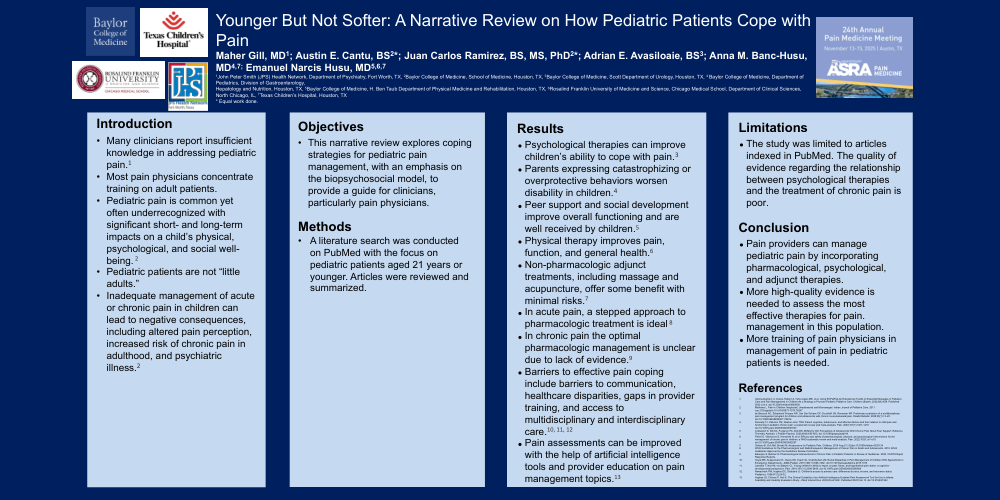
Introduction

Many clinicians report insufficient knowledge in addressing pediatric pain.1

Most pain physicians concentrate training on adult patients.

Pediatric pain is common yet often underrecognized with significant short- and long-term impacts on a child’s physical, psychological, and social well-being. 2

Pediatric patients are not “little adults.”

Inadequate management of acute or chronic pain in children can lead to negative consequences, including altered pain perception, increased risk of chronic pain in adulthood, and psychiatric illness.2

Objectives

This narrative review explores coping strategies for pediatric pain management, with an emphasis on the biopsychosocial model, to provide a guide for clinicians, particularly pain physicians.


Methods

A literature search was conducted on PubMed with the focus on pediatric patients aged 21 years or younger. Articles were reviewed and summarized.

Results

●Psychological therapies can improve children’s ability to cope with pain.3
●Parents expressing catastrophizing or overprotective behaviors worsen disability in children.4
●Peer support and social development improve overall functioning and are well received by children.5
●Physical therapy improves pain, function, and general health.6
●Non-pharmacologic adjunct treatments, including massage and acupuncture, offer some benefit with minimal risks.7
●In acute pain, a stepped approach to pharmacologic treatment is ideal 8
●In chronic pain the optimal pharmacologic management is unclear due to lack of evidence.9
●Barriers to effective pain coping include barriers to communication, healthcare disparities, gaps in provider training, and access to multidisciplinary and interdisciplinary care.10, 11, 12
●Pain assessments can be improved with the help of artificial intelligence tools and provider education on pain management topics.13
 

Limitations

●The study was limited to articles indexed in PubMed. The quality of evidence regarding the relationship between psychological therapies and the treatment of chronic pain is poor.
●

Conclusion

●Pain providers can manage pediatric pain by incorporating pharmacological, psychological, and adjunct therapies.
●More high-quality evidence is needed to assess the most effective therapies for pain management in this population.
●More training of pain physicians in management of pain in pediatric patients is needed.
24th Annual Pain Medicine Meeting 2025 banner
Copyright © 2015-2026, ePostersLive® SciGen is a registered trademark of SciGen Technologies S.A. Patent pending.

This website and third-party tools we use rely on cookies for the best user experience. By selecting "I agree", you agree to cookie usage as described in our Privacy Policy.