343 posters, 5 videos, 2 audios, 18 topics, 33 sessions, 263 authors, 202 institutions
ePostersLive by SciGen Technologies S.A. All rights reserved.
24th Annual Pain Medicine Meeting 2025
November 13-15, 2025| JW Marriott Austin, Austin, Texas

2191348
Didn't Circle Back: Patient with A Conus Medullaris Mass Lost to Follow Up
Poster Presenter
Authors
Affiliations
Part of Topic
Scientific Abstracts > Chronic Pain
Introduction:
Conus medullaris masses can be caused by benign tumors like schwannomas, neurofibromas, and lipomas, as well as malignant tumors such as gliomas, metastatic lesions, and primary spinal cord tumors. These masses can lead lower back pain, leg weakness, sensory disturbances, and bladder or bowel dysfunction, depending on the level of compression. Treatment may involve surgery, radiation, or chemotherapy.
Materials and Methods:
As per Nassau University Medical Center policy, this case report is exempt from IRB review requirements as all patient information has been deidentified. Informed consent was obtained from the patient.
Case Report:
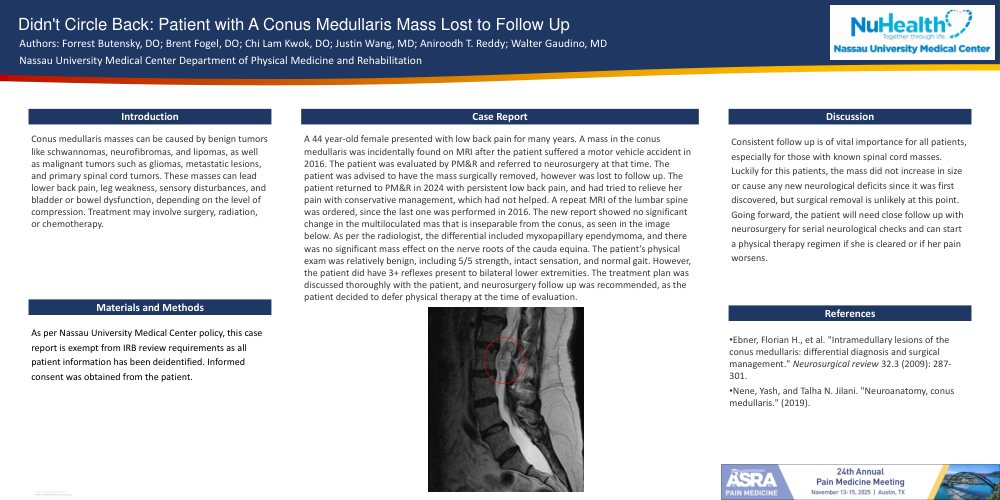
A 44 year-old female presented with low back pain for many years. A mass in the conus medullaris was incidentally found on MRI after the patient suffered a motor vehicle accident in 2016. The patient was evaluated by PM&R and referred to neurosurgery at that time. The patient was advised to have the mass surgically removed, however was lost to follow up. The patient returned to PM&R in 2024 with persistent low back pain, and had tried to relieve her pain with conservative management, which had not helped. A repeat MRI of the lumbar spine was ordered, since the last one was performed in 2016. The new report showed no significant change in the multiloculated mas that is inseparable from the conus. As per the radiologist, the differential included myxopapillary ependymoma, and there was no significant mass effect on the nerve roots of the cauda equina. The patient’s physical exam was relatively benign, including 5/5 strength, intact sensation, and normal gait. However, the patient did have 3+ reflexes present to bilateral lower extremities. The treatment plan was discussed thoroughly with the patient, and neurosurgery follow up was recommended, as the patient decided to defer physical therapy at the time of evaluation.
Discussion:
Consistent follow up is of vital importance for all patients, especially for those with known spinal cord masses. Luckily for this patients, the mass did not increase in size or cause any new neurological deficits since it was first discovered, but surgical removal is unlikely at this point. Going forward, the patient will need close follow up with neurosurgery for serial neurological checks and can start a physical therapy regimen if she is cleared or if her pain worsens.
References: