501 posters, 2 videos, 1 audios, 8 topics, 37 sessions, 395 authors, 307 institutions
ePostersLive by SciGen Technologies S.A. All rights reserved.
23rd Annual Pain Medicine Meeting 2024
November 21-23, 2024 | Caesars Palace, Las Vegas, Nevada

6184
DICYCLOMINE AS A POTENTIAL TREATMENT OPTION FOR NEUROPATHIC PAIN IN SPINAL CORD INJURY: A CASE REPORT
Poster Presenter
Part of Topic
Medically Challenging Cases
Dicyclomine as a Potential Treatment Option for Neuropathic Pain in Spinal Cord Injury: A Case Report
We present a complex case of spinal cord injury (SCI)-related neuropathic pain (NP), where clinically significant improvement was achieved with the combined use of dicyclomine and gabapentin. Dicyclomine, a muscarinic antagonist traditionally used to treat gastrointestinal spasms, also inhibits histamine and bradykinin—mechanisms implicated in analgesia and NP modulation.1,2
18-year-old female s/p gunshot wounds sustained T3 AIS A paraplegia. She was admitted to acute rehabilitation with neurogenic bladder and bowel, NP, intermittent nausea, and abdominal discomfort, which continued despite an effective neurogenic bowel program. Diagnostic studies were unrevealing. She was started on dicyclomine 10 mg TID PRN with good effect for truncal and abdominal pain while also receiving treatment with low dose gabapentin for her NP. Dicyclomine was discontinued upon resolution of her NP, but her burning pain significantly worsened after cessation. The reinstitution of dicyclomine 10 mg TID PRN resulted in pain resolution. Upon discharge from acute rehabilitation, her NP remained controlled on this regimen.
The combination of dicyclomine and gabapentin proved effective and well tolerated in treating this patient’s SCI-related NP.
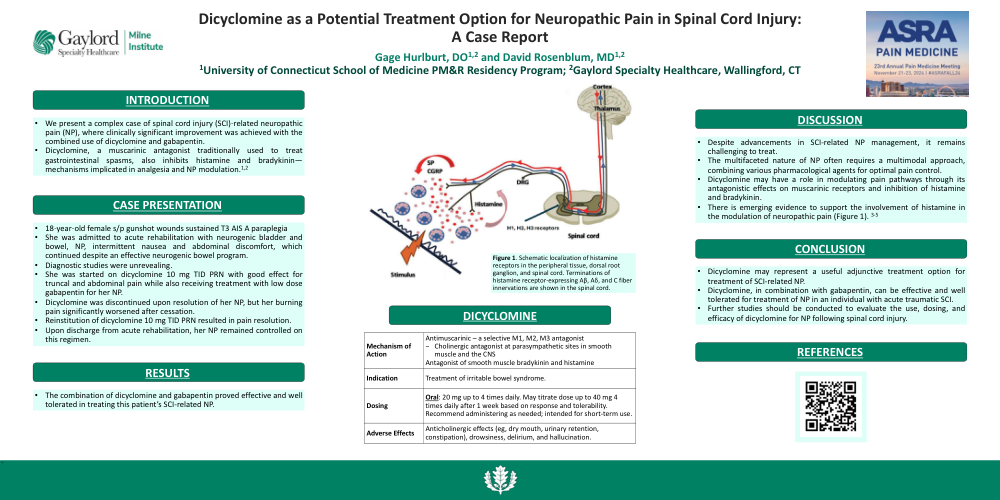
Despite advancements in SCI-related NP management, it remains challenging to treat. The multifaceted nature of NP often requires a multimodal approach, combining various pharmacological agents for optimal pain control. Dicyclomine may have a role in modulating pain pathways through its antagonistic effects on muscarinic receptors and inhibition of histamine and bradykinin. There is emerging evidence to support the involvement of histamine in the modulation of neuropathic pain (Figure 1).3-5
Dicyclomine may represent a useful adjunctive treatment option for treating SCI-related NP. Dicyclomine, in combination with gabapentin, can be effective and well tolerated for the treatment of NP in an individual with acute traumatic SCI. Further studies should be conducted to evaluate the use, dosing, and efficacy of dicyclomine for NP following spinal cord injury.