501 posters, 2 videos, 1 audios, 8 topics, 37 sessions, 395 authors, 307 institutions
ePostersLive by SciGen Technologies S.A. All rights reserved.
23rd Annual Pain Medicine Meeting 2024
November 21-23, 2024 | Caesars Palace, Las Vegas, Nevada

6099
LONG-TERM RELIEF FROM ANOSMIA, AGEUSIA, AND PTSD SYMPTOMS AFTER A 3-YEAR SERIES OF STELLATE GANGLION BLOCKS
Poster Presenter
Part of Topic
Medically Challenging Cases
Introduction
• Smell and taste are mediated by the olfactory and gustatory systems through chemoreception.
• COVID-19 is a notable cause of temporary anosmia and ageusia, with some long COVID patients experiencing persistent issues due to nasal and oral mucosal inflammation or sympathetic nervous system dysregulation.
Case Description
History
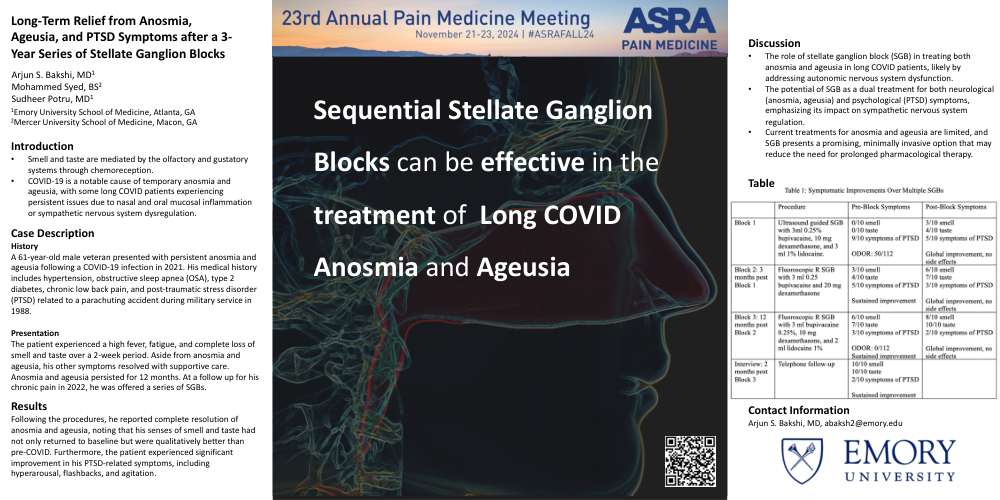
A 61-year-old male veteran presented with persistent anosmia and ageusia following a COVID-19 infection in 2021. His medical history includes hypertension, obstructive sleep apnea (OSA), type 2 diabetes, chronic low back pain, and post-traumatic stress disorder (PTSD) related to a parachuting accident during military service in 1988.
Presentation
The patient experienced a high fever, fatigue, and complete loss of smell and taste over a 2-week period. Aside from anosmia and ageusia, his other symptoms resolved with supportive care. Anosmia and ageusia persisted for 12 months. At a follow up for his chronic pain in 2022, he was offered a series of SGBs.
Results
Following the procedures, he reported complete resolution of anosmia and ageusia, noting that his senses of smell and taste had
not only returned to baseline but were qualitatively better than pre-COVID. Furthermore, the patient experienced significant improvement in his PTSD-related symptoms, including hyperarousal, flashbacks, and agitation.
Sequential Stellate Ganglion Blocks can be effective in the treatment of Long COVID Anosmia and Ageusia
Discussion
• The role of stellate ganglion block (SGB) in treating both anosmia and ageusia in long COVID patients, likely by addressing autonomic nervous system dysfunction.
• The potential of SGB as a dual treatment for both neurological (anosmia, ageusia) and psychological (PTSD) symptoms, emphasizing its impact on sympathetic nervous system regulation.
• Current treatments for anosmia and ageusia are limited, and SGB presents a promising, minimally invasive option that may reduce the need for prolonged pharmacological therapy.