501 posters, 2 videos, 1 audios, 8 topics, 37 sessions, 395 authors, 307 institutions
ePostersLive by SciGen Technologies S.A. All rights reserved.
23rd Annual Pain Medicine Meeting 2024
November 21-23, 2024 | Caesars Palace, Las Vegas, Nevada

6035
MULTIMODAL PAIN MANAGEMENT IN FIBROSING MEDIASTINITIS
Poster Presenter
Authors
Affiliations
Part of Topic
Medically Challenging Cases
Fibrosing Mediastinitis (FM) is a rare, slowly progressing disease that involves fibrotic infiltration of the mediastinum and/or hilar regions resulting in constriction or occlusion of chest structures such as pulmonary artery/vein, superior vena cava (SVC), airways/ bronchi, and/or the esophagus.
-Can be fatal in the setting of bilateral lung involvement.
-May result secondary to histoplasma infection (post-histoplasma fibrosing mediastinitis) and more rarely be idiopathic.
-Symptoms: chronic (pleuritic) chest pain, dyspnea, fatigue, dysphagia, face/arm swelling, and hemoptysis are likely secondary to narrowing of major chest vessels such as the SVC or pulmonary vessels and
-diagnosis can be made with chest CT demonstrating abnormal mediastinal tissue.
-We report a multimodal pain management strategy
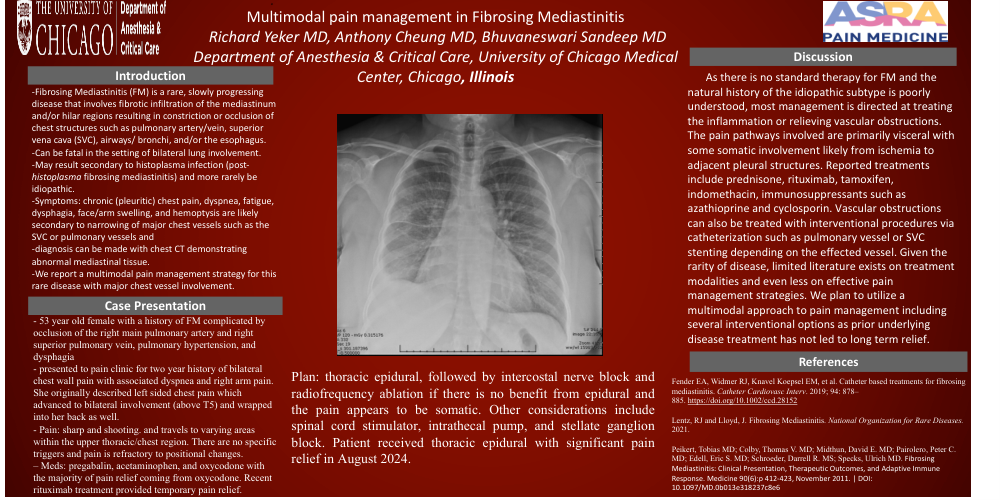
53 year old female with a history of FM complicated by occlusion of the right main pulmonary artery and right superior pulmonary vein, pulmonary hypertension, and dysphagia
- presented to pain clinic for two year history of bilateral chest wall pain with associated dyspnea and right arm pain. She originally described left sided chest pain which advanced to bilateral involvement (above T5) and wrapped into her back as well.
- Pain: sharp and shooting. and travels to varying areas within the upper thoracic/chest region. There are no specific triggers and pain is refractory to positional changes.
– Meds: pregabalin, acetaminophen, and oxycodone with the majority of pain relief coming from oxycodone. Recent rituximab treatment provided temporary pain relief.
Plan: thoracic epidural, followed by intercostal nerve block and radiofrequency ablation if there is no benefit from epidural and the pain appears to be somatic. Other considerations include spinal cord stimulator, intrathecal pump, and stellate ganglion block. Patient received thoracic epidural with significant pain relief in August 2024.
As there is no standard therapy for FM and the natural history of the idiopathic subtype is poorly understood, most management is directed at treating the inflammation or relieving vascular obstructions. The pain pathways involved are primarily visceral with some somatic involvement likely from ischemia to adjacent pleural structures. Reported treatments include prednisone, rituximab, tamoxifen, indomethacin, immunosuppressants such as azathioprine and cyclosporin. Vascular obstructions can also be treated with interventional procedures via catheterization such as pulmonary vessel or SVC stenting depending on the effected vessel. Given the rarity of disease, limited literature exists on treatment modalities and even less on effective pain management strategies. We plan to utilize a multimodal approach to pain management including several interventional options as prior underlying disease treatment has not led to long term relief.