501 posters, 2 videos, 1 audios, 8 topics, 37 sessions, 395 authors, 307 institutions
ePostersLive by SciGen Technologies S.A. All rights reserved.
23rd Annual Pain Medicine Meeting 2024
November 21-23, 2024 | Caesars Palace, Las Vegas, Nevada

5926
NEUROMA MANAGEMENT IN A PATIENT WITH PNS FOR PHANTOM LIMB PAIN POST-AMPUTATION
Poster Presenter
Authors
Affiliations
Part of Topic
Medically Challenging Cases
Title: Neuroma Management in a Patient with PNS for Phantom Limb Pain Post-Amputation
Authors: Shreya N. Patel, DO (Presenting Author); Amit Sharma, MD; Trent Emerick, MD
INTRODUCTION
-
CRPS and Neuromas can develop after limb trauma or surgeries like BKAs, leading to chronic pain and complications with recovery and prosthetic use.
-
Neuromas, or abnormal nerve growths at the amputation site, can significantly worsen residual limb pain and complicate prosthetic use, requiring targeted intervention.
-
Comprehensive management of CRPS and neuroma-related pain, including medications, peripheral nerve stimulators, and nerve blocks, is crucial for improving patient outcomes and quality of life.
METHODS
-
Patient: 63-year-old male with CRPS and phantom limb pain post-BKA experienced persistent residual limb pain due to a sciatic neuroma, managed with a nerve block and multimodal pain strategies
-
The peripheral nerve stimulator (PNS) used in this case was the Curonix device, targeting sciatic nerve-related pain
-
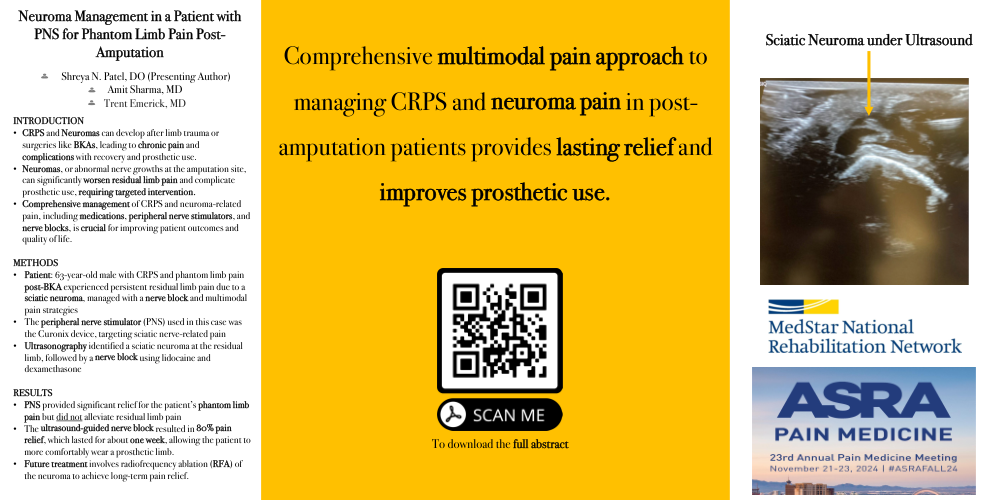
Ultrasonography identified a sciatic neuroma at the residual limb, followed by a nerve block using lidocaine and dexamethasone
RESULTS
-
PNS provided significant relief for the patient’s phantom limb pain but did not alleviate residual limb pain
-
The ultrasound-guided nerve block resulted in 80% pain relief, which lasted for about one week, allowing the patient to more comfortably wear a prosthetic limb.
-
Future treatment involves radiofrequency ablation (RFA) of the neuroma to achieve long-term pain relief.