501 posters, 2 videos, 1 audios, 8 topics, 37 sessions, 395 authors, 307 institutions
ePostersLive by SciGen Technologies S.A. All rights reserved.
23rd Annual Pain Medicine Meeting 2024
November 21-23, 2024 | Caesars Palace, Las Vegas, Nevada

6309
PAIN: AN OVERLOOKED SYMPTOM IN GBS
Poster Presenter
Authors
Affiliations
Part of Topic
Medically Challenging Cases
Pain: An Overlooked Symptom of GBS
Authors: Leslie Wong, DO; Petter Atallah, DO; Karthik Kamath, DO; Jenzel Espares, DO; Elliott Berry, MD; Ajendra Sohal, MD
Department: Physical Medicine and Rehabilitation
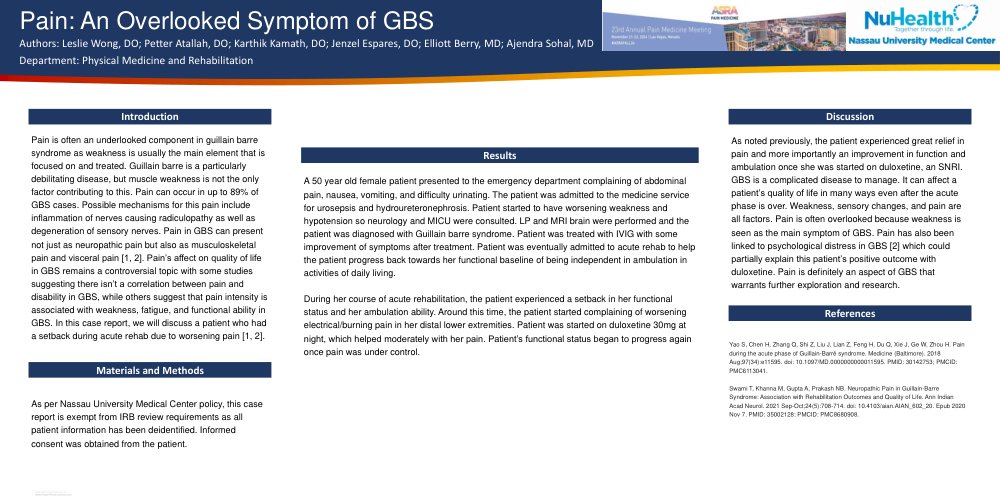
Pain is often an underlooked component in guillain barre syndrome as weakness is usually the main element that is focused on and treated. Guillain barre is a particularly debilitating disease, but muscle weakness is not the only factor contributing to this. Pain can occur in up to 89% of GBS cases. Possible mechanisms for this pain include inflammation of nerves causing radiculopathy as well as degeneration of sensory nerves. Pain in GBS can present not just as neuropathic pain but also as musculoskeletal pain and visceral pain [1, 2]. Pain’s affect on quality of life in GBS remains a controversial topic with some studies suggesting there isn’t a correlation between pain and disability in GBS, while others suggest that pain intensity is associated with weakness, fatigue, and functional ability in GBS. In this case report, we will discuss a patient who had a setback during acute rehab due to worsening pain [1, 2].
A 50 year old female patient presented to the emergency department complaining of abdominal pain, nausea, vomiting, and difficulty urinating. The patient was admitted to the medicine service for urosepsis and hydroureteronephrosis. Patient started to have worsening weakness and hypotension so neurology and MICU were consulted. LP and MRI brain were performed and the patient was diagnosed with Guillain barre syndrome. Patient was treated with IVIG with some improvement of symptoms after treatment. Patient was eventually admitted to acute rehab to help the patient progress back towards her functional baseline of being independent in ambulation in activities of daily living.
During her course of acute rehabilitation, the patient experienced a setback in her functional status and her ambulation ability. Around this time, the patient started complaining of worsening electrical/burning pain in her distal lower extremities. Patient was started on duloxetine 30mg at night, which helped moderately with her pain. Patient’s functional status began to progress again once pain was under control.
As noted previously, the patient experienced great relief in pain and more importantly an improvement in function and ambulation once she was started on duloxetine, an SNRI. GBS is a complicated disease to manage. It can affect a patient’s quality of life in many ways even after the acute phase is over. Weakness, sensory changes, and pain are all factors. Pain is often overlooked because weakness is seen as the main symptom of GBS. Pain has also been linked to psychological distress in GBS [2] which could partially explain this patient’s positive outcome with duloxetine. Pain is definitely an aspect of GBS that warrants further exploration and research.