501 posters, 2 videos, 1 audios, 8 topics, 37 sessions, 395 authors, 307 institutions
ePostersLive by SciGen Technologies S.A. All rights reserved.
23rd Annual Pain Medicine Meeting 2024
November 21-23, 2024 | Caesars Palace, Las Vegas, Nevada

6159
USING THORACIC PARAVERTEBRAL BLOCKS TO TREAT INTERCOSTAL NEURALGIA
Poster Presenter
Authors
Affiliations
Part of Topic
Medically Challenging Cases
Using Thoracic Paravertebral Blocks to Treat Intercostal Neuralgia
Incorporating thoracic paravertebral blocks and peripheral nerve stimulation into the treatment algorithm for refractory intercostal neuralgia may offer a more comprehensive approach to pain management, ultimately improving patient outcomes.
- Intercostal neuralgia encompasses pain associated with the intercostal nerves
- Standard of care can include pain control with NSAIDs, neuropathic medications, and intercostal nerve blocks (ICNBs)
- This case details an additional strategy to consider when patient fail the typical course of treatment.
- A 36-year old male presented with chronic left-sided thoracic pain, originating from his back and wrapping around his chesPatient reported only partial relief following an ICNB
- Performing a thoracic paravertebral block (TPVB) provided 100% pain relief for one week
- Peripheral nerve stimulation (PNS) system was placed in the paravertebral space for 2 months
- Patient reported complete pain relief while the leads were in place and even after removal
- Sympathetic-mediated pain may explain why patient only had partial relief with an ICNB
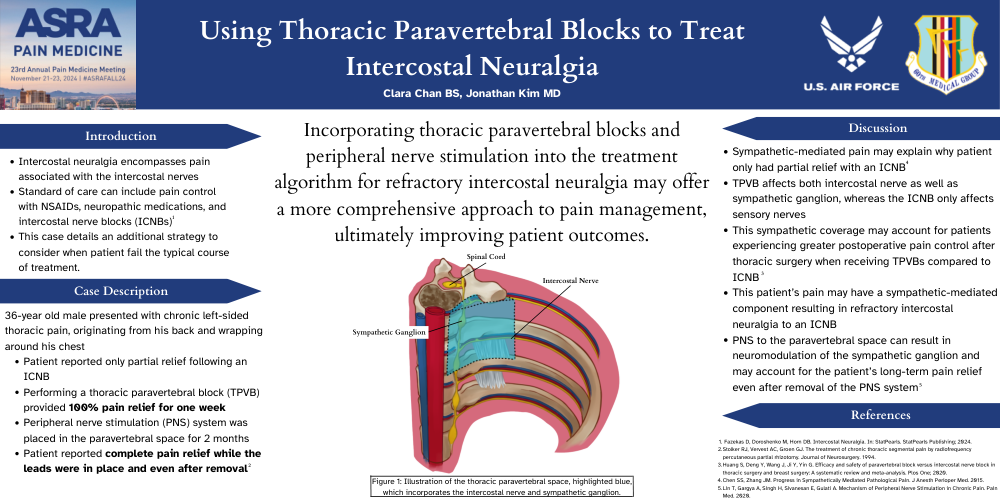
- TPVB affects both intercostal nerve as well as sympathetic ganglion, whereas the ICNB only affects sensory nerves
- This sympathetic coverage may account for patients experiencing greater postoperative pain control after thoracic surgery when receiving TPVBs compared to ICNB
- This patient’s pain may have a sympathetic-mediated component resulting in refractory intercostal neuralgia to an ICNB
- PNS to the paravertebral space can result in neuromodulation of the sympathetic ganglion and may account for the patient’s long-term pain relief even after removal of the PNS system