501 posters, 2 videos, 1 audios, 8 topics, 37 sessions, 395 authors, 307 institutions
ePostersLive by SciGen Technologies S.A. All rights reserved.
23rd Annual Pain Medicine Meeting 2024
November 21-23, 2024 | Caesars Palace, Las Vegas, Nevada

6251
TREATMENT OF REFRACTORY XIPHODYNIA WITH INTERCOSTAL NERVE RADIOFREQUENCY ABLATION
Poster Presenter
Authors
Affiliations
Part of Topic
Medically Challenging Cases
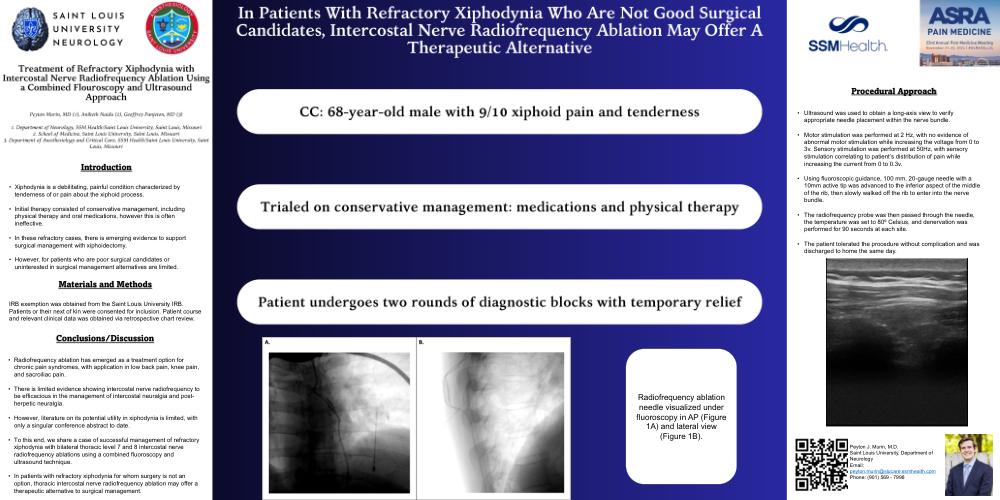
Treatment of Refractory Xiphodynia with Intercostal Nerve Radiofrequency Ablation Using a Combined Fluoroscopy and Ultrasound Approach
Introduction:
Xiphodynia is a debilitating, painful condition characterized by tenderness of or pain about the xiphoid process. Initial therapy consisted of conservative management, including physical therapy and oral medications, however this is often ineffective. In these refractory cases, there is emerging evidence to support surgical management with xiphoidectomy. However, for patients who are poor surgical candidates or uninterested in surgical management alternatives are limited.
Materials and Methods:
IRB exemption was obtained from the Saint Louis University IRB. Patients or their next of kin were consented for inclusion. Patient course and relevant clinical data was obtained via retrospective chart review.
Conclusions/Discussion:
Radiofrequency ablation has emerged as a treatment option for chronic pain syndromes, with application in low back pain, knee pain, and sacroiliac pain. There is limited evidence showing intercostal nerve radiofrequency to be efficacious in the management of intercostal neuralgia and post-herpetic neuralgia. However, literature on its potential utility in xiphodyniais limited, with only a singular conference abstract to date. To this end, we share a case of successful management of refractory xiphodynia with bilateral thoracic level 7 and 8 intercostal nerve radiofrequency ablations using a combined fluoroscopy and ultrasound technique. In patients with refractory xiphodynia for whom surgery is not an option, thoracic intercostal nerve radiofrequency ablation may offer a therapeutic alternative to surgical management.