501 posters, 2 videos, 1 audios, 8 topics, 37 sessions, 395 authors, 307 institutions
ePostersLive by SciGen Technologies S.A. All rights reserved.
23rd Annual Pain Medicine Meeting 2024
November 21-23, 2024 | Caesars Palace, Las Vegas, Nevada

6087
THE IMPACT OF A FALSE-POSITIVE URINE DRUG TESTING RESULT DUE TO METHADONE/BUPRENORPHINE CROSS REACTIVITY: A CASE REPORT
Poster Presenter
Authors
Affiliations
Part of Topic
Medically Challenging Cases
Patient profile:
• 70-year-old female patient w/ hx of rheumatoid arthritis, hip osteoarthritis, lumbar spondylosis, and long-standing methadone use for pain management presented to our interdisciplinary pain clinic seeking to establish care after her previous provider relocated.
Management:
UDT ordered during onboarding for methadone weaning plan
• Urine Drug screening (UDS)results:
-Consistent with methadone use
- False-positive for buprenorphine
• Patient denied buprenorphine use
• CURES (Controlled Substance Utilization Review and Evaluation System)database supported patient's claim
• Methadone not refilled during visit
• Repeat UDS yielded negative results for buprenorphine
Cutoff level importance:
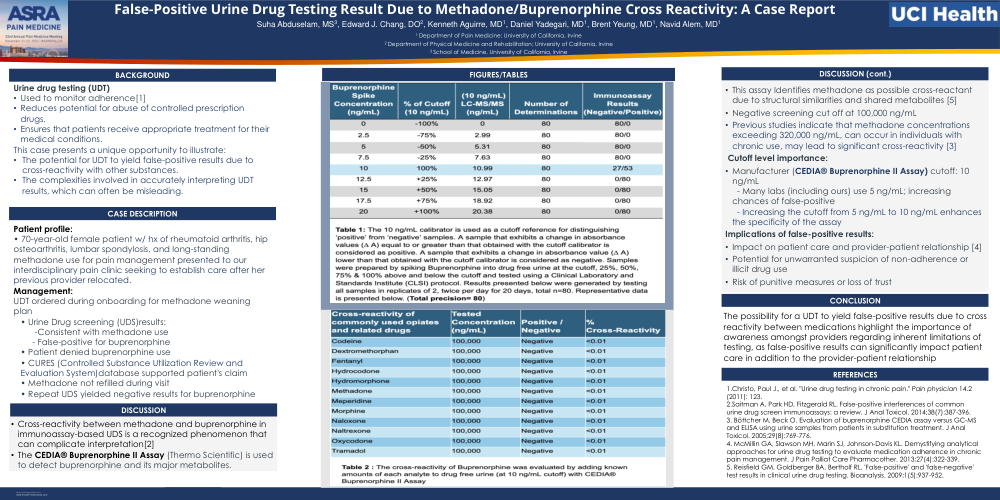
- Many labs (including ours) use 5 ng/mL; increasing chances of false-positive
- Increasing the cutoff from 5 ng/mL to 10 ng/mL enhances the specificity of the assay
Implications of false-positive results:
The possibility for a UDT to yield false-positive results due to cross reactivity between medications highlight the importance of awareness amongst providers regarding inherent limitations of testing, as false-positive results can significantly impact patient care in addition to the provider-patient relationship