501 posters, 2 videos, 1 audios, 8 topics, 37 sessions, 395 authors, 307 institutions
ePostersLive by SciGen Technologies S.A. All rights reserved.
23rd Annual Pain Medicine Meeting 2024
November 21-23, 2024 | Caesars Palace, Las Vegas, Nevada

5946
FLANKING THE PAIN: PERIPHERAL NERVE STIMULATION'S SHOCKINGLY EFFECTIVE RELIEF FOR POLYCYSTIC KIDNEY DISEASE
Poster Presenter
Authors
Affiliations
Part of Topic
Medically Challenging Cases
FLANKING THE PAIN: PERIPHERAL NERVE STIMULATION'S SHOCKINGLY EFFECTIVE RELIEF FOR POLYCYSTIC KIDNEY DISEASE
Patient: 28-year-old female with a history of Polycystic Kidney Disease (PCKD)
Chief Complaint: Right flank pain
Clinical Background:
•Patient presented with worsening right flank pain following an increase in cyst burden, confirmed via imaging.
•Due to her PCKD and compromised kidney function, pharmacologic pain management options were significantly limited.
•
Management Plan:
•A diagnostic Transverse Abdominal Plane (TAP) block was proposed as an initial intervention to assess localized pain control. If effective, the plan was to proceed with Peripheral Nerve Stimulation (PNS) for long-term management.
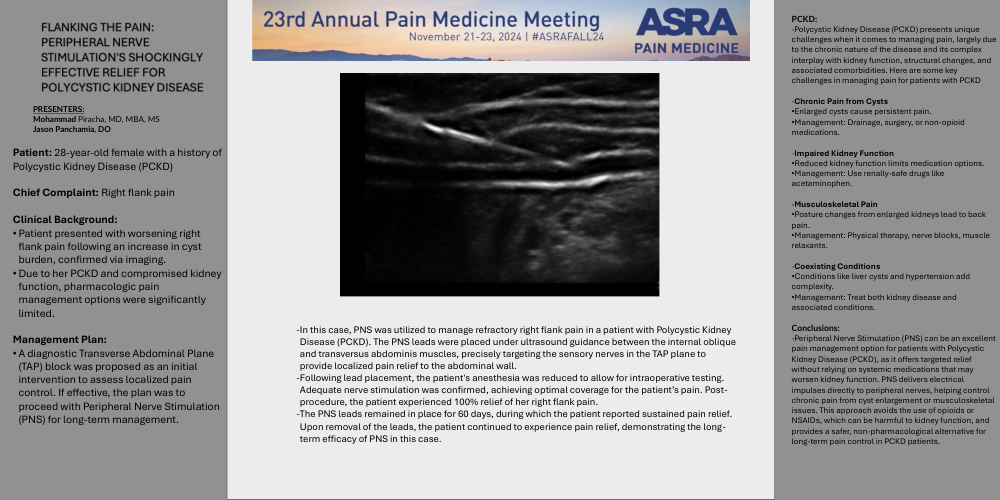
-In this case, PNS was utilized to manage refractory right flank pain in a patient with Polycystic Kidney Disease (PCKD). The PNS leads were placed under ultrasound guidance between the internal oblique and transversus abdominis muscles, precisely targeting the sensory nerves in the TAP plane to provide localized pain relief to the abdominal wall.
-Following lead placement, the patient's anesthesia was reduced to allow for intraoperative testing. Adequate nerve stimulation was confirmed, achieving optimal coverage for the patient’s pain. Post-procedure, the patient experienced 100% relief of her right flank pain.
-The PNS leads remained in place for 60 days, during which the patient reported sustained pain relief. Upon removal of the leads, the patient continued to experience pain relief, demonstrating the long-term efficacy of PNS in this case.
PCKD:
-Polycystic Kidney Disease (PCKD) presents unique challenges when it comes to managing pain, largely due to the chronic nature of the disease and its complex interplay with kidney function, structural changes, and associated comorbidities. Here are some key challenges in managing pain for patients with PCKD
-Chronic Pain from Cysts
•Enlarged cysts cause persistent pain.
•Management: Drainage, surgery, or non-opioid medications.
-Impaired Kidney Function
•Reduced kidney function limits medication options.
•Management: Use renally-safe drugs like acetaminophen.
-Musculoskeletal Pain
•Posture changes from enlarged kidneys lead to back pain.
•Management: Physical therapy, nerve blocks, muscle relaxants.
-Coexisting Conditions
•Conditions like liver cysts and hypertension add complexity.
•Management: Treat both kidney disease and associated conditions.
Conclusions:
-Peripheral Nerve Stimulation (PNS) can be an excellent pain management option for patients with Polycystic Kidney Disease (PCKD), as it offers targeted relief without relying on systemic medications that may worsen kidney function. PNS delivers electrical impulses directly to peripheral nerves, helping control chronic pain from cyst enlargement or musculoskeletal issues. This approach avoids the use of opioids or NSAIDs, which can be harmful to kidney function, and provides a safer, non-pharmacological alternative for long-term pain control in PCKD patients.