425 posters, 1 videos, 9 audios, 8 topics, 53 sessions, 340 authors, 286 institutions
ePostersLive by SciGen Technologies S.A. All rights reserved.
22nd Annual Pain Medicine Meeting 2023
November 10 - 11, 2023 | New Orleans Marriott | New Orleans, Louisiana, USA

4582
VISUAL OVER-THE-COUNTER PAIN MEDICATION LIST TO IMPROVE MEDICATION DOCUMENTATION IN CHRONIC PAIN PATIENTS
Poster Presenter
Authors
Affiliations
Part of Topic
Safety/QA/QI Projects
Chronic pain (CP) patients often grapple with the dual challenge of managing their pain while also dealing with cardiovascular disease (CVD) or the risk of developing it. The intertwined nature of the cardiovascular and pain regulatory systems means that managing pain in these patients demands a meticulous approach. A popular recourse for many is the use of Over-The-Counter (OTC) medications. However, the potential cardiovascular implications of such medications are frequently underestimated, leading to suboptimal documentation and heightened patient risk.
One of the primary hurdles in addressing this challenge is the inconsistency in documenting OTC usage in patient charts. Physicians, pressed for time, might inadvertently overlook discussions about OTC use during patient consultations. Moreover, patients might not always report their OTC consumption accurately due to knowledge gaps. This scenario underscores concerns in areas of Quality & Safety, Patient Experience, and Cost/Expense.
Objectives: This project aspires to enhance the documentation of OTC medications among chronic pain patients. At the same time, it seeks to elevate awareness about the cardiovascular risks associated with OTCs, ensuring both patients and providers are adequately informed.
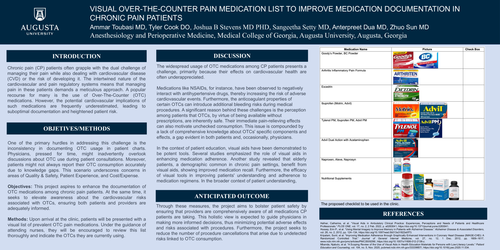
Methods: Upon arrival at the clinic, patients will be presented with a visual list of prevalent OTC pain medications. Under the guidance of attending nurses, they will be encouraged to review this list thoroughly and indicate the OTCs they are currently using.
The widespread usage of OTC medications among CP patients presents a challenge, primarily because their effects on cardiovascular health are often underappreciated.
Medications like NSAIDs, for instance, have been observed to negatively interact with antihypertensive drugs, thereby increasing the risk of adverse cardiovascular events. Furthermore, the anticoagulant properties of certain OTCs can introduce additional bleeding risks during medical procedures. A significant reason behind these challenges is the perception among patients that OTCs, by virtue of being available without prescriptions, are inherently safe. Their immediate pain-relieving effects can also motivate unchecked consumption. This issue is compounded by a lack of comprehensive knowledge about OTCs' specific components and effects, a gap evident in both patients and, occasionally, physicians.
In the context of patient education, visual aids have been demonstrated to be potent tools. Several studies emphasized the role of visual aids in enhancing medication adherence. Another study revealed that elderly patients, a demographic common in chronic pain settings, benefit from visual aids, showing improved medication recall. Furthermore, the efficacy of visual tools in improving patients' understanding and adherence to medication regimens. In the broader context of patient understanding,
Through these measures, the project aims to bolster patient safety by ensuring that providers are comprehensively aware of all medications CP patients are taking. This holistic view is expected to guide physicians in making more informed decisions, thus minimizing potential adverse effects and risks associated with procedures. Furthermore, the project seeks to reduce the number of procedure cancellations that arise due to undetected risks linked to OTC consumption.