425 posters, 1 videos, 9 audios, 8 topics, 53 sessions, 340 authors, 286 institutions
ePostersLive by SciGen Technologies S.A. All rights reserved.
22nd Annual Pain Medicine Meeting 2023
November 10 - 11, 2023 | New Orleans Marriott | New Orleans, Louisiana, USA

4719
DEFINING POSTOPERATIVE RESPIRATORY DEPRESSION: THE NEED FOR A UNIVERSALLY ACCEPTED DEFINITION
Poster Presenter
Authors
Affiliations
Part of Topic
Emerging Technology
Defining Postoperative Respiratory Depression: The Need for a Universally Accepted Definition
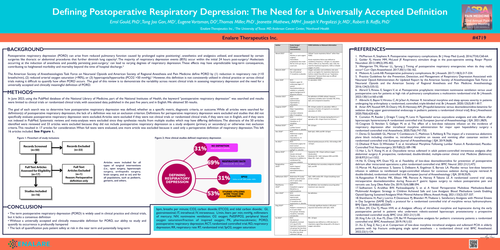
Postoperative respiratory depression (PORD) can arise from reduced pulmonary function caused by prolonged supine positioning1, anesthetics and analgesics utilized, and exacerbated by certain surgeries like thoracic or abdominal procedures that further diminish lung capacity2. The majority of respiratory depression events (85%) occur within the initial 24 hours post-surgery.3 Atelectasis occurring at the induction of anesthesia and possibly persisting post-surgery,1 can lead to varying degrees of respiratory depression. These effects may have unpredictable long-term consequences, contributing to heightened morbidity and mortality beyond the time of hospital discharge.4
The American Society of Anesthesiologists Task Force on Neuraxial Opioids and American Society of Regional Anesthesia and Pain Medicine define PORD by (1) reduction in respiratory rate (<10 breaths/min), (2) reduced arterial oxygen saturation (<90%), or (3) hypercapnia/hypercarbia (PCO2 >50 mmHg).5 However, this definition is not consistently utilized in clinical practice or across clinical trials making it difficult to quantify how often PORD occurs. The goal of this review is to demonstrate the variability across recent clinical trials in accessing respiratory depression and the need for a universally accepted and clinically meaningful definition of PORD.