105 posters, 2 topics, 24 sessions, 264 authors, 71 institutions
ePostersLive by SciGen Technologies S.A. All rights reserved.
2022 ACP Annual Session
2 - 5 November | Austin, TX

137
Occlusion as a predisposing factor for peri-implant disease
Poster Presenter
Authors
Affiliations
Part of Topic
Original Research
Occlusion as a Predisposing Factor for Peri-implant Disease: A Review
Sang J Lee DMD MMSc, Osamah Alamri BDS, Huilin Cao DDS MS, Yujun Wang DDS, German O Gallucci DMD PhD, Jason D Lee DDS MMSc
Department of Restorative Dentistry and Biomaterial Sciences, Harvard School of Dental Medicine, Boston, MA, USA
Background
Purpose
Materials and methods
OCCLUSAL FORCE, MAGNITUDE, AND DISTRIBUTION AND IMPLANT COMPLICATIONS
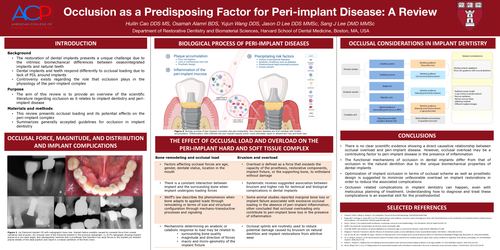
Figure 1. (a) fractured implant i30 with radiographic bone loss. Implant failure possibly caused by nonaxial force from mesial canteliver and bruxism; (b) occlusal view of the fractured implant in the previous radiograph; (c-d) PA radiograph showing implant placed at a non-ideal angle, and subsequently restored with a prosthesis that transfers non-axial forces to the implant;(e) Implant placed distally of the ideal position and result in a mesial cantilever of the final crown.
BIOLOGICAL PROCESS OF PERI-IMPLANT DISEASES
Figure 2. Biologic process of peri-implant mucositis and peri-implantitis. Peri-implant diseases are first initiated with biofilm accumulation. Inflammatory cells infiltrate the peri-implant tissues which could ultimately result in attachment loss and bone loss.
THE EFFECT OF OCCLUSAL LOAD AND OVERLOAD ON THE
PERI-IMPLANT HARD AND SOFT TISSUE COMPLEX
OCCLUSAL CONSIDERATIONS IN IMPLANT DENTISTRY