206 posters, 13 topics, 5 sessions, 713 authors, 293 institutions
ePostersLive by SciGen Technologies S.A. All rights reserved.
AAPS 104th Annual Meeting
May 2-5, 2026 | Lihue, HI

D137
Mitigating Post-amputation Pain In Diabetic Patients: The Role Of Regenerative Peripheral Nerve Interface (rpni) Surgery
Part of Topic
Lower Extremity Reconstruction
Introduction
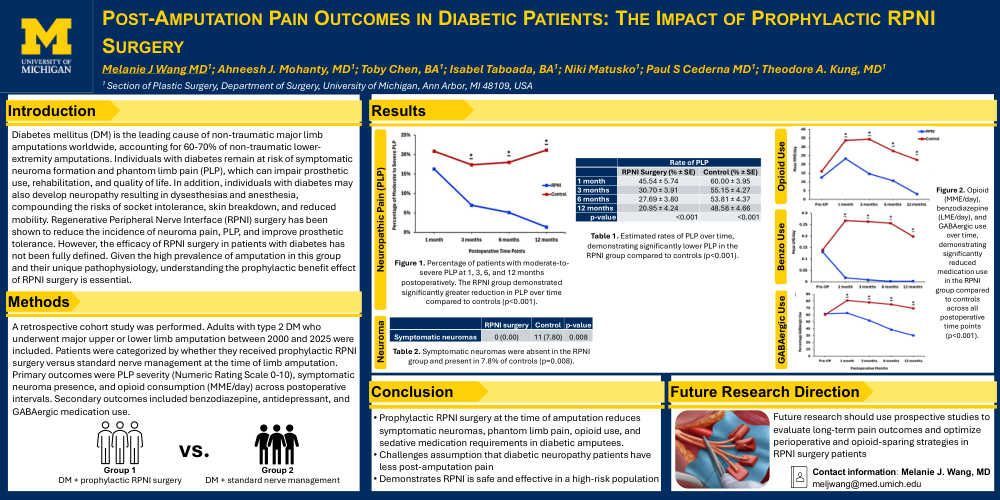
Diabetes mellitus (DM) is the leading cause of non-traumatic major limb amputations worldwide, accounting for 60-70% of non-traumatic lower-extremity amputations. Individuals with diabetes remain at risk of symptomatic neuroma formation and phantom limb pain (PLP), which can impair prosthetic use, rehabilitation, and quality of life. In addition, individuals with diabetes may also develop neuropathy resulting in dysesthesias and anesthesia, compounding the risks of socket intolerance, skin breakdown, and reduced mobility. Regenerative Peripheral Nerve Interface (RPNI) surgery has been shown to reduce the incidence of neuroma pain, PLP, and improve prosthetic tolerance. However, the efficacy of RPNI surgery in patients with diabetes has not been fully defined. Given the high prevalence of amputation in this group and their unique pathophysiology, understanding the prophylactic benefit effect of RPNI surgery is essential.
Methods
A retrospective cohort study was performed. Adults with type 2 DM who underwent major upper or lower limb amputation between 2000 and 2025 were included. Patients were categorized by whether they received prophylactic RPNI surgery versus standard nerve management at the time of limb amputation. Primary outcomes were PLP severity (Numeric Rating Scale 0-10), symptomatic neuroma presence, and opioid consumption (MME/day) across postoperative intervals. Secondary outcomes included benzodiazepine, antidepressant, and GABAergic medication use.
Conclusion