241 posters, 10 topics, 7 sessions, 899 authors, 296 institutions
ePostersLive by SciGen Technologies S.A. All rights reserved.
The AAPS 103rd Annual Meeting 2025
May 24-27, 2025 | Austin, Texas

P46
Enhanced Recovery After Surgery Protocols Can Vastly Decrease Rates Of Outpatient Opiate Prescribing In Pediatric Plastic Surgery Patients
Poster Presenter
Authors
Colton Fernstrum, Samantha Morin, Laura Humphries, Ian Hoppe
Affiliations
Part of Topic
Craniofacial/Peds
Background/Purpose:
Enhanced recovery after surgery (ERAS) protocols have been shown to decrease inpatient opiate usage after pediatric plastic surgery, but little research has been done on the effect of ERAS protocols on outpatient opiate prescribing. This study analyzes the authors ERAS protocols and their effects on outpatient opiate prescribing rates in comparison to other participating United States hospitals using the 2023 ACS NSQIP Pediatric Opiate Stewardship report.
Methods:
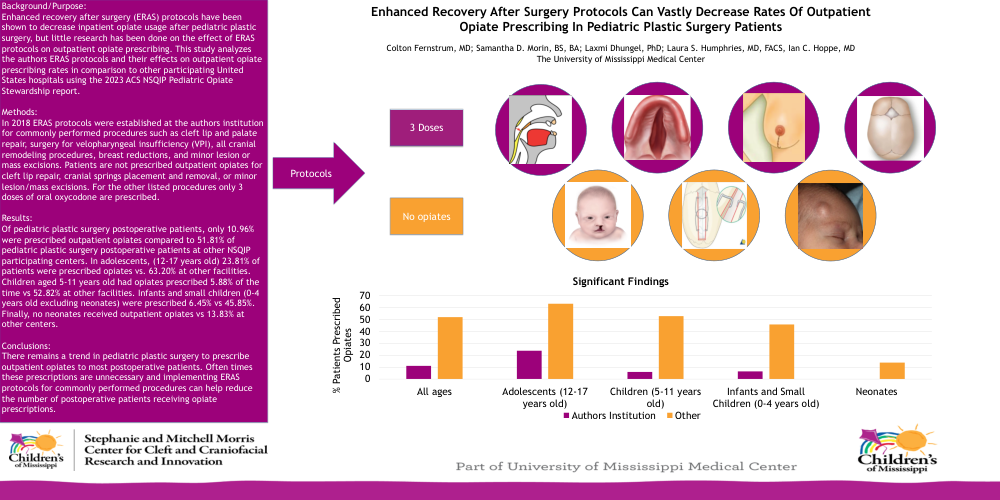
In 2018 ERAS protocols were established at the authors institution for commonly performed procedures such as cleft lip and palate repair, surgery for velopharyngeal insufficiency (VPI), all cranial remodeling procedures, breast reductions, and minor lesion or mass excisions. Patients are not prescribed outpatient opiates for cleft lip repair, cranial springs placement and removal, or minor lesion/mass excisions. For the other listed procedures only 3 doses of oral oxycodone are prescribed.
Results:
Of pediatric plastic surgery postoperative patients, only 10.96% were prescribed outpatient opiates compared to 51.81% of pediatric plastic surgery postoperative patients at other NSQIP participating centers. In adolescents, (12-17 years old) 23.81% of patients were prescribed opiates vs. 63.20% at other facilities. Children aged 5-11 years old had opiates prescribed 5.88% of the time vs 52.82% at other facilities. Infants and small children (0-4 years old excluding neonates) were prescribed 6.45% vs 45.85%. Finally, no neonates received outpatient opiates vs 13.83% at other centers.
Conclusions:
There remains a trend in pediatric plastic surgery to prescribe outpatient opiates to most postoperative patients. Often times these prescriptions are unnecessary and implementing ERAS protocols for commonly performed procedures can help reduce the number of postoperative patients receiving opiate prescriptions.