241 posters, 10 topics, 7 sessions, 899 authors, 296 institutions
ePostersLive by SciGen Technologies S.A. All rights reserved.
The AAPS 103rd Annual Meeting 2025
May 24-27, 2025 | Austin, Texas

D138
Surgical Treatment For Patients Diagnosed With Complex Regional Pain Syndrome Of The Extremities
Poster Presenter
Part of Topic
Hand/Extremity
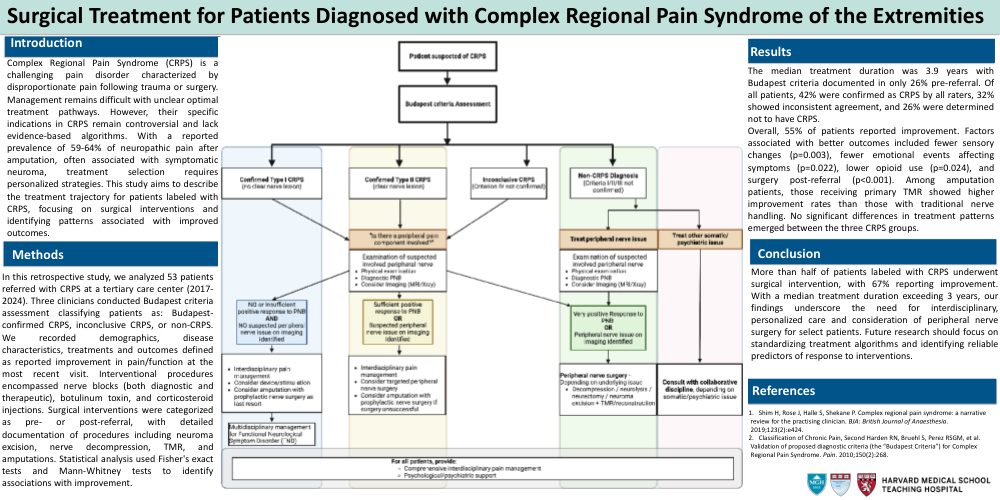
Complex Regional Pain Syndrome (CRPS) is a challenging pain disorder characterized by disproportionate pain following trauma or surgery. Management remains difficult with unclear optimal treatment pathways. However, their specific indications in CRPS remain controversial and lack evidence-based algorithms. With a reported prevalence of 59-64% of neuropathic pain after amputation, often associated with symptomatic neuroma, treatment selection requires personalized strategies. This study aims to describe the treatment trajectory for patients labeled with CRPS, focusing on surgical interventions and identifying patterns associated with improved outcomes.
In this retrospective study, we analyzed 53 patients referred with CRPS at a tertiary care center (2017-2024). Three clinicians conducted Budapest criteria assessment classifying patients as: Budapest-confirmed CRPS, inconclusive CRPS, or non-CRPS. We recorded demographics, disease characteristics, treatments and outcomes defined as reported improvement in pain/function at the most recent visit. Interventional procedures encompassed nerve blocks (both diagnostic and therapeutic), botulinum toxin, and corticosteroid injections. Surgical interventions were categorized as pre- or post-referral, with detailed documentation of procedures including neuroma excision, nerve decompression, TMR, and amputations. Statistical analysis used Fisher's exact tests and Mann-Whitney tests to identify associations with improvement.
The median treatment duration was 3.9 years with Budapest criteria documented in only 26% pre-referral. Of all patients, 42% were confirmed as CRPS by all raters, 32% showed inconsistent agreement, and 26% were determined not to have CRPS.
Overall, 55% of patients reported improvement. Factors associated with better outcomes included fewer sensory changes (p=0.003), fewer emotional events affecting symptoms (p=0.022), lower opioid use (p=0.024), and surgery post-referral (p<0.001). Among amputation patients, those receiving primary TMR showed higher improvement rates than those with traditional nerve handling. No significant differences in treatment patterns emerged between the three CRPS groups.
More than half of patients labeled with CRPS underwent surgical intervention, with 67% reporting improvement. With a median treatment duration exceeding 3 years, our findings underscore the need for interdisciplinary, personalized care and consideration of peripheral nerve surgery for select patients. Future research should focus on standardizing treatment algorithms and identifying reliable predictors of response to interventions.