241 posters, 10 topics, 7 sessions, 899 authors, 296 institutions
ePostersLive by SciGen Technologies S.A. All rights reserved.
The AAPS 103rd Annual Meeting 2025
May 24-27, 2025 | Austin, Texas

D131
Navigating Diagnostic Complexities In Chronic Regional Pain Syndrome
Poster Presenter
Authors
Floris Raasveld, Margaux Wolff, Anna Luan, David Hao, Ian Valerio, Kyle Eberlin
Affiliations
Part of Topic
Hand/Extremity
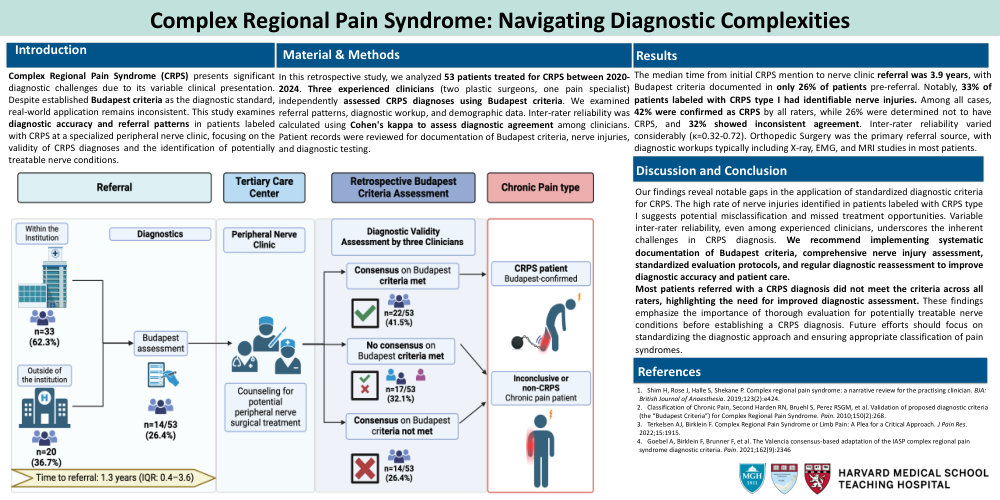
Complex Regional Pain Syndrome (CRPS) presents significant diagnostic challenges due to its variable clinical presentation. Despite established Budapest criteria as the diagnostic standard, real-world application remains inconsistent. This study examines diagnostic accuracy and referral patterns in patients labeled with CRPS at a specialized peripheral nerve clinic, focusing on the validity of CRPS diagnoses and the identification of potentially treatable nerve conditions.
In this retrospective study, we analyzed 53 patients treated for CRPS between 2020-2024. Three experienced clinicians (two plastic surgeons, one pain specialist) independently assessed CRPS diagnoses using Budapest criteria. We examined referral patterns, diagnostic workup, and demographic data. Inter-rater reliability was calculated using Cohen's kappa to assess diagnostic agreement among clinicians. Patient records were reviewed for documentation of Budapest criteria, nerve injuries, and diagnostic testing.
The median time from initial CRPS mention to nerve clinic referral was 3.9 years, with Budapest criteria documented in only 26% of patients pre-referral. Notably, 33% of patients labeled with CRPS type I had identifiable nerve injuries. Among all cases, 42% were confirmed as CRPS by all raters, while 26% were determined not to have CRPS, and 32% showed inconsistent agreement. Inter-rater reliability varied considerably (κ=0.32-0.72). Orthopedic Surgery was the primary referral source, with diagnostic workups typically including X-ray, EMG, and MRI studies in most patients.
Our findings reveal notable gaps in the application of standardized diagnostic criteria for CRPS. The high rate of nerve injuries identified in patients labeled with CRPS type I suggests potential misclassification and missed treatment opportunities. Variable inter-rater reliability, even among experienced clinicians, underscores the inherent challenges in CRPS diagnosis. We recommend implementing systematic documentation of Budapest criteria, comprehensive nerve injury assessment, standardized evaluation protocols, and regular diagnostic reassessment to improve diagnostic accuracy and patient care.
Most patients referred with a CRPS diagnosis did not meet the criteria across all raters, highlighting the need for improved diagnostic assessment. These findings emphasize the importance of thorough evaluation for potentially treatable nerve conditions before establishing a CRPS diagnosis. Future efforts should focus on standardizing the diagnostic approach and ensuring appropriate classification of pain syndromes.